Why Reheating a Dinner Party Menu Is Harder Than It Looks
Multi-course menus demand staggered timing, and one overcooked dish can derail the whole evening. The most common errors hosts make are drying out fish, splitting emulsified sauces, and overcooking proteins while waiting for sides to finish. The goal is restaurant-standard plating at home, not a microwave dump.
Mr. Saucy solves much of this by delivering premium chilled meals with separate components and precise finishing instructions. When proteins, sauces, and garnishes arrive in their own containers, you control exactly when each element hits the heat. This is the key advantage over cooking everything yourself or ordering a pre-plated meal that has already been sitting in a warming tray for twenty minutes.
If you are planning a dinner for six or more, a detailed Bruges dinner-party planning guide can help you map portions and timing before you even think about the oven.
How to Reheat a Dinner Party Menu: The Master Timeline
Work backwards from your serving time and map each course's reheating method, resting window, and plating step on a written run sheet. Even a simple checklist on your phone will prevent last-minute panic and keep you out of the kitchen while your guests are talking.
Start with sauces and elements that benefit from gentle, slow reheating. Stocks, braises, and reductions can be warmed on the stovetop over low heat twenty to thirty minutes before you plan to serve. They actually improve as they sit, and a gentle reheat preserves their texture and depth of flavour.
Leave high-heat, fast-cook items for the final ten to fifteen minutes. Seared fish, delicate proteins, and crisp garnishes should be the last things you touch before plating. If you reheat everything at once, the fish will be dry and the herbs will be wilted by the time the first course is cleared.
A practical planning timeline for ordering catering gives you a similar backwards framework, just applied to the ordering stage rather than the reheating stage. The principle is the same: start from the moment you want to sit down and work backwards from there.
Course-by-Course Reheating Sequence: Starters, Mains, and Desserts
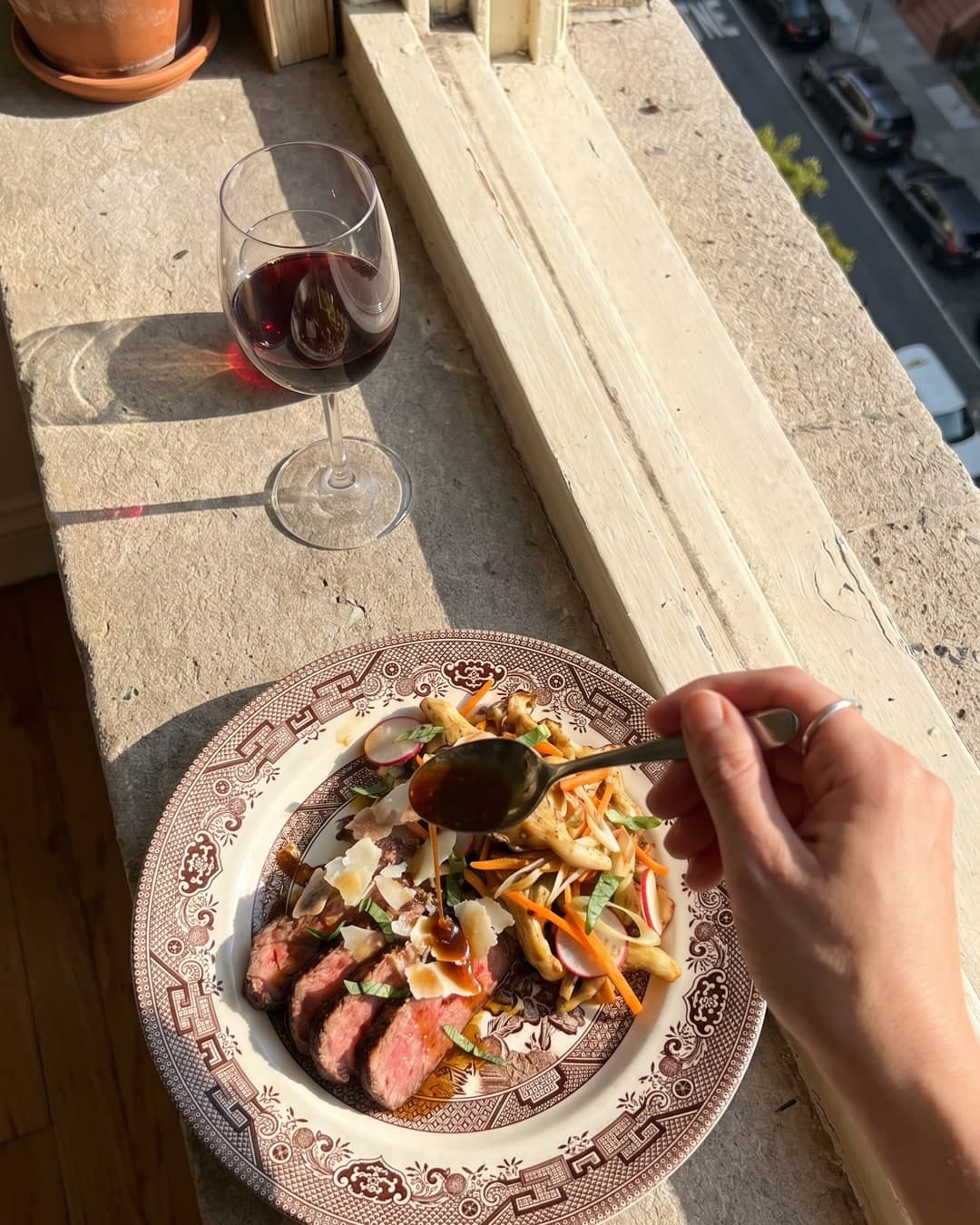
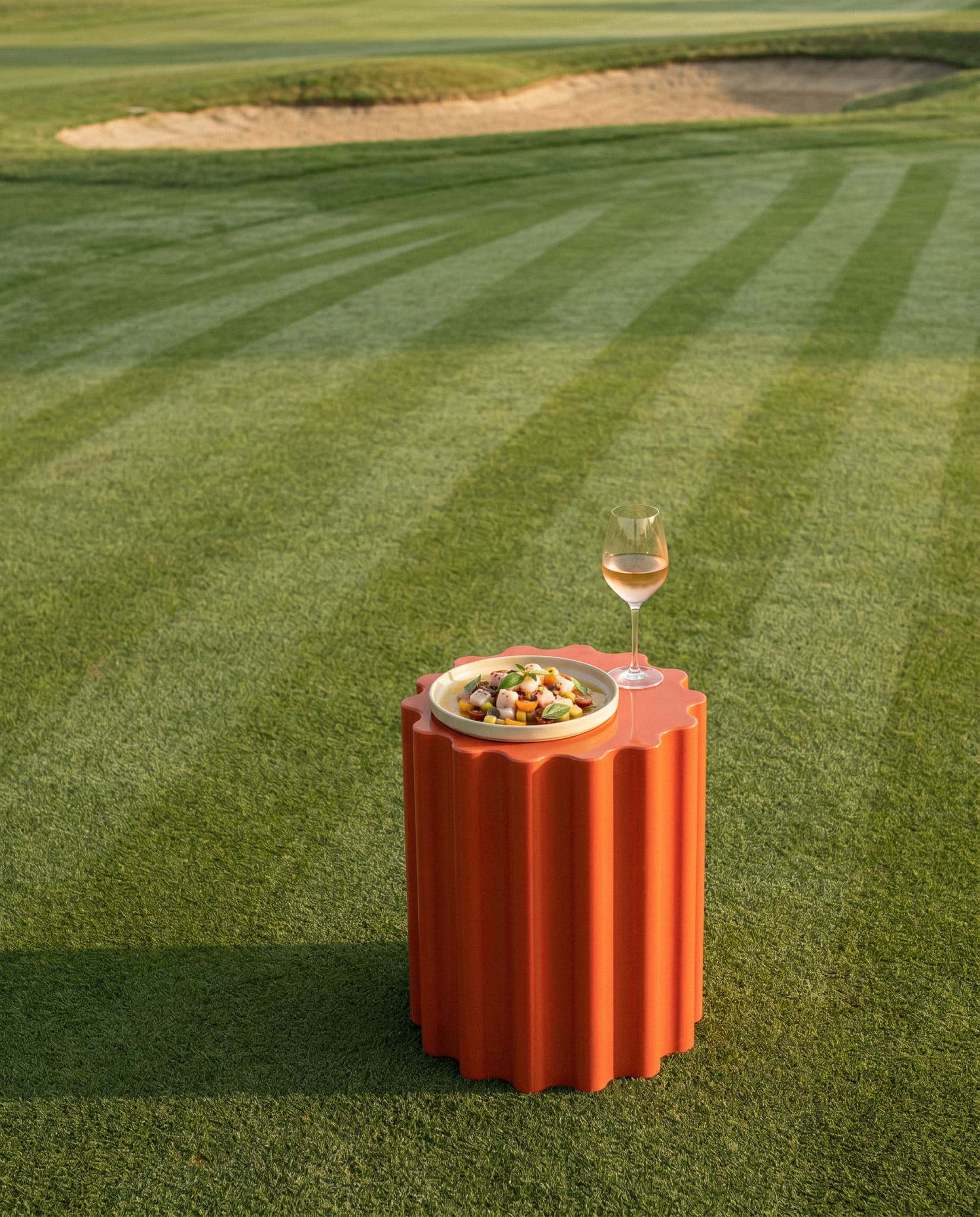
Cold starters like tartares, ceviches, and salads need no reheating at all. Plate them last-minute, straight from the fridge, so they arrive at the table at the right temperature. A dish like Gochujang Beef Tataki Tartare is designed to be served cold and can be plated in under a minute.
Warm starters such as soups and veloutés can be held in a low oven or a double boiler. Reheat them gently to preserve texture, and keep them covered so the surface does not form a skin. A Waterzooi Tom Yum is a good example of a warm starter that benefits from slow, gentle reheating.
For main courses, let proteins rest while sides finish. Use the oven at 80 to 100 degrees Celsius to keep components warm without cooking them further. A Seared Lamb in Gochujang-Coconut Sauce with Fennel arrives with the fennel salad packed separately, so you can warm the lamb and sauce gently and add the fresh salad at the last second.
Desserts served warm, like crumbles and fondants, go in the oven while guests enjoy the main course. Cold desserts are pre-plated and pulled from the fridge just before serving. A Ginger and Pear Almond Tart can be served at room temperature or slightly warmed, giving you flexibility depending on how the evening is running.
How to Reheat Fish Without Drying It Out
Fish continues to cook from residual heat, so always undercook it slightly during initial preparation. When reheating, use a low oven at 80 degrees Celsius with a splash of liquid, or a covered pan on the stovetop with butter. Never microwave fish unless absolutely necessary, as it destroys texture and moisture almost instantly.
Mr. Saucy proteins arrive separately packed so you can reheat fish at the precise moment without overcooking. A dish like Fish Quenelles in Red Curry arrives with the fish balls and sauce ready to warm together gently, so the fish stays moist and the curry stays silky.
If you are serving a whole fish, the Herbal Curry Steamed Sea Bass is designed to be gently reheated in the oven or steamer, which is the most forgiving method for keeping a large fish tender.
How to Reheat Sauces Without Splitting Them
Emulsified sauces like béarnaise, hollandaise, and butter sauces split when heated too fast or too hot. The fix is a double boiler or bain-marie, which provides gentle, indirect heat and keeps emulsions stable. If a sauce begins to separate, remove it from the heat immediately and whisk in a splash of cold liquid or an ice cube to bring it back together.
Mr. Saucy delivers sauces separately so you can warm them on your own schedule without risking the protein. A Wolffish with Lemon Brown Butter arrives with the brown butter sauce in its own container, so you can warm it gently in a small pan while the fish rests.
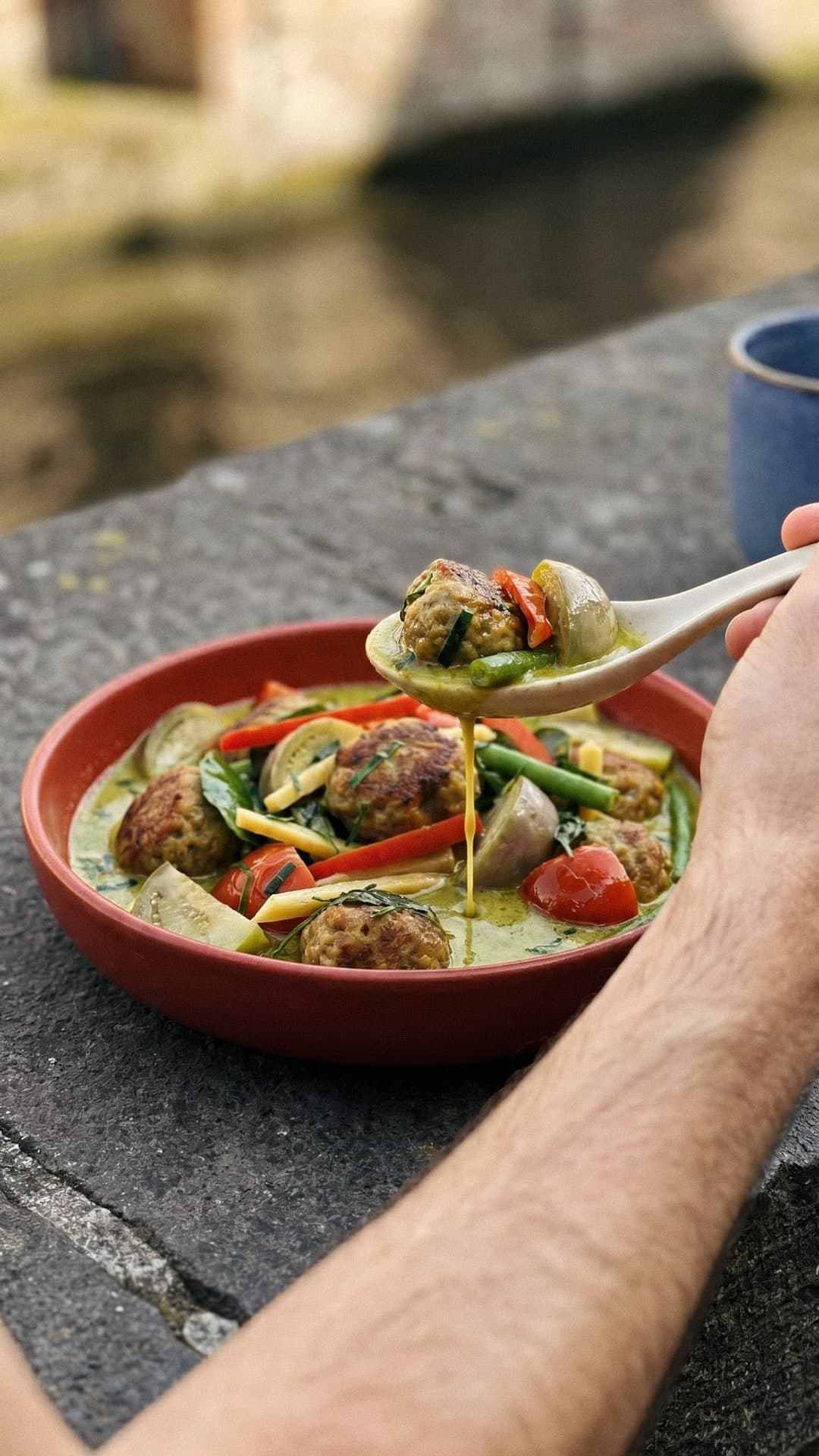
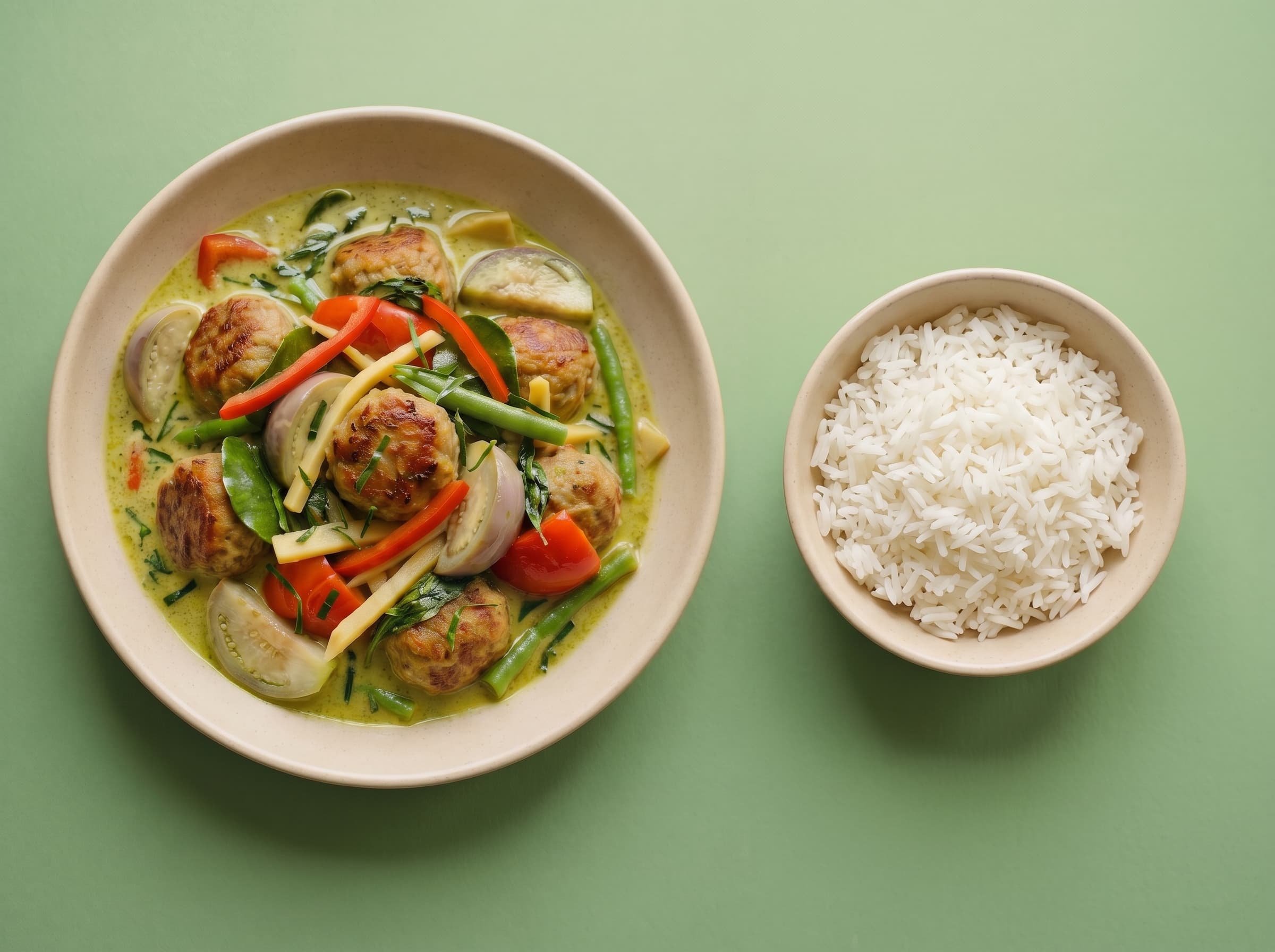
Cream-based sauces are more forgiving but still benefit from low, slow reheating. The Green Thai Curry with Meatballs has a coconut cream base that stays smooth as long as you do not let it boil. Warm it over medium-low heat and stir occasionally until it is heated through.
Keeping Food Warm During a Multi-Course Dinner Party
Use your oven at 60 to 80 degrees Celsius as a warming drawer for plates, proteins, and oven-safe side dishes. This is the most useful technique for a multi-course dinner, because it gives you a holding zone for anything that is ready before the rest of the table is.
Cover food loosely with foil to retain heat without trapping steam, which makes crispy items soggy. Rest meat on a warm plate under foil, and it stays hot while juices redistribute. You also gain valuable plating time, because the meat is not cooling on the counter while you finish the sides.
Avoid holding food above 80 degrees Celsius for more than twenty minutes. Quality degrades quickly at higher temperatures, and safety margins shrink. If a course is running late, pull the ready components into the low oven and focus on finishing what is still on the stovetop.
For a broader look at how much food per person you should plan, the portion guide covers quantities that keep guests satisfied without leaving you with a mountain of reheated leftovers.
Plating Checklist: Warm Plates, Garnishes, and Sauce Timing
Warm plates in the oven at 60 degrees Celsius for five minutes before plating. Cold plates kill hot food instantly, and there is no recovering from a lukewarm main course once it hits a chilled plate. This is a small step that makes an outsized difference to how the meal feels.
Add sauce to the plate first or drizzle it at the last second. Never sauce a dish that will sit waiting, because the sauce will soak into the food and dull the presentation. A Braised Pork Cheeks Grand Veneur with Korean Touch is a good example of a dish where the sauce should go on the plate just before the meat, so the gremolata stays fresh and bright.
Apply fresh garnishes like herbs, microgreens, and edible flowers after plating, not before reheating. Heat destroys delicate herbs in seconds, and a wilted garnish is worse than no garnish at all. Serve in order: clear starter plates, pause briefly, then bring mains. Never rush guests between courses, because the pacing is what makes a dinner party feel considered rather than chaotic.
If you want to go further on presentation, an elegant tablescapes guide covers the visual side of plating and serving in the same spirit.
How to Reheat a Caterer's or Mr. Saucy Meal Without Overcooking
Caterer and meal-delivery dishes are designed for finishing at home, so follow the provided instructions precisely. Mr. Saucy meals arrive chilled with separate components for proteins, sauces, and garnishes, along with step-by-step finishing guides that tell you exactly how long each element needs.
Reheat vacuum-sealed pouches in a water bath at the recommended temperature. Never boil them directly, because the high heat can overcook the protein and compromise the texture. A gentle water bath at 60 to 70 degrees Celsius is the safest method for most chilled meals.
Mr. Saucy delivers premium chilled meals across Belgium and Luxembourg with a 14:00 order cutoff two days before delivery, and delivery on Wednesday, Friday, and Saturday. You get the same restaurant-standard plating at home with far less stress, because the culinary team has already done the hard work of building flavour and texture. All you need to do is follow the finishing instructions and plate with confidence.
For a fuller comparison between catering and cooking yourself, the honest comparison guide walks through the trade-offs in time, cost, and quality so you can decide what fits your evening.