Szechuan Cumin Beef Wok with Belgian Blonde Ale Glaze
45 min · Medium · Serves 4
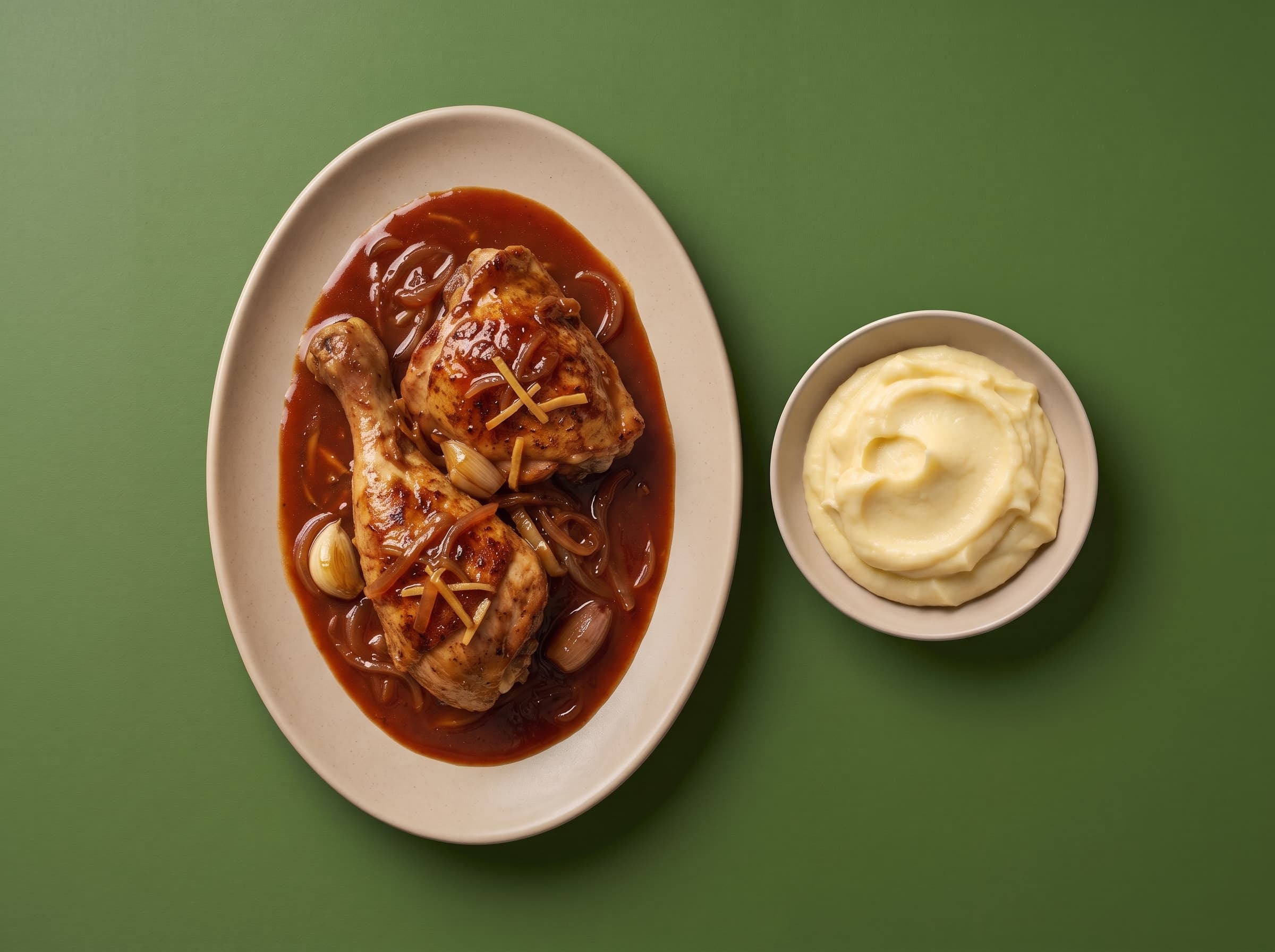 From our menuCoq au vin€22.95 · Made by us, delivered chilled.
This bold, glossy stir-fry brings together Szechuan cumin beef and a splash of Belgian beer wok magic - a blonde ale deglaze that softens the chili heat and builds a rich, shiny sauce. Velveted beef stays silky and tender. Ready in 45 minutes and serves 4 hungry people.
Recipe by Christophe Rammant
Cordon Bleu Paris alumni - Two star Michelin kitchen experience
What Makes This Belgian Beer Wok Different from Regular Stir-Fry?
Professional culinary team use a technique called velveting to get that silky, restaurant-quality beef texture at home. A quick marinade of cornstarch, soy sauce, and rice wine forms a thin protective coating around each slice. This barrier locks in moisture so the beef stays tender even at the fierce heat of a screaming-hot wok.
Traditional Szechuan cooking teaches that spices must bloom in hot oil to release their full flavor. When doubanjiang, dried chilies, and cumin hit the hot wok, fat-soluble flavor compounds wake up and fill the kitchen with a deep, toasty aroma. Food science shows this step can multiply the perceived intensity of spices several times over compared to adding them raw.
The Belgian blonde ale does something clever and quiet. Its natural carbonation and malt sweetness lift the sticky, caramelized bits from the wok bottom and fold them back into the sauce. The gentle bitterness of the ale rounds off the sharp chili edges, creating a glossy glaze that feels both boldly Szechuan and instinctively familiar.
Estimated nutrition per serving
Estimated from ingredient weights, not lab-tested.
- Calories
- 538
- Protein
- 42g
- Fat
- 32g
- Carbohydrates
- 22g
The weekly recipe note
Enjoyed this recipe? Get the next one first.
One new recipe each week from Christophe: global flavor, French technique, and practical home-cook timing.
By signing up, you agree to receive emails from Mr. Saucy.
Ingredients
Recipe yields 4 servings
For the Beef and Velveting Marinade
| Amount | Ingredient | Notes |
|---|---|---|
| 600 g | beef sirloin or flank steak, sliced 3 mm thin against the grain | partially freeze for 20 minutes before slicing for cleaner cuts |
| 20 g (about 1½ tbsp) | light soy sauce | for the velveting marinade |
| 20 g (about 1½ tbsp) | Shaoxing rice wine | dry sherry works as a substitute |
| 10 g (about 1 tbsp) | cornstarch | for velveting - creates the silky restaurant texture |
| 8 g (about 1½ tsp) | sesame oil | for the marinade |
For the Spice Base
| Amount | Ingredient | Notes |
|---|---|---|
| 12 g (about 2 tsp) | whole cumin seeds | toasted dry and coarsely crushed - the backbone of the dish |
| 10 g (about 8–10 chilies) | dried Szechuan chilies | deseed half for Belgian-friendly heat; deseed all for mild |
| 4 g (about 1 tsp) | Szechuan peppercorns | lightly crushed - provides the signature mala numbing note |
| 25 g (about 1½ tbsp) | doubanjiang (fermented chili bean paste) | the Szechuan soul of the dish - find at any Asian grocery |
| 20 g (approximately 5 cloves) | garlic cloves, thinly sliced | — |
| 20 g (about a 4 cm piece) | fresh ginger, julienned | matchstick cut for quick cooking |
For the Vegetables
| Amount | Ingredient | Notes |
|---|---|---|
| 150 g (approximately 1 large) | red onion, sliced into half-moons | — |
| 150 g (approximately 1 large) | sweet white onion, sliced into half-moons | caramelizes beautifully and bridges Belgian flavor memory |
| 150 g (approximately 1 large) | red bell pepper, julienned | — |
| 150 g (approximately 1 large) | yellow bell pepper, julienned | — |
| 60 g (approximately 6 stalks) | scallions, cut into 5 cm lengths | added at the very end |
For the Sauce and Cooking
| Amount | Ingredient | Notes |
|---|---|---|
| 80 g (about 80 ml / ⅓ cup) | Belgian blonde ale (Leffe Blonde or Duvel) | deglazes the wok and softens chili heat |
| 15 g (about 1 tbsp) | dark soy sauce | for color, depth, and a touch of molasses sweetness |
| 6 g (about 1½ tsp) | sugar | balances the fermented and spicy notes |
| 45 g (about 3 tbsp) | neutral oil (sunflower or grapeseed) | high smoke point essential for wok hei - divided: 30 g for beef, 15 g for spice base |
| 8 g (about 1½ tsp) | sesame oil | finishing oil - added off the heat only |
Instructions
Prep (Do This First)
- 1
Velvet the Beef (The Silky Texture Secret)
Combine the sliced beef with the light soy sauce, Shaoxing wine, cornstarch, and sesame oil. Toss well until every slice is evenly coated. The cornstarch forms a thin, protective barrier around the meat that keeps it silky and tender even at fierce wok heat - this is the velveting technique that separates restaurant stir-fry from home versions. Let it rest at room temperature for at least 20 minutes, or up to 4 hours in the fridge.
- 2
Toast and Crush the Cumin (Unlock the Flavor)
Place a dry wok or small skillet over medium heat. Add the whole cumin seeds and toast, shaking the pan constantly, for 60-90 seconds until they smell deeply fragrant and turn a shade darker. Tip them onto a cutting board and crush coarsely with the flat of a knife or a mortar and pestle - you want rough texture, not fine powder. Set aside. This step cracks open the seeds and releases fat-soluble flavor compounds that would otherwise stay locked inside.
- 3
Set Up Your Mise en Place (No Time to Search Later)
Arrange all your prepped ingredients in the order you will use them, within arm's reach of the stove: marinated beef, garlic and ginger, dried chilies, doubanjiang, onions, peppers, ale, dark soy sauce, sugar, toasted cumin, Szechuan peppercorns, scallions, and finishing sesame oil. Once the wok is hot, the cooking moves fast - there is no time to measure or search for anything.
Sear the Beef
- 4
Get the Wok Screaming Hot (Wok Hei Starts Here)
Heat your wok over the highest flame your stove can produce until it just begins to smoke. Add 30 g of the neutral oil and swirl to coat the surface. The wok should be around 450°F / 230°C or hotter - you will see faint wisps of smoke rising from the surface. If it does not smoke, wait longer. A cold wok means steamed, grey beef instead of charred, glossy beef.
- 5
Sear the Beef in Batches (Do Not Crowd the Pan)
Lay the beef slices in a single layer and do not stir for a full 45 seconds. You should hear a violent sizzle the moment the meat hits the oil - if you don't, the wok is not hot enough. Toss once, cook for 30 more seconds, then remove the beef to a plate. It should be just cooked through with some charred, caramelized edges. Crowding the wok is the most common stir-fry mistake: too much meat drops the temperature and the beef steams grey instead of searing. Cook in two batches if needed.
Build the Sauce
- 6
Bloom the Spice Base (The Szechuan Soul)
Reduce the heat slightly to medium-high. Add the remaining 15 g of oil. Add the dried Szechuan chilies first and stir for 20 seconds - they will darken and smell fragrant. Add the garlic and ginger and stir for 30 seconds. Add the doubanjiang and stir-fry for a full 60-90 seconds, pressing the paste against the hot wok surface. The oil will turn a deep brick red and the paste will smell toasted and complex rather than raw. This step cannot be rushed - it is where the deep, layered flavor of the dish is built.
- 7
Cook the Vegetables with Some Char
Add the onions and toss over high heat for 2 minutes. You want them softened with some charred edges - not fully soft and limp. Add the bell peppers and toss for 1 more minute. The vegetables should keep some bite and bright color; they will continue cooking when the beef returns to the wok.
- 8
Deglaze with the Belgian Ale (The Flavor Bridge)
Pour in the blonde ale - it will steam dramatically and lift all the caramelized bits from the wok bottom. Add the dark soy sauce and sugar. Let this reduce for 90 seconds over high heat, stirring occasionally, until the sauce becomes slightly syrupy and glossy. The ale's malt sweetness and carbonation cut through the chili heat and add a subtle depth that makes the dish feel immediately familiar without announcing itself as a fusion element.
Finish and Serve
- 9
Reunite Everything and Coat in the Glaze
Return the seared beef to the wok. Add the crushed toasted cumin and the lightly crushed Szechuan peppercorns. Toss everything together over high heat for 60 seconds - you want every piece of beef and vegetable coated in the glossy sauce. Add the scallions and toss for 15 more seconds. Remove from heat.
- 10
Finish Off the Heat and Taste
Drizzle the finishing sesame oil over the wok and toss once more off the heat. Adding sesame oil to a hot wok burns it and destroys its delicate, nutty flavor - always add it last with the flame off. Taste and adjust: if it needs salt, add a few drops of light soy sauce; if it needs brightness, a few drops of rice vinegar. Serve immediately over steamed jasmine rice or thick egg noodles.
The weekly recipe note
Enjoyed this recipe? Get the next one first.
One new recipe each week from Christophe: global flavor, French technique, and practical home-cook timing.
By signing up, you agree to receive emails from Mr. Saucy.
Tips & Tricks
Your guests have different spice tolerances:
Deseed all the dried chilies and use only 3 g of Szechuan peppercorns for a crowd-friendly version. The dish will still have clear Szechuan character from the doubanjiang and cumin. For a more authentic experience, keep all the seeds and increase peppercorns to 6 g.
The beef is hard to slice thin and clean:
Pop it in the freezer for 20 minutes before slicing. The cold firms up the muscle fibers just enough to cut clean 3 mm slices without the meat sliding under the knife. Always slice against the grain - this shortens the fibers so each bite is tender, not chewy.
Your home stove does not get hot enough for wok hei:
Use a carbon steel pan instead of a wok. Its flat base makes full contact with a domestic burner and achieves a much better sear than a round-bottomed wok sitting above the flame. Wok hei is about maximum heat transfer, not the shape of the pan.
You cannot find doubanjiang at your local store:
Mix 2 parts red miso with 1 part sambal oelek. This gives a reasonable approximation of the fermented, spicy, salty profile. If you do find doubanjiang, Lee Kum Kee is widely available in Belgium and is a reliable starting brand - taste it before cooking and adjust your added soy sauce accordingly.
You are cooking this for a dinner party and need to plan ahead:
Velvet and marinate the beef up to 4 hours ahead, toast and crush the cumin, slice all the vegetables, and measure out the sauces. The actual wok cooking takes under 10 minutes and must be done just before serving. Stir-fry does not reheat well - the texture and charred edges are irreplaceable once the dish sits.
Your guests have different spice tolerances:
Deseed all the dried chilies and use only 3 g of Szechuan peppercorns for a crowd-friendly version. The dish will still have clear Szechuan character from the doubanjiang and cumin. For a more authentic experience, keep all the seeds and increase peppercorns to 6 g.
The beef is hard to slice thin and clean:
Pop it in the freezer for 20 minutes before slicing. The cold firms up the muscle fibers just enough to cut clean 3 mm slices without the meat sliding under the knife. Always slice against the grain - this shortens the fibers so each bite is tender, not chewy.
Your home stove does not get hot enough for wok hei:
Use a carbon steel pan instead of a wok. Its flat base makes full contact with a domestic burner and achieves a much better sear than a round-bottomed wok sitting above the flame. Wok hei is about maximum heat transfer, not the shape of the pan.
You cannot find doubanjiang at your local store:
Mix 2 parts red miso with 1 part sambal oelek. This gives a reasonable approximation of the fermented, spicy, salty profile. If you do find doubanjiang, Lee Kum Kee is widely available in Belgium and is a reliable starting brand - taste it before cooking and adjust your added soy sauce accordingly.
You are cooking this for a dinner party and need to plan ahead:
Velvet and marinate the beef up to 4 hours ahead, toast and crush the cumin, slice all the vegetables, and measure out the sauces. The actual wok cooking takes under 10 minutes and must be done just before serving. Stir-fry does not reheat well - the texture and charred edges are irreplaceable once the dish sits.
Frequently Asked Questions
Can I use chicken or pork instead of beef?
Yes, both work well. For chicken, use boneless thigh sliced thin - it stays juicier than breast at high heat. For pork, shoulder or loin are good choices. The velveting marinade and technique stay exactly the same. Adjust cooking time slightly: chicken needs about 60 seconds per side, pork about 45 seconds.
Which Belgian beer works best in this wok recipe, and can I substitute it?
Leffe Blonde or Duvel are ideal for this Belgian beer wok - their malt sweetness and mild bitterness complement the chili heat without overpowering it. A dry white wine or dry sherry works as a substitute and keeps the deglazing function. Avoid dark ales or lambic beers, which would clash with the Szechuan spice profile.
Why does my stir-fry always turn out watery and grey instead of glossy and charred?
Two things cause this: the wok is not hot enough before you add the oil, and the beef is crowded. When too much meat goes in at once, the temperature drops and water releases from the meat, steaming everything instead of searing it. Heat the wok until it just smokes, cook the beef in a single layer without stirring, and work in batches if needed.
What if I cannot find Szechuan peppercorns or doubanjiang?
Szechuan peppercorns are increasingly available at Delhaize and Carrefour in Belgium, or any Asian grocery. For doubanjiang, mix red miso and sambal oelek in a 2:1 ratio. Without Szechuan peppercorns, the dish loses its numbing tingle but stays delicious - add a little extra chili to compensate.
Can I make this ahead of time for a dinner party?
You can prep everything up to 4 hours ahead - marinate the beef, toast the cumin, slice the vegetables, and measure the sauces. The actual wok cooking is 8-10 minutes and must be done live just before serving. Stir-fry does not reheat well; the glossy texture and charred edges cannot be recreated once the dish sits.
How spicy is this dish, and how do I describe it to guests?
At the recommended setting - half-deseeded chilies and 4 g of peppercorns - it reads as medium-spicy with a mild numbing tingle, similar to a well-seasoned Thai dish. The ale and sugar soften the edges noticeably. Tell guests it has a warm, lingering heat rather than numbing Szechuan fire and they will approach it with curiosity.
What should I serve with this dish?
Steamed jasmine rice is the classic pairing and soaks up the glossy sauce beautifully. Thick egg noodles also work very well. For a Belgian-inspired table, a cold glass of the same blonde ale you used in the recipe is a natural match - the shared malt notes tie the meal together.
Can I use chicken or pork instead of beef?
Yes, both work well. For chicken, use boneless thigh sliced thin - it stays juicier than breast at high heat. For pork, shoulder or loin are good choices. The velveting marinade and technique stay exactly the same. Adjust cooking time slightly: chicken needs about 60 seconds per side, pork about 45 seconds.
Which Belgian beer works best in this wok recipe, and can I substitute it?
Leffe Blonde or Duvel are ideal for this Belgian beer wok - their malt sweetness and mild bitterness complement the chili heat without overpowering it. A dry white wine or dry sherry works as a substitute and keeps the deglazing function. Avoid dark ales or lambic beers, which would clash with the Szechuan spice profile.
Why does my stir-fry always turn out watery and grey instead of glossy and charred?
Two things cause this: the wok is not hot enough before you add the oil, and the beef is crowded. When too much meat goes in at once, the temperature drops and water releases from the meat, steaming everything instead of searing it. Heat the wok until it just smokes, cook the beef in a single layer without stirring, and work in batches if needed.
What if I cannot find Szechuan peppercorns or doubanjiang?
Szechuan peppercorns are increasingly available at Delhaize and Carrefour in Belgium, or any Asian grocery. For doubanjiang, mix red miso and sambal oelek in a 2:1 ratio. Without Szechuan peppercorns, the dish loses its numbing tingle but stays delicious - add a little extra chili to compensate.
Can I make this ahead of time for a dinner party?
You can prep everything up to 4 hours ahead - marinate the beef, toast the cumin, slice the vegetables, and measure the sauces. The actual wok cooking is 8-10 minutes and must be done live just before serving. Stir-fry does not reheat well; the glossy texture and charred edges cannot be recreated once the dish sits.
How spicy is this dish, and how do I describe it to guests?
At the recommended setting - half-deseeded chilies and 4 g of peppercorns - it reads as medium-spicy with a mild numbing tingle, similar to a well-seasoned Thai dish. The ale and sugar soften the edges noticeably. Tell guests it has a warm, lingering heat rather than numbing Szechuan fire and they will approach it with curiosity.
What should I serve with this dish?
Steamed jasmine rice is the classic pairing and soaks up the glossy sauce beautifully. Thick egg noodles also work very well. For a Belgian-inspired table, a cold glass of the same blonde ale you used in the recipe is a natural match - the shared malt notes tie the meal together.
Recipe Reviews
No reviews yet — Be the first to review this recipe!
The collection
All recipesOlive Oil Chocolate Mousse Recipe with Candied Orange
This olive oil chocolate mousse recipe makes a rich but airy dessert with dark chocolate, fruity olive oil, bright candied orange, and crisp almond tuiles. A warm sugar syrup gives the yolks body, while softly whipped cream keeps the mousse light. Plan about 5 hours, including chilling, for 4 generous servings.
300 min · Intermediate · Fusion
Celeriac Ravioli with Brown Butter and Pear
This celeriac ravioli recipe makes 24 delicate pasta pillows filled with roasted celeriac, aged Comté, mascarpone and truffle. Roast the celeriac for deep flavor, then finish the ravioli in a glossy brown-butter sauce with pear, hazelnuts and sage. Plan on 145 minutes for 4 servings, including resting and chilling.
145 min · Intermediate · Fusion
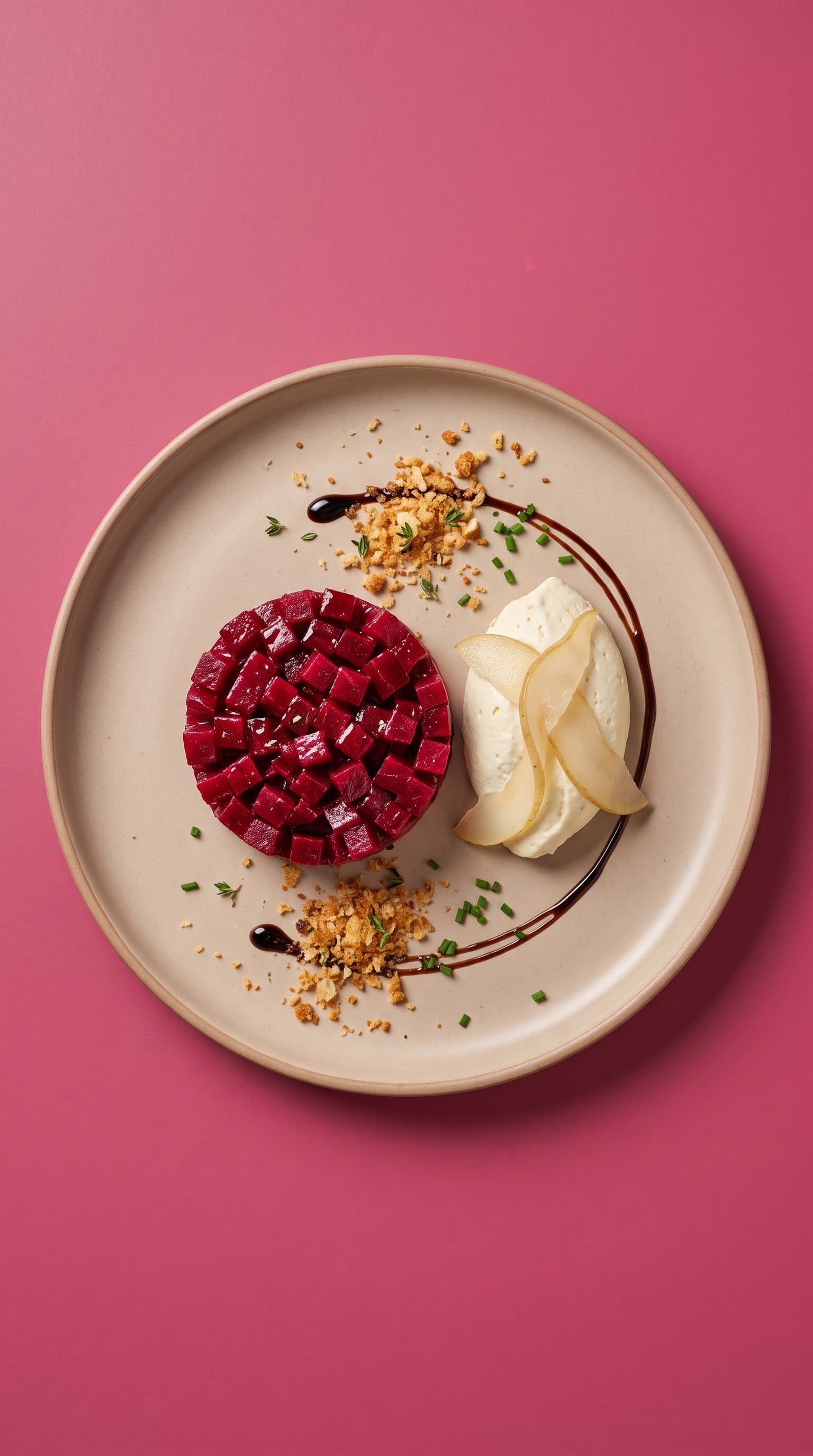
Beetroot Tartare Recipe with Whipped Goat Cheese
This beetroot tartare recipe turns sweet roasted beetroot into a bright, elegant appetizer for four. Cut the chilled beetroot into tiny cubes, dress it just before serving, and pair it with whipped goat cheese, pickled pear, and a buttery hazelnut crumb. Allow about 2 hours from roasting to plating.
120 min · Intermediate · Fusion