Celeriac Ravioli with Brown Butter and Pear
2 hrs 25 min · Advanced · Serves 4
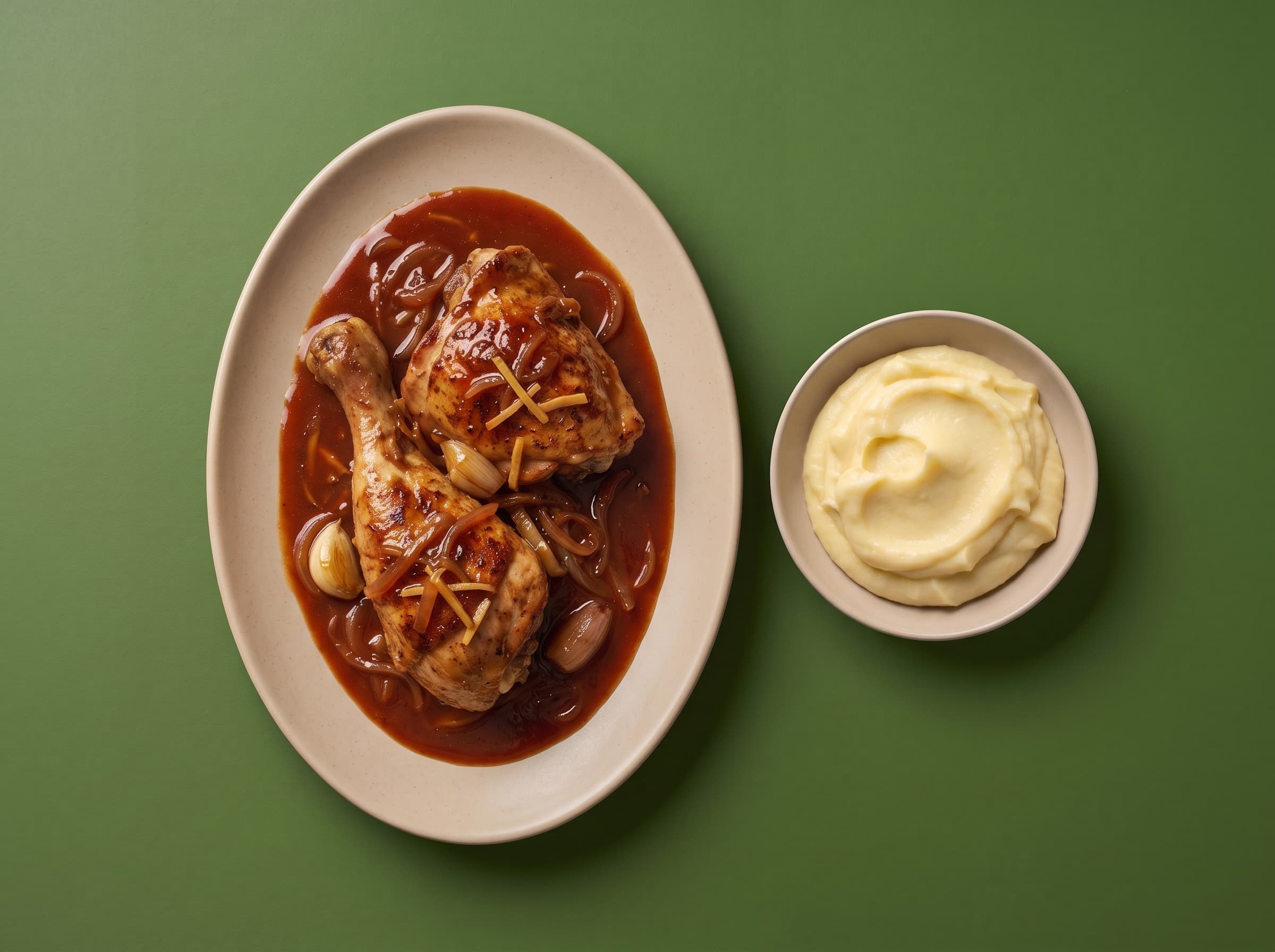 From our menuCoq au vin€22.95 · Made by us, delivered chilled.
This celeriac ravioli recipe makes 24 delicate pasta pillows filled with roasted celeriac, aged Comté, mascarpone and truffle. Roast the celeriac for deep flavor, then finish the ravioli in a glossy brown-butter sauce with pear, hazelnuts and sage. Plan on 145 minutes for 4 servings, including resting and chilling.
Recipe by Christophe Rammant
Cordon Bleu Paris alumni - Two star Michelin kitchen experience
What Makes This Celeriac Ravioli So Special?
Traditional French roasting technique gives celeriac sweet, deep flavor. The dry heat removes extra water, so the filling stays smooth and firm instead of leaking inside the pasta.
Professional culinary team know that cold, dry filling makes better ravioli. Chilling helps the filling hold its shape, while pressing the pasta from the center outward pushes away air that could burst the sealed edges.
Food science shows that pasta water helps butter and sauce come together. The starchy water turns brown butter into a glossy coating that clings to every ravioli instead of pooling in the pan.
Estimated nutrition per serving
Estimated from ingredient weights, not lab-tested.
- Calories
- 1020
- Protein
- 28g
- Fat
- 67g
- Carbohydrates
- 81g
The weekly recipe note
Enjoyed this recipe? Get the next one first.
One new recipe each week from Christophe: global flavor, French technique, and practical home-cook timing.
By signing up, you agree to receive emails from Mr. Saucy.
Ingredients
Recipe yields 4 servings
For the Pasta Dough
| Amount | Ingredient | Notes |
|---|---|---|
| 300 g | Italian 00 flour | plus 30 g for dusting and shaping |
| 150 g | Whole eggs | approximately 3 large eggs, weighed without shells |
| 30 g | Egg yolks | approximately 2 yolks |
| 20 g | Water | only add if needed to bring the dough together |
| 3 g | Fine sea salt for pasta dough | — |
For the Celeriac Filling
| Amount | Ingredient | Notes |
|---|---|---|
| 700 g | Celeriac | peeled and cut into 3 cm cubes |
| 20 g | Olive oil | for roasting the celeriac |
| 105 g | Aged Comté | 80 g for the filling and 25 g for finishing; finely grated |
| 35 g | Mascarpone | for a smooth, cohesive filling |
| 6 g | Preserved black truffle | finely grated, or use a high-quality truffle paste |
| 5 g | Fine sea salt for filling | — |
| 1 g | White pepper | finely ground |
For the Brown Butter Sauce
| Amount | Ingredient | Notes |
|---|---|---|
| 160 g | Unsalted butter | 120 g for the skillet and 40 g for the emulsion |
| 65 g | Raw hazelnuts | roughly chopped |
| 18 g | Fresh sage leaves | — |
| 160 g | Firm pear | peeled and cut into 3 mm brunoise |
| 12 g | Lemon juice | — |
| 2 g | Finely grated lemon zest | — |
For Cooking
| Amount | Ingredient | Notes |
|---|---|---|
| 150 g | Ravioli cooking water | reserved after boiling; use as needed |
| 25 g | Fine sea salt for cooking water | — |
Instructions
Make and Rest the Dough
- 1
Mix and Knead the Pasta Dough
Mix the flour and 3 g salt on a work surface and form a well. Add the eggs and yolks, then slowly draw in the flour. Knead for 8-10 minutes until smooth, elastic and slightly tacky. Add the 20 g water only if the dough feels dry, because kneading builds strength without making the pasta tough.
- 2
Rest the Dough to Relax It
Wrap the dough tightly and rest it at room temperature for 30 minutes. You may refrigerate it for up to 24 hours, but bring it back to room temperature before rolling. Resting relaxes the gluten, so the pasta sheet will not spring back.
Roast and Chill the Filling
- 3
Roast the Celeriac for Deep Flavor
Heat the oven to 400°F / 200°C. Toss the celeriac with the olive oil and a pinch of the filling salt. Spread it in one layer and roast for 35-45 minutes, until the edges are deeply golden and the centers are completely tender. Roasting removes water and concentrates the celeriac's sweetness.
- 4
Blend a Smooth, Dry Filling
While the celeriac is hot, blend it with the mascarpone, 80 g Comté, truffle, remaining filling salt and white pepper until completely smooth. If it seems loose, stir it in a saucepan over low heat for 2-3 minutes to remove moisture. The filling should hold a soft peak.
- 5
Chill the Filling for Easy Shaping
Spread the filling in a shallow tray and chill for at least 30 minutes. Cold, firm filling is easier to portion and helps the pasta edges seal cleanly.
Roll and Shape the Ravioli
- 6
Roll Thin Pasta Sheets
Divide the dough into four pieces and keep three covered while you work. Roll each piece through a pasta machine from the widest setting to about 1 mm thick. The sheet should show the outline of your fingers but still feel strong, so it stays tender without tearing.
- 7
Fill and Seal the Ravioli
Place rounded teaspoons of filling, about 18-20 g each, along one pasta sheet with 5 cm between portions. Lightly brush water around each mound, cover with a second sheet, and press from the filling outward to remove air. Cut 24 ravioli with a 7-8 cm cutter and press the edges firmly, because trapped air can make them burst.
- 8
Chill or Freeze the Ravioli
Arrange the ravioli in one layer on a floured tray. Refrigerate uncovered for up to 2 hours, or freeze on the tray until solid before transferring to a container. Do not stack unfrozen ravioli, because condensation can soften the dough and make it stick.
Build the Sauce and Serve
- 9
Toast the Hazelnuts Until Fragrant
Toast the hazelnuts in a dry skillet over medium heat for 3-4 minutes, until fragrant and golden. Remove them at once, because the hot pan will keep darkening them.
- 10
Brown the Butter and Brighten the Pear
Melt 120 g butter in a wide skillet over medium heat. Add the sage and fry until crisp, while the butter smells nutty and its milk solids turn amber brown. Transfer the sage to a plate. Add the pear, lemon juice and zest to the warm butter for 30-45 seconds. The pear should stay distinct and lightly bright.
- 11
Boil the Ravioli Gently
Bring a large pot of water to a gentle boil and add the 25 g salt. Cook chilled ravioli in batches for 3-4 minutes, or frozen ravioli for 4-5 minutes, until the pasta is tender and the filling is hot. A gentle simmer protects the sealed edges better than a strong, rolling boil.
- 12
Emulsify the Brown Butter Sauce
Reserve 150 g cooking water before draining. Add 60-100 g gradually to the skillet while swirling, then add the remaining 40 g butter in small pieces. The starchy water and butter should become glossy and cling to a spoon. Use only enough water to make the sauce smooth, not watery.
- 13
Coat and Plate the Ravioli
Transfer the ravioli to the skillet and toss or spoon the sauce over them for 30 seconds. Plate six ravioli per person. Spoon the pear and brown butter around and lightly over the pasta, then finish with the toasted hazelnuts, crisp sage and remaining 25 g Comté. Serve right away while the pasta is supple.
The weekly recipe note
Enjoyed this recipe? Get the next one first.
One new recipe each week from Christophe: global flavor, French technique, and practical home-cook timing.
By signing up, you agree to receive emails from Mr. Saucy.
Tips & Tricks
your celeriac filling is loose:
Roast the celeriac instead of boiling it, then stir the blended filling over low heat for 2-3 minutes. This removes extra water without adding flour or breadcrumbs, which can dull the celeriac and Comté.
your ravioli edges will not seal:
Seal one or two ravioli at a time. Keep the dough covered, brush only a thin film of water around the filling, and press outward to remove air. Dry edges and trapped air can cause the ravioli to split.
your filling is too soft to portion:
Chill it longer or stir it over low heat to remove moisture. A cold filling is easier to scoop and gives the pasta a cleaner seal.
your brown butter turns bitter:
Remove the skillet from the heat when the milk solids are hazelnut-brown and smell toasted. Add the pear and lemon promptly, because their moisture helps slow the cooking.
your frozen ravioli stick together:
Freeze them in one layer until hard, then transfer them to a container. Cook them directly from frozen and add about one minute to the cooking time. Do not thaw them first.
your celeriac filling is loose:
Roast the celeriac instead of boiling it, then stir the blended filling over low heat for 2-3 minutes. This removes extra water without adding flour or breadcrumbs, which can dull the celeriac and Comté.
your ravioli edges will not seal:
Seal one or two ravioli at a time. Keep the dough covered, brush only a thin film of water around the filling, and press outward to remove air. Dry edges and trapped air can cause the ravioli to split.
your filling is too soft to portion:
Chill it longer or stir it over low heat to remove moisture. A cold filling is easier to scoop and gives the pasta a cleaner seal.
your brown butter turns bitter:
Remove the skillet from the heat when the milk solids are hazelnut-brown and smell toasted. Add the pear and lemon promptly, because their moisture helps slow the cooking.
your frozen ravioli stick together:
Freeze them in one layer until hard, then transfer them to a container. Cook them directly from frozen and add about one minute to the cooking time. Do not thaw them first.
Frequently Asked Questions
Can I make the ravioli ahead of time?
Yes. Shape the ravioli up to two hours ahead and refrigerate them uncovered on a floured tray. For longer storage, freeze them in one layer until solid, then transfer them to an airtight container. Cook frozen ravioli directly, because thawing softens the dough and makes sticking more likely.
Why did my ravioli open while cooking?
The usual causes are trapped air, wet filling or edges that were not sealed firmly. Press outward from each mound to remove air, keep the filling cold and firm, and use only a thin film of water. Too much water can stop the pasta from bonding.
Can I use truffle oil instead of preserved truffle?
Yes, but use it carefully after blending the filling. Many truffle oils have a strong artificial aroma that can cover the celeriac and Comté. Start with a few drops, taste, and add more only if the flavor stays gentle and savory.
How thin should the pasta be?
Roll it to about 1 mm, usually the second-thinnest setting on a home pasta machine. The sheet should be delicate but strong enough to hold the filling. If it becomes very clear and tears around the filling, it has been rolled too thin.
What if my brown butter tastes bitter?
The milk solids likely cooked too far. Start again with fresh butter and watch closely once it foams. The right color is amber brown, with a roasted hazelnut smell. Add the pear and lemon promptly to help slow the cooking and balance the sauce.
Is this celeriac ravioli recipe hard to make?
It is a hard recipe because it combines fresh pasta, filling, shaping and a pan sauce. Work in small steps, keep the dough covered, and chill the filling before shaping. The make-ahead option helps, since frozen ravioli can go straight into the cooking water.
Can I make the ravioli ahead of time?
Yes. Shape the ravioli up to two hours ahead and refrigerate them uncovered on a floured tray. For longer storage, freeze them in one layer until solid, then transfer them to an airtight container. Cook frozen ravioli directly, because thawing softens the dough and makes sticking more likely.
Why did my ravioli open while cooking?
The usual causes are trapped air, wet filling or edges that were not sealed firmly. Press outward from each mound to remove air, keep the filling cold and firm, and use only a thin film of water. Too much water can stop the pasta from bonding.
Can I use truffle oil instead of preserved truffle?
Yes, but use it carefully after blending the filling. Many truffle oils have a strong artificial aroma that can cover the celeriac and Comté. Start with a few drops, taste, and add more only if the flavor stays gentle and savory.
How thin should the pasta be?
Roll it to about 1 mm, usually the second-thinnest setting on a home pasta machine. The sheet should be delicate but strong enough to hold the filling. If it becomes very clear and tears around the filling, it has been rolled too thin.
What if my brown butter tastes bitter?
The milk solids likely cooked too far. Start again with fresh butter and watch closely once it foams. The right color is amber brown, with a roasted hazelnut smell. Add the pear and lemon promptly to help slow the cooking and balance the sauce.
Is this celeriac ravioli recipe hard to make?
It is a hard recipe because it combines fresh pasta, filling, shaping and a pan sauce. Work in small steps, keep the dough covered, and chill the filling before shaping. The make-ahead option helps, since frozen ravioli can go straight into the cooking water.
Recipe Reviews
No reviews yet — Be the first to review this recipe!
The collection
All recipesOlive Oil Chocolate Mousse Recipe with Candied Orange
This olive oil chocolate mousse recipe makes a rich but airy dessert with dark chocolate, fruity olive oil, bright candied orange, and crisp almond tuiles. A warm sugar syrup gives the yolks body, while softly whipped cream keeps the mousse light. Plan about 5 hours, including chilling, for 4 generous servings.
300 min · Intermediate · Fusion
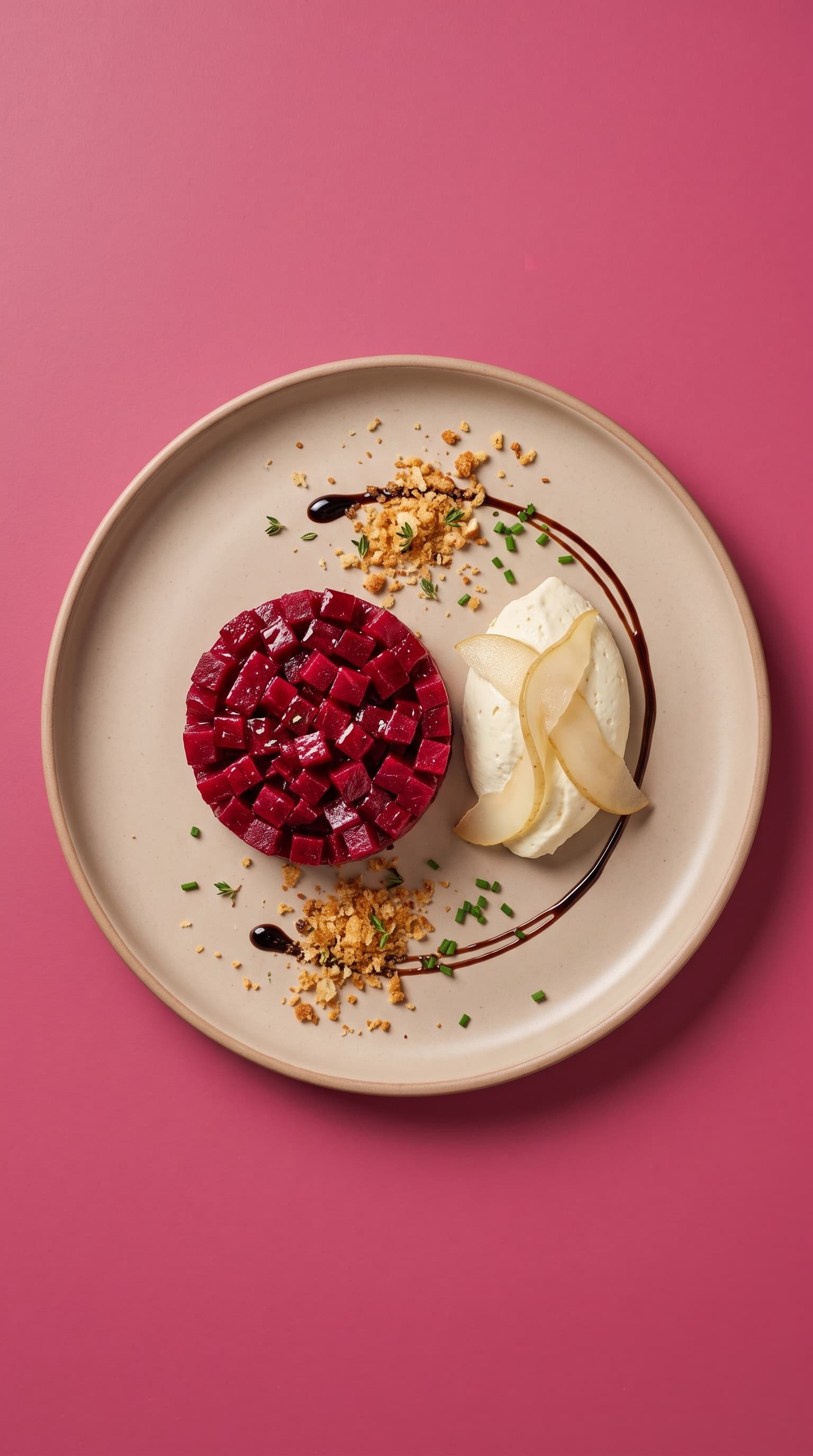
Beetroot Tartare Recipe with Whipped Goat Cheese
This beetroot tartare recipe turns sweet roasted beetroot into a bright, elegant appetizer for four. Cut the chilled beetroot into tiny cubes, dress it just before serving, and pair it with whipped goat cheese, pickled pear, and a buttery hazelnut crumb. Allow about 2 hours from roasting to plating.
120 min · Intermediate · Fusion
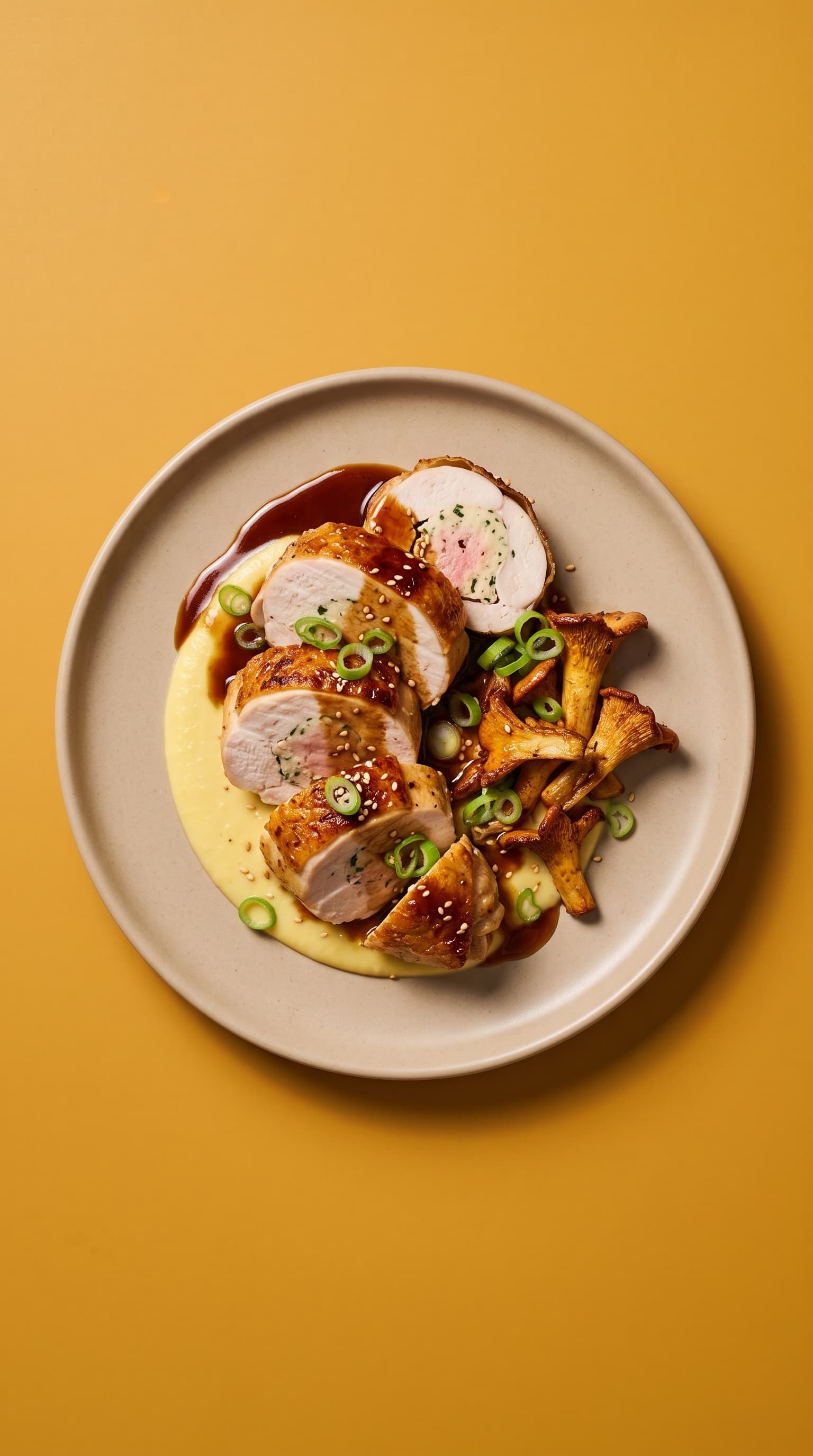
Chicken Ballotine Recipe with Gochujang and Tarragon
This chicken ballotine recipe wraps tender chicken around a cold tarragon mousseline with doenjang and gochujang. Gentle poaching keeps the roll juicy, while pan-crisping makes the skin golden. Serve it with sweetcorn velouté, girolles, and chicken jus. Plan about 2 hours for 4 servings, with several parts ready the day before.
150 min · Intermediate · Fusion