Duck Breast with Cherries and Black Pepper Jus
1 hr 40 min · Advanced · Serves 4
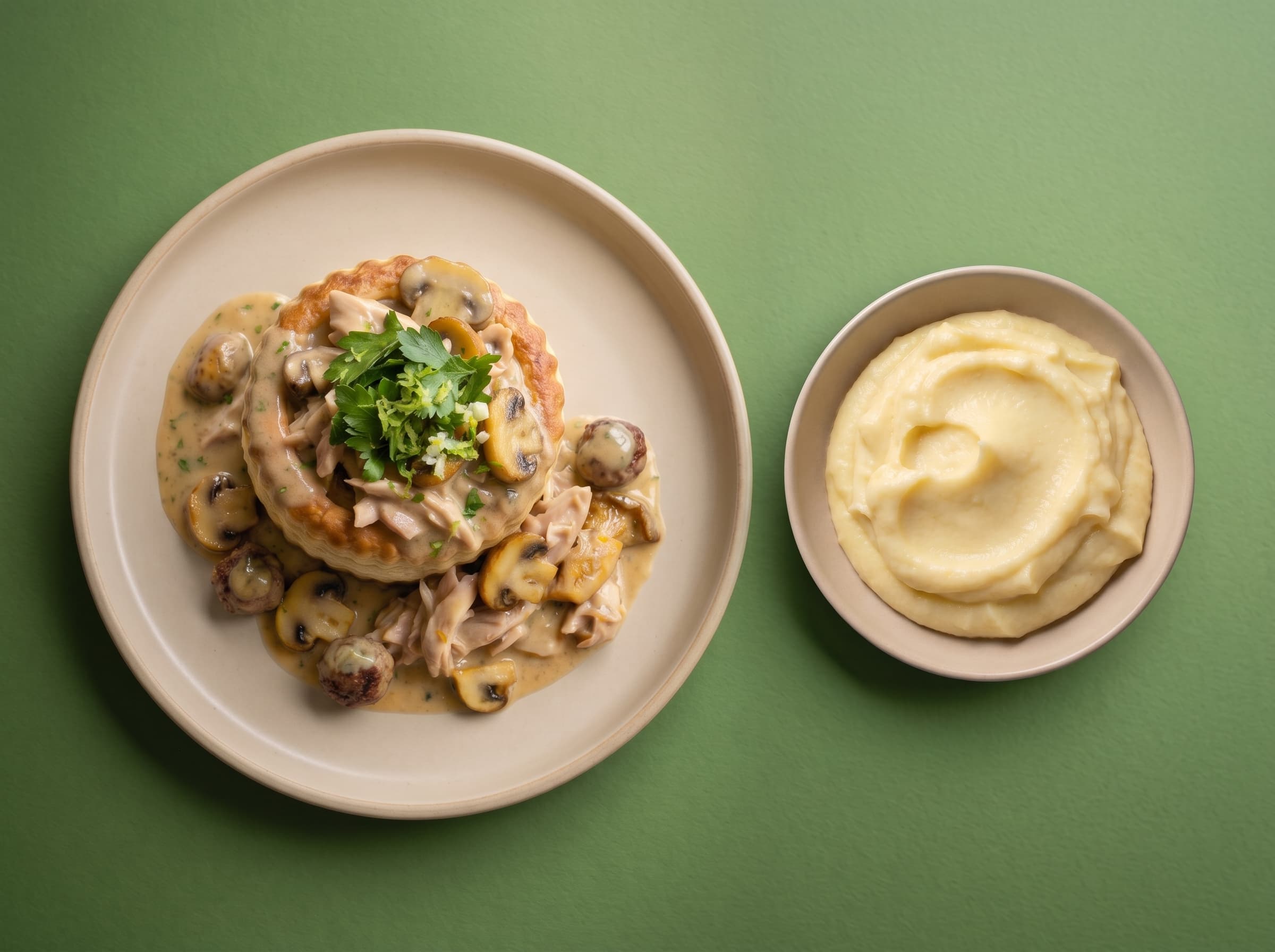 From our menuVol-au-Vent East meets West€19.95 · Made by us, delivered chilled.
This duck breast with cherries is a French-style main dish with crisp skin, a rosy center, and a glossy black pepper jus. Roasted cherries add sweet-tart flavor, while celeriac mousseline and glazed carrots complete the plate. Plan about 100 minutes for 4 servings, with most parts ready ahead.
Recipe by Christophe Rammant
Cordon Bleu Paris alumni - Two star Michelin kitchen experience
What Makes This Duck Breast with Cherries So Special?
Traditional French technique starts duck in a cold pan. The slow heat melts the fat before the skin browns, giving you crisp, amber skin instead of a chewy layer.
Food science shows that a short rest keeps meat juicy. Pulling the duck at 54-56°C / 129-133°F lets carryover heat raise it another 3-4°C / 5-7°F while the juices settle back into the meat.
Professional culinary team finish sauces with cold butter off the heat. This gentle whisking makes the jus glossy and smooth, while vinegar and roasted cherries balance the rich duck.
Estimated nutrition per serving
Estimated from ingredient weights, not lab-tested.
- Calories
- 302
- Protein
- 11g
- Fat
- 20g
- Carbohydrates
- 17g
The weekly recipe note
Enjoyed this recipe? Get the next one first.
One new recipe each week from Christophe: global flavor, French technique, and practical home-cook timing.
By signing up, you agree to receive emails from Mr. Saucy.
Ingredients
Recipe yields 4 servings
For the Duck and Jus
| Amount | Ingredient | Notes |
|---|---|---|
| 720 g | Duck breasts (magret-style, skin on) | 4 pieces, about 180 g each; score the skin and bring to room temperature before cooking |
| 400 g | Fresh cherries, pitted | Use 250 g for roasting and garnish, and crush 150 g for the sauce |
| 300 g | Red wine (Pinot Noir or Burgundy) | Full-bodied but not tannic |
| 400 g | Duck or veal stock | Homemade or good-quality store-bought, unsalted |
| 60 g | Shallots | About 2 medium, finely diced |
| 6 g | Black peppercorns | Cracked coarsely, not ground |
| 40 g | Cold unsalted butter | Cubed for finishing the jus |
| 15 g | Honey | For roasting the cherries |
| 15 g | Red wine vinegar | For brightness in the sauce |
| 4 g | Fresh thyme | A few sprigs |
| 1 g | Bay leaf | 1 leaf |
| 8 g | Salt | Divided across the duck, cherries, sauce, and vegetables |
For the Celeriac Mousseline
| Amount | Ingredient | Notes |
|---|---|---|
| 800 g | Celeriac (celery root) | Peeled and cut into even chunks |
| 500 g | Whole milk | For poaching the celeriac |
| 60 g | Unsalted butter | Cold and cubed |
| 100 g | Crème fraîche or light cream | Warmed slightly before blending |
| 2 g | White pepper | For the celeriac mousseline |
For the Glazed Carrots
| Amount | Ingredient | Notes |
|---|---|---|
| 500 g | Baby carrots | Trimmed, peeled if needed, with tops removed leaving 1 cm |
| 30 g | Unsalted butter | For glazing the carrots |
| 20 g | Sugar | Split between the cherries and carrot glaze |
| 8 g | Salt | Divided across components, to taste |
Instructions
Prepare the Duck and Jus
- 1
Score and Salt the Duck Skin
Score the duck skin in a tight crosshatch, cutting through the fat but not into the meat. Season generously with salt at least 30 minutes before cooking, then pat the skin completely dry. The cuts let fat melt evenly, while dry skin browns more cleanly.
- 2
Build the Pepper Base
While the duck rests, sweat the shallots in a splash of rendered duck fat until translucent. Add the cracked peppercorns, thyme, and bay leaf, and toast briefly until fragrant. This warms the pepper's aromatic oils before the wine goes in.
- 3
Reduce the Wine
Add the red wine and scrape up any browned bits. Reduce over medium heat until about two-thirds remains. The reduction cooks off harsh alcohol notes and leaves a dark, syrupy base for the jus.
- 4
Simmer and Strain the Jus
Add the stock and 150 g of crushed cherries. Simmer gently for 15-20 minutes until the sauce coats a spoon and a line stays clear when you drag a finger through it. Strain through a fine-mesh sieve for a smooth jus.
Make the Sides
- 5
Poach the Celeriac in Milk
Place the celeriac in the whole milk with a pinch of salt. Poach gently for about 20-25 minutes, until a knife slides in without resistance. Milk seasons the root as it cooks and keeps the purée from tasting watery.
- 6
Pass and Enrich the Mousseline
Drain the celeriac and reserve the milk. While the celeriac is hot, pass it through a food mill or fine sieve. Beat in the cold butter cube by cube, then add the warm crème fraîche and white pepper. Add a splash of reserved milk only if needed, because passing and gradual mixing create a silky texture.
- 7
Roast the Cherries
Toss the remaining 250 g of whole cherries with the honey and a pinch of salt. Roast at 400°F / 200°C for 8-10 minutes, until just blistered and glossy. The heat concentrates their sweetness while keeping a pleasant bite.
- 8
Glaze the Carrots
Simmer the baby carrots in a shallow pan with the butter, sugar, a splash of water, and a pinch of salt. Cook uncovered, shaking the pan now and then, until the liquid reduces to a shiny coating. Uncovered cooking lets the water evaporate and builds an even glaze.
Render and Cook the Duck
- 9
Start the Duck in a Cold Pan
Place the duck skin-side down in a completely cold, dry heavy-bottomed skillet. Turn the heat to medium-low. Starting cold gives the fat time to melt slowly, so the skin becomes crisp instead of rubbery.
- 10
Render Until Deep Amber
Render the duck for 10-12 minutes, pouring off excess fat once or twice into a bowl. Save the fat for another use. The skin should be deep amber and fully crisp, and removing extra fat keeps the duck from frying in a deep pool.
- 11
Sear and Finish in the Oven
Turn the duck and sear the flesh side for 2-3 minutes over slightly higher heat. Transfer it to a 356°F / 180°C oven for 4-6 minutes, depending on thickness. Gentle oven heat finishes the center without burning the crisp skin.
- 12
Check and Rest the Duck
Remove the duck at 129-133°F / 54-56°C inside for a true rosé center. It will rise another 5-7°F / 3-4°C as it rests. Loosely tent with foil and rest for 8-10 minutes so the muscle fibers relax and the juices settle back into the meat.
Finish and Serve
- 13
Emulsify the Jus
Warm the strained jus gently just before serving. Remove it from the heat, then whisk in the cold butter cubes and the red wine vinegar. Do not let the sauce boil after adding butter, because high heat can make the glossy emulsion split.
- 14
Slice and Plate the Duck
Slice each duck breast on a slight diagonal into 4-5 pieces. Fan the slices over a swipe of celeriac mousseline, then add the glazed carrots. Spoon the jus over and around the duck, and finish with the roasted cherries so each plate has crisp, rosy, sweet, and silky textures.
The weekly recipe note
Enjoyed this recipe? Get the next one first.
One new recipe each week from Christophe: global flavor, French technique, and practical home-cook timing.
By signing up, you agree to receive emails from Mr. Saucy.
Tips & Tricks
You need more time before guests arrive:
Make the jus, roasted cherries, glazed carrots, and celeriac mousseline 2-3 hours ahead. Hold the mousseline warm over a pan of simmering water with the lid slightly ajar, then stir in a splash of hot reserved milk before serving.
Your jus tastes thin:
Reduce it longer before adding the finishing butter. A thicker reduction gives a spoon-coating sauce, while cornstarch can dull the glossy finish and soften the flavor.
You do not have an instant-read thermometer:
Press the thickest part of the duck with a finger. For rosé duck, it should feel like the fleshy base of your relaxed thumb: springy but yielding, not firm.
Fresh cherries are not available:
Use frozen cherries for the sauce without thawing them, and simmer a few extra minutes. For the roasted garnish, use well-drained jarred morello cherries in light syrup and reduce the added honey.
You want to skip the resting time:
Do not skip it. A rested duck that is slightly cooler stays juicy, while a hot duck cut too soon loses its juices on the board. The warm jus will gently heat the slices on the plate.
You need more time before guests arrive:
Make the jus, roasted cherries, glazed carrots, and celeriac mousseline 2-3 hours ahead. Hold the mousseline warm over a pan of simmering water with the lid slightly ajar, then stir in a splash of hot reserved milk before serving.
Your jus tastes thin:
Reduce it longer before adding the finishing butter. A thicker reduction gives a spoon-coating sauce, while cornstarch can dull the glossy finish and soften the flavor.
You do not have an instant-read thermometer:
Press the thickest part of the duck with a finger. For rosé duck, it should feel like the fleshy base of your relaxed thumb: springy but yielding, not firm.
Fresh cherries are not available:
Use frozen cherries for the sauce without thawing them, and simmer a few extra minutes. For the roasted garnish, use well-drained jarred morello cherries in light syrup and reduce the added honey.
You want to skip the resting time:
Do not skip it. A rested duck that is slightly cooler stays juicy, while a hot duck cut too soon loses its juices on the board. The warm jus will gently heat the slices on the plate.
Frequently Asked Questions
Can I sear the duck ahead and reheat it for the party?
It is best seared fresh because duck breast reheats poorly and can lose its rosy center. You can render and sear it 30-40 minutes ahead, then rest it fully. Warm it in a 320°F / 160°C oven for 2-3 minutes before slicing, just to remove the chill.
Why is my duck breast with cherries skin chewy instead of crisp?
The pan may have been hot when the duck went in, or the skin may have been wet. A hot pan seizes the fat before it can melt. Pat the skin dry, salt it ahead, and begin in a cold, dry skillet so the fat renders slowly.
Can I substitute the celeriac mousseline?
Yes. Parsnip purée made with the same milk-poaching, milling, and butter method is a lovely substitute. It has a sweeter, caramel-like taste that works with the cherries and pepper jus. Potato mousseline also works, though it makes the dish feel a little heavier.
What if my sauce splits when I add the finishing butter?
The jus was likely too hot or boiling. Remove the pan from the heat before whisking in the cold butter cubes, and add them slowly. If it splits, whisk in a splash of cold water off the heat. The cooler liquid can sometimes bring the sauce back together.
Can I use frozen baby carrots instead of fresh?
Yes, but fresh carrots give a better bite and cleaner glaze. Do not thaw frozen carrots first. Add them straight to the pan with the butter and sugar, and use a little less simmering water because frozen carrots release extra liquid as they cook.
How far in advance can I make the whole dish?
The jus and roasted cherries can be made one day ahead and gently reheated. Make the celeriac mousseline the same day and hold it warm for a couple of hours. Sear the duck and finish the sauce right before serving for the best texture.
Can I sear the duck ahead and reheat it for the party?
It is best seared fresh because duck breast reheats poorly and can lose its rosy center. You can render and sear it 30-40 minutes ahead, then rest it fully. Warm it in a 320°F / 160°C oven for 2-3 minutes before slicing, just to remove the chill.
Why is my duck breast with cherries skin chewy instead of crisp?
The pan may have been hot when the duck went in, or the skin may have been wet. A hot pan seizes the fat before it can melt. Pat the skin dry, salt it ahead, and begin in a cold, dry skillet so the fat renders slowly.
Can I substitute the celeriac mousseline?
Yes. Parsnip purée made with the same milk-poaching, milling, and butter method is a lovely substitute. It has a sweeter, caramel-like taste that works with the cherries and pepper jus. Potato mousseline also works, though it makes the dish feel a little heavier.
What if my sauce splits when I add the finishing butter?
The jus was likely too hot or boiling. Remove the pan from the heat before whisking in the cold butter cubes, and add them slowly. If it splits, whisk in a splash of cold water off the heat. The cooler liquid can sometimes bring the sauce back together.
Can I use frozen baby carrots instead of fresh?
Yes, but fresh carrots give a better bite and cleaner glaze. Do not thaw frozen carrots first. Add them straight to the pan with the butter and sugar, and use a little less simmering water because frozen carrots release extra liquid as they cook.
How far in advance can I make the whole dish?
The jus and roasted cherries can be made one day ahead and gently reheated. Make the celeriac mousseline the same day and hold it warm for a couple of hours. Sear the duck and finish the sauce right before serving for the best texture.
Recipe Reviews
No reviews yet — Be the first to review this recipe!
The collection
All recipesPheasant with Grapes, Verjus Jus and Celery Root
This pheasant with grapes recipe pairs juicy roast pheasant with glossy Muscat grapes, sweet caramelised shallots, and bright verjus jus. Gentle pan-roasting keeps the skin crisp, while celery root purée adds silky depth. Plan on about 2 hours for 4 servings, with several parts ready ahead for an easy dinner party.
120 min · Intermediate · France
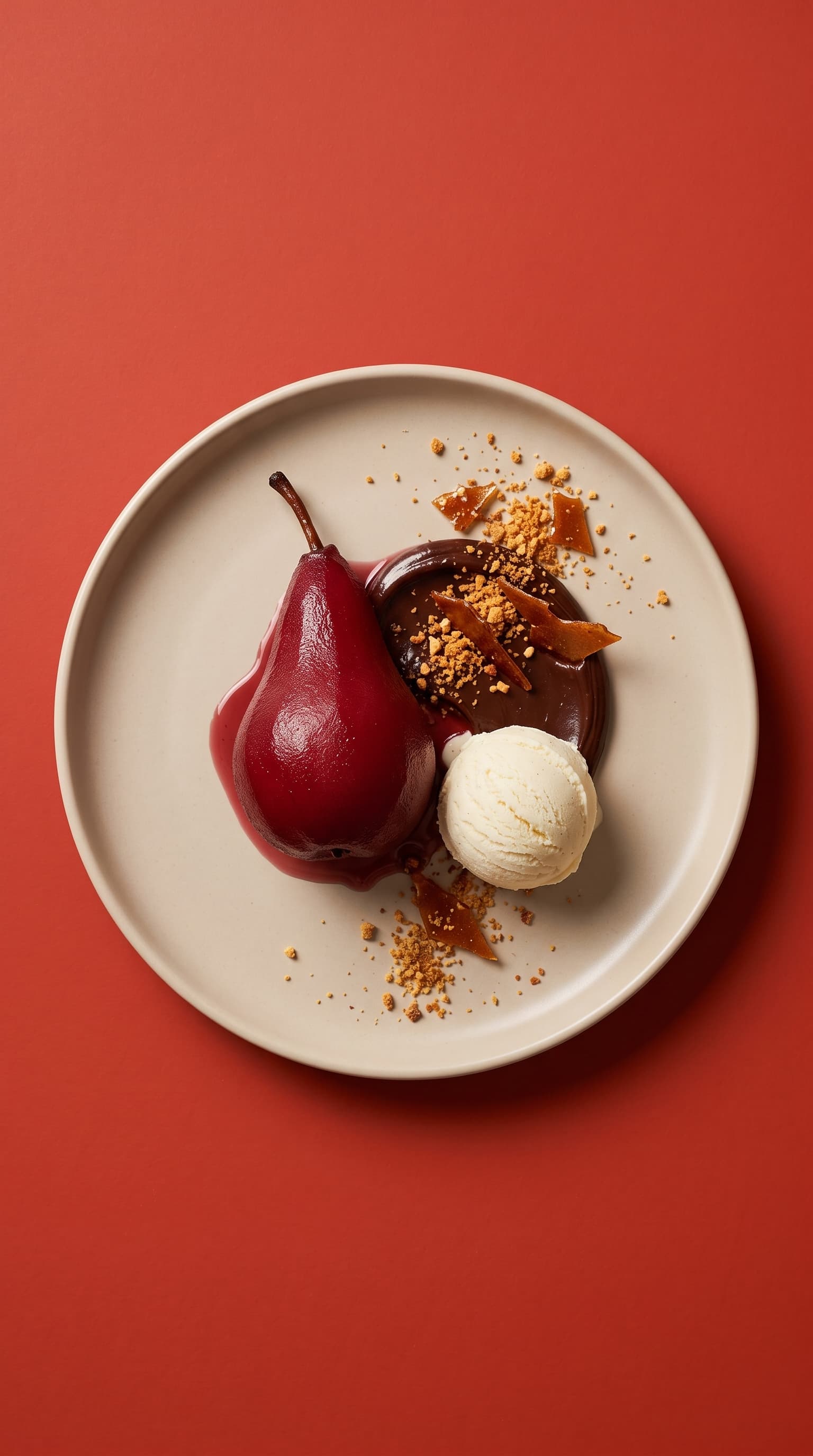
Poires Belle Hélène Recipe with Wine Poached Pears
This poires belle hélène recipe pairs tender red wine poached Conference pears with warm dark chocolate sauce, cold vanilla ice cream, and crisp hazelnut praline. Gentle poaching keeps the pears whole and silky. Plan about 2 hours for cooking and cooling, and serve 4 people right away for the best warm and cold contrast.
150 min · Intermediate · France
Roast Partridge Recipe with Celeriac Mousseline
This roast partridge recipe pairs rosy roasted breast with a crisp confited leg, silky celeriac mousseline, glazed baby carrots, and a glossy juniper-port jus. Dry-brining helps the lean meat stay seasoned and juicy. Allow about 3 hours for cooking and resting, plus overnight dry-brining if you have time. Serves 4.
210 min · Intermediate · France