Chilled Yellow Tomato Gazpacho Recipe with Shrimp and Basil Oil
5 hrs · Medium · Serves 4-6
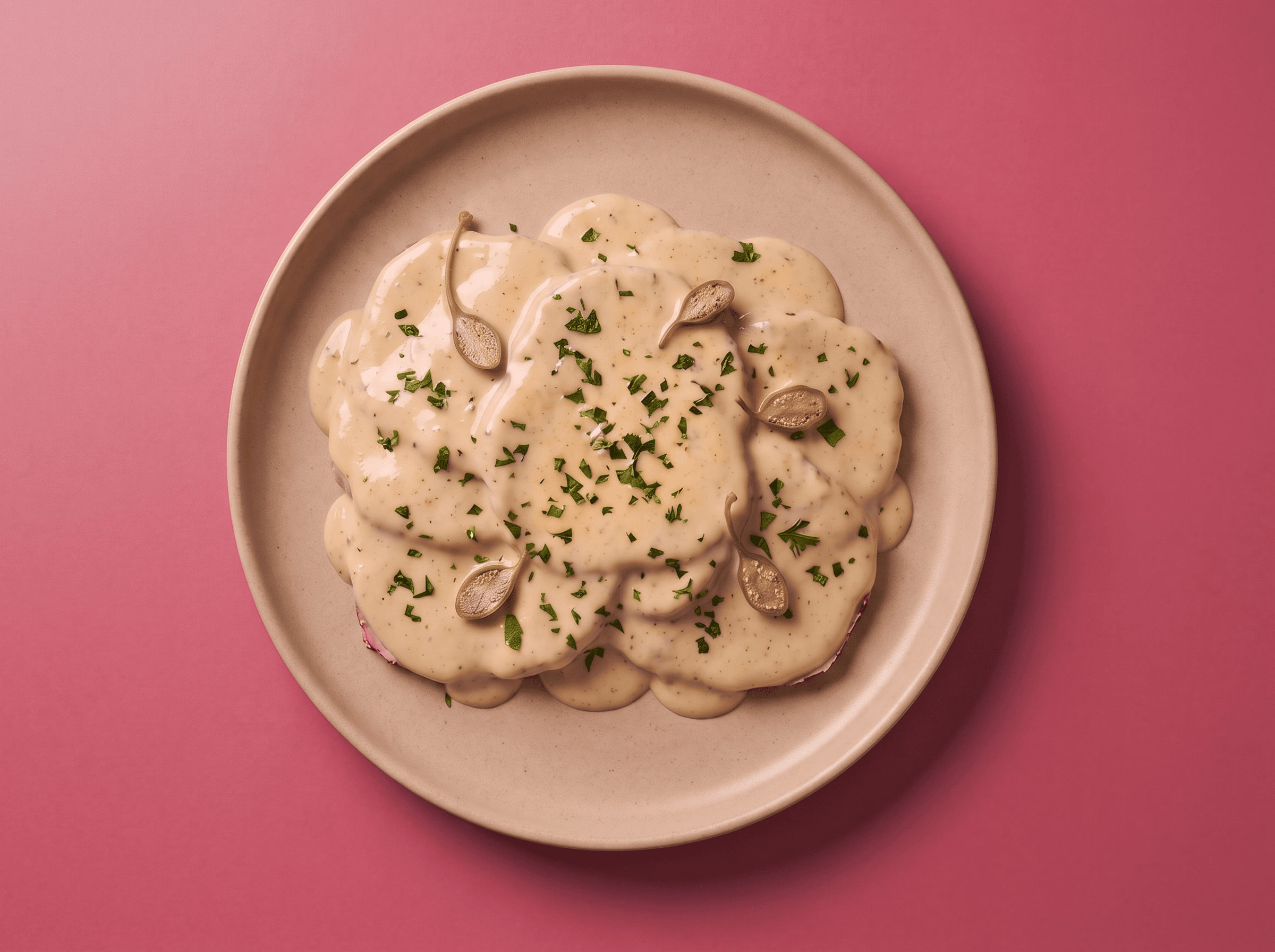 From our menuVitello Tonnato€17.50 · Made by us, delivered chilled.
This yellow tomato gazpacho recipe turns ripe summer tomatoes and roasted peppers into a silky chilled soup, using a classic bread-and-oil trick for body and a partial strain for restaurant-smooth texture. Top it with sweet North Sea shrimp, bright basil oil, and crunchy sourdough crumbs. It takes about 50 minutes of hands-on work, plus chilling time, and serves 4-6.
Recipe by Christophe Rammant
Cordon Bleu Paris alumni - Two star Michelin kitchen experience
What Makes This Gazpacho Taste So Silky and Refined?
Traditional Andalusian technique shows that soaked bread blended right into the vegetables creates a natural emulsion with the olive oil. That's what gives this soup its creamy, satisfying body without a drop of cream.
Professional culinary team know that straining only two-thirds of the soup through a fine chinois removes tough fibers and seeds while keeping a little garden-fresh texture. This is why the soup tastes elegant but never flat or one-note.
Food science shows that charring the peppers' skins triggers deep browning, the caramelization that creates smoky, sweet flavor raw peppers simply can't deliver on their own.
Estimated nutrition per serving
Estimated from ingredient weights, not lab-tested.
- Calories
- 525
- Protein
- 19g
- Fat
- 36g
- Carbohydrates
- 36g
The weekly recipe note
Enjoyed this recipe? Get the next one first.
One new recipe each week from Christophe: global flavor, French technique, and practical home-cook timing.
By signing up, you agree to receive emails from Mr. Saucy.
Ingredients
Recipe yields 4-6 servings
For the Gazpacho Soup
| Amount | Ingredient | Notes |
|---|---|---|
| 800 g | Ripe yellow tomatoes | halved, at room temperature for best flavor |
| 300 g | Yellow bell peppers | about 2 medium, whole, for roasting |
| 200 g | Cucumber | peeled and seeded |
| 30 g | Shallot | peeled |
| 5 g | Garlic clove | peeled, green germ removed if present |
| 50 g | Stale country bread, crustless | cubed, for classical gazpacho body |
| 30 g (about 2 Tbsp) | Sherry vinegar | Pedro Ximenez or Reserva quality preferred |
| 60 g (about 1/4 cup) | Extra virgin olive oil (for soup) | fruity, mild variety |
| 6 g (about 1 tsp) | Fine sea salt | to taste, adjust after chilling |
| 100 g (about 100 ml / 7 Tbsp) | Ice water | adjust for pouring consistency |
For the Basil Oil
| Amount | Ingredient | Notes |
|---|---|---|
| 30 g (about 1 cup, loosely packed) | Fresh basil leaves | for basil oil, plus a few extra leaves for garnish |
| 60 g (about 1/4 cup) | Extra virgin olive oil (for basil oil) | neutral-fruity, cold-pressed |
For the Sourdough Crumbs
| Amount | Ingredient | Notes |
|---|---|---|
| 100 g | Sourdough bread | cut into 1 cm cubes, for garnish crumbs |
| 15 g | Olive oil (for toasting crumbs) | — |
For the Shrimp Garnish
| Amount | Ingredient | Notes |
|---|---|---|
| 200 g | North Sea grey shrimp, cooked and peeled | Crangon crangon, small and sweet |
| 1 small | Lemon | zest and a small squeeze of juice, for the shrimp |
| 5 g (about 1 Tbsp, sliced) | Fresh chives | finely sliced |
| 2 g (about 1/2 tsp) | Black pepper | freshly ground, to taste |
Instructions
Roast the Peppers and Prep the Base
- 1
Char the Peppers (The Flavor Trick)
Roast the whole yellow peppers under a hot broiler or in a 220°C / 428°F oven for 20-25 minutes, turning occasionally, until the skins blister and blacken in spots. This short charring step triggers caramelization, the deep browning that gives you smoky sweetness raw peppers simply can't match.
- 2
Steam and Peel the Skins Off
Transfer the roasted peppers to a bowl and cover tightly with cling film for 10 minutes. The trapped steam loosens the skins so they slide off easily. Once cool enough to handle, peel, deseed, and roughly chop the flesh.
- 3
Soften the Bread for Body
Soak the cubed stale bread in a splash of water for a few minutes until soft. This classical gazpacho trick gives the soup a silky, emulsified body without needing any cream.
Blend and Strain for a Silky Finish
- 4
Blend Everything Smooth
Combine the tomatoes, roasted peppers, cucumber, shallot, garlic, soaked bread, sherry vinegar, olive oil, and salt in a high-speed blender. Blend for a full 1-2 minutes so the bread and oil fully emulsify into the vegetable liquid, until completely smooth.
- 5
Loosen with Ice Water
Add the ice water gradually while blending until you reach a pourable, cream-like consistency. Starting the soup cold at this stage also speeds up chilling later.
- 6
Strain Two-Thirds (The Silky Secret)
Pass about two-thirds of the blended soup through a fine-mesh sieve or chinois, pressing firmly on the solids with a ladle to extract every drop of flavorful liquid. Discard the leftover pulp. This is the step that gives the soup its restaurant-style, refined texture.
- 7
Fold the Textures Back Together
Fold the strained portion back together with the reserved unstrained third. This balances elegant silkiness with just enough garden-fresh texture to keep the soup interesting.
- 8
Season and Chill Thoroughly
Taste and adjust salt and vinegar, then cover and chill in the fridge at about 39°F / 4°C for at least 4 hours, ideally overnight. Cold mutes seasoning, so plan to taste again once fully chilled.
Make the Basil Oil and Sourdough Crumbs
- 9
Blanch and Shock the Basil
Blanch the basil leaves in boiling water for 10 seconds, then shock them immediately in ice water. This quick hot-then-cold move sets the chlorophyll and locks in a vivid green color that won't turn brown.
- 10
Blend the Basil Oil Bright and Clear
Pat the basil dry, then blend with the olive oil and a pinch of salt until smooth. Strain through a fine sieve for a clear, bright oil with no leftover flecks.
- 11
Toast the Sourdough Crumbs Golden
Toss the bread cubes with olive oil and a little salt, then toast in a dry skillet or a 180°C / 356°F oven for 8-10 minutes, tossing occasionally, until deeply golden and crisp all the way through. This crunch is the textural counterpoint to the silky soup.
Dress the Shrimp and Serve
- 12
Dress the Shrimp Just Before Serving
Toss the North Sea grey shrimp with lemon zest, a small squeeze of lemon juice, chives, and a pinch of salt and pepper. Dressing them at the last moment keeps their delicate sweetness bright and stops the acid from turning the flesh mushy.
- 13
Chill Bowls and Assemble
Chill your serving bowls or glasses in the freezer for 10 minutes beforehand, then pour in the gazpacho. Top each portion with the dressed shrimp, a drizzle of basil oil, a scatter of sourdough crumbs, and a few small basil leaves. Serve immediately while the soup is ice-cold and the crumbs are still crisp.
The weekly recipe note
Enjoyed this recipe? Get the next one first.
One new recipe each week from Christophe: global flavor, French technique, and practical home-cook timing.
By signing up, you agree to receive emails from Mr. Saucy.
Tips & Tricks
Your tomatoes taste bland instead of sweet and sunny:
Use fully ripe, unrefrigerated yellow tomatoes if you can. Cold storage dulls the sugars and aromatic compounds that give this gazpacho its bright flavor, so buy them a few days ahead and let them ripen on the counter.
You're tempted to skip the long chilling time:
Don't skip the minimum 4-hour chill. Gazpacho genuinely tastes better once the raw vegetable flavors have had time to mellow and marry, and this rest is exactly why it's such a great make-ahead starter.
The soup tastes flat right before you serve it:
Taste for salt and acidity again right before plating. Refrigeration blunts your perception of both, so a soup that seemed perfectly seasoned before chilling can taste dull once served ice-cold.
Your sourdough crumbs go soft or the shrimp turns mushy:
Keep the crumbs and shrimp separate from the soup until the very last moment. Assembling everything just before serving keeps the crumbs crisp and the shrimp fresh instead of softening in the liquid.
The soup feels too thin after straining through the chinois:
Whisk in a touch more soaked bread or a small drizzle of olive oil rather than adding more water. This restores body while keeping the flavor concentrated.
Frequently Asked Questions
Can I really make this gazpacho recipe entirely ahead of time?
Yes, and it actually improves with a rest. Make the strained soup and basil oil up to 24 hours ahead and keep both refrigerated. Toast the sourdough crumbs a few hours ahead and store airtight at room temperature. Dress the shrimp only right before plating.
What if I can't find yellow tomatoes?
Yellow tomatoes give this gazpacho its signature sunny color and a slightly gentler acidity than red ones. If unavailable, use ripe red tomatoes. The flavor will still be excellent, just with a warmer color and a touch more tang, which you can soften with a bit more sherry vinegar balance.
Why strain only part of the soup instead of all of it?
Straining everything gives a beautifully silky but slightly one-note soup. Folding a third of the unstrained puree back in restores some body and garden texture, so the final result reads as refined without losing the rustic character that makes gazpacho feel alive.
Can I skip roasting the peppers and use them raw?
You can, but you'll lose the smoky sweetness that roasting develops through caramelization of the peppers' natural sugars. Raw peppers make the soup taste sharper and greener. If you're short on time, at least char them briefly over a gas flame for a few minutes.
What can I substitute for North Sea grey shrimp?
Small cooked brown shrimp or peeled cooked prawns work well if grey shrimp aren't available, though you'll lose some of the distinctive briny sweetness that makes the North Sea variety special. Keep the pieces small so they scatter nicely over the soup rather than sinking.
How do I keep the sourdough crumbs crisp until I serve?
Toast them until properly golden all the way through, then cool completely on a rack before storing in an airtight container at room temperature, never in the fridge, where moisture will soften them. Add them to the soup only at the final moment of plating.
Recipe Reviews
No reviews yet — Be the first to review this recipe!
The collection
All recipesOlive Oil Chocolate Mousse Recipe with Candied Orange
This olive oil chocolate mousse recipe makes a rich but airy dessert with dark chocolate, fruity olive oil, bright candied orange, and crisp almond tuiles. A warm sugar syrup gives the yolks body, while softly whipped cream keeps the mousse light. Plan about 5 hours, including chilling, for 4 generous servings.
300 min · Intermediate · Fusion
Celeriac Ravioli with Brown Butter and Pear
This celeriac ravioli recipe makes 24 delicate pasta pillows filled with roasted celeriac, aged Comté, mascarpone and truffle. Roast the celeriac for deep flavor, then finish the ravioli in a glossy brown-butter sauce with pear, hazelnuts and sage. Plan on 145 minutes for 4 servings, including resting and chilling.
145 min · Intermediate · Fusion
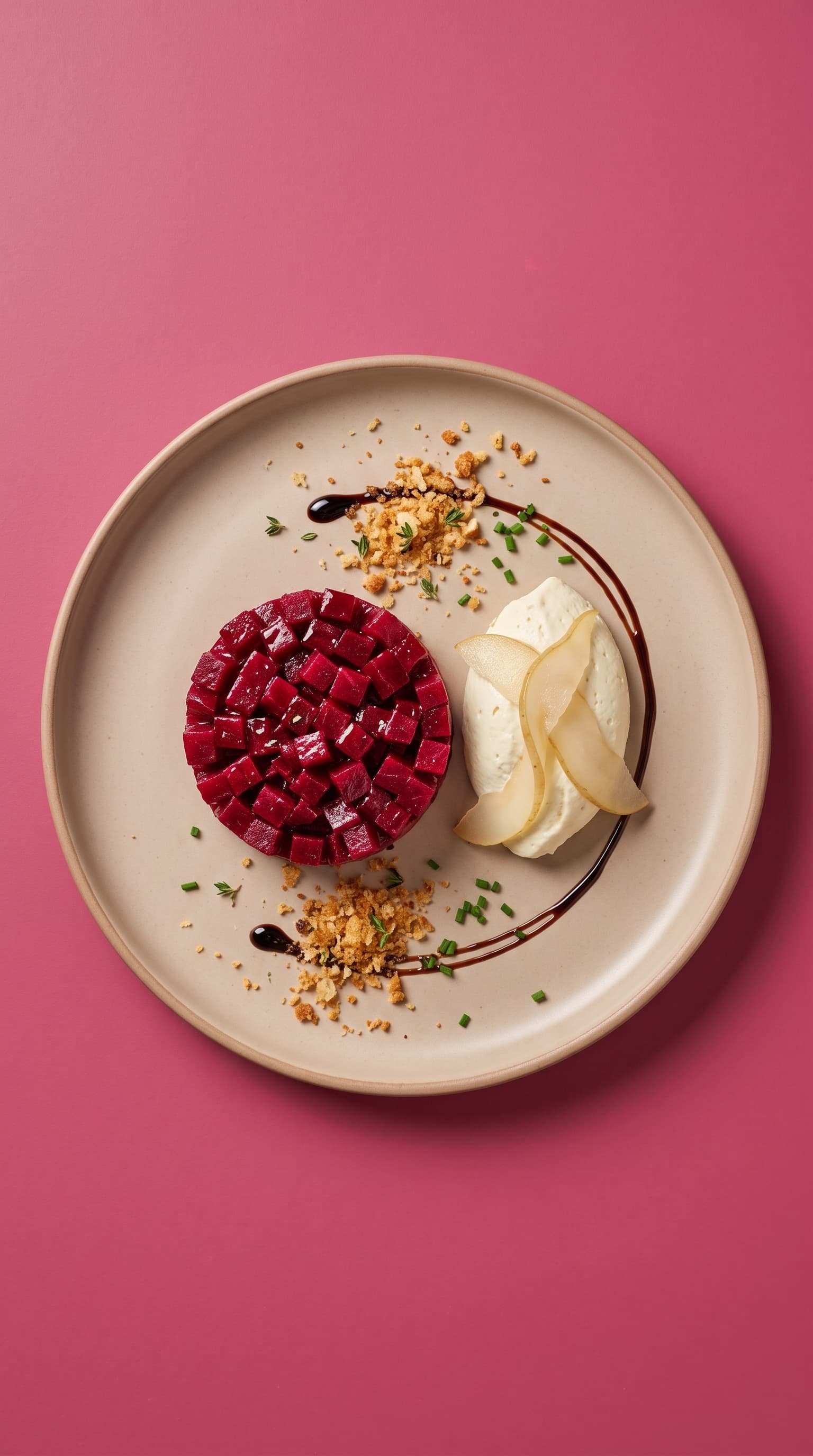
Beetroot Tartare Recipe with Whipped Goat Cheese
This beetroot tartare recipe turns sweet roasted beetroot into a bright, elegant appetizer for four. Cut the chilled beetroot into tiny cubes, dress it just before serving, and pair it with whipped goat cheese, pickled pear, and a buttery hazelnut crumb. Allow about 2 hours from roasting to plating.
120 min · Intermediate · Fusion