How to Plan a Catering Menu for Vegetarians and Meat Eaters
A successful catering menu for vegetarians and meat eaters uses one flavour direction and two main choices, rather than preparing two unrelated meals. Start with food everyone can enjoy, then add a substantial vegetarian main and a meat or fish main that share ingredients, sauces or cooking style. This creates visual harmony at the table and keeps the host from managing an entirely separate menu.
A practical structure is a flexible aperitif, one shared starter, two complementary mains, inclusive side dishes and one dessert. Choose components that can be prepared ahead, held safely and reheated without losing their texture. The ideal menu lets you warm the mains, toss a salad, finish a sauce and plate in a short window, rather than cooking individual portions while guests are waiting. Hosting a dinner at home is far easier when the final service is assembly, not a second cooking shift.
Chef-prepared chilled dishes can make this approach feel especially polished. Mr. Saucy’s Le Cordon Bleu Paris-trained chef prepares restaurant-style food in Bruges, while guests heat, plate and serve it at home. Separately packaged sauces allow a host to keep a shared base neutral, then finish vegetarian, meat or fish portions with the right accompaniment.
- Build around one culinary theme, such as Mediterranean, French, Asian-inspired or seasonal.
- Make the vegetarian main complete in its own right, not an enlarged side dish.
- Use labels and separate serving utensils from the moment food leaves the refrigerator.
Collect Dietary Preferences Before Choosing the Menu
A reliable mixed catering menu starts with a detailed RSVP, because “vegetarian” does not describe every guest’s boundaries. Ask each person to identify whether they are vegetarian, vegan, pescatarian, gluten-free, dairy-free or avoiding a particular ingredient. Religious requirements, pregnancy-related restrictions and personal dislikes should be recorded separately from medical allergies.
Confirm the ingredients that can quietly change a dish’s status. Some vegetarians eat eggs and dairy, while others do not; fish stock, anchovies, gelatin, lard, meat-based gravy and sauces made with animal stock can also be overlooked. A pescatarian may eat fish but avoid shellfish, and a vegan guest will need more than a meat-free plate. Ask direct questions rather than relying on assumptions.
Record allergies separately and ask how severe they are, particularly for gluten, nuts, shellfish, sesame and dairy. Set an RSVP deadline early enough to adjust quantities and communicate the proposed menu. Sharing the ingredient list before the event gives guests a chance to flag unsuitable substitutions and helps the caterer or chef identify cross-contact risks.
- Ask for dietary information by a stated date, not casually on the day.
- Separate allergies, ethical preferences and dislikes in your notes.
- Keep the final menu and allergen information accessible during service.
Choose a Flexible Aperitif Everyone Can Enjoy
A mostly vegetarian aperitif gives every guest something to eat immediately, before the main menu is served. Choose food that can be picked up easily, such as vegetable fritters, marinated olives, cheese bites, crudités, hummus and plant-based spreads. A good aperitif should feel generous without making the later starter redundant.
Meat and seafood can appear as optional additions on separate platters. Cured meats, smoked fish or chicken skewers are easy to identify and prevent guests from having to ask which bites are suitable. Keep dips, sauces and garnishes in their own bowls, label ingredients clearly and include gluten-free crackers or vegetables if that requirement has been confirmed.
Prioritise items that are good at room temperature or need only a brief, predictable warm-up. This is more practical than a selection of individually assembled canapés that all require different timing. For example, a vegetarian tart or mushroom preparation can be warmed while chilled spreads and crisp vegetables remain ready to serve. Use separate tongs for each platter, even when the food looks similar.

Serve One Shared Vegetable-Forward Starter
One substantial vegetable-forward starter can satisfy vegetarians and meat eaters alike when it has enough texture, richness and protein. Consider roasted seasonal vegetables, burrata with tomatoes, a grain salad, soup, a vegetable tart or a warm legume dish. The key is to make it feel like the planned first course for everyone, not the vegetarian replacement for a meat starter.
Legumes, grains, cheese, eggs and nuts can provide body and contrast, subject to the confirmed dietary requirements. Roasted vegetables benefit from a creamy element and something sharp; a grain salad needs herbs, acidity and a textural topping; soup can be made more substantial with pulses or a carefully chosen garnish. If nuts or dairy are involved, keep an alternative portion clearly separate rather than asking guests to work around them.
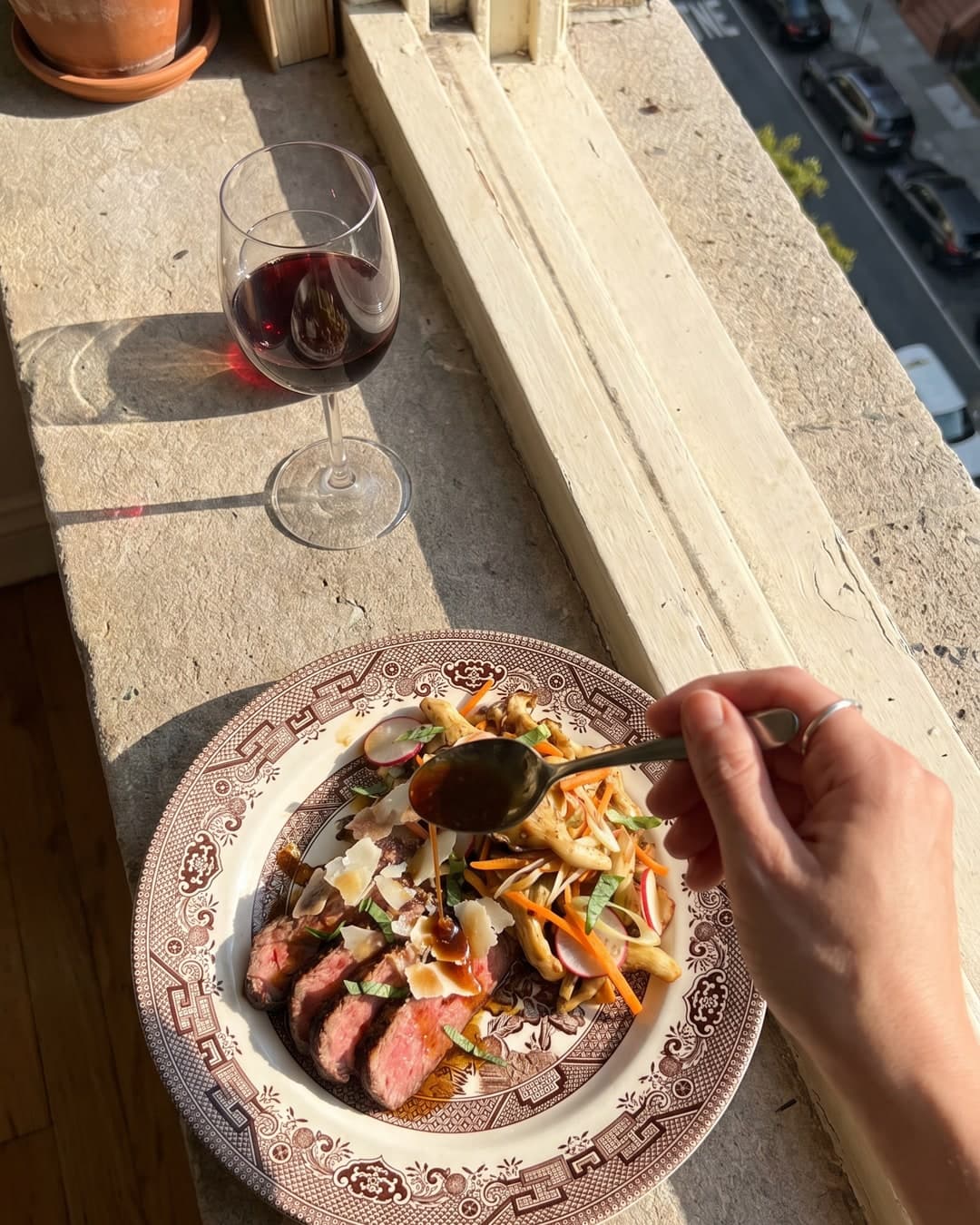
Any meat or fish should be an optional topping or side served separately from the base dish. A separate dressing or sauce also makes plating more consistent and gives better allergen control. Mr. Saucy’s Oyster Mushrooms with Korean Sauce Vierge are a useful example of a meaty-textured vegetarian course that can be served chilled or gently warmed, with its bright dressing adding contrast without requiring last-minute cooking.
Pair Vegetarian and Meat or Fish Mains Without Cooking Two Full Meals
The simplest way to serve two mains is to give them a shared flavour profile while keeping the proteins and sauces distinct. Vegetable lasagne can sit alongside slow-cooked beef ragù, roasted cauliflower can echo the herbs used with chicken, and mushroom risotto can complement seared fish. Guests experience one composed menu, while the kitchen handles two clearly defined finishing jobs.
The vegetarian main must stand alone as a proper main course. Lentils, beans, tofu, mushrooms, cheese, eggs or grains can provide substance, and the dish should have its own sauce or concentrated flavour rather than depending on meat juices. A vegetarian plate made only from the shared sides will usually feel smaller and less considered, even when the sides are excellent.
Separate sauces are particularly useful. A neutral grain, potato or vegetable base can be plated for everyone, then finished with a vegetarian sauce, meat jus or fish accompaniment. This also reduces the risk of a meat-based stock accidentally entering the vegetarian dish. Plan the order of work so vegetarian portions are plated first in a clean area, followed by meat and fish portions.
This is where chef-cooked chilled dishes can remove much of the pressure. A host can heat confirmed quantities, warm sauces gently and assemble plates instead of preparing two full recipes from raw ingredients. For a larger shared main, Herb Crusted Lamb Gigot with Mint offers a substantial meat centrepiece, while a separate mushroom, grain or vegetable main can carry the same herbal and seasonal character. The contrast looks intentional when both are served with matching garnishes and sides.
Pick Side Dishes That Everyone at the Table Can Eat
Most side dishes for a mixed menu should be vegetarian by default, because inclusive sides reduce the number of separate items on the table. Roasted potatoes, seasonal vegetables, rice, leafy salads, bread and legumes can accompany both a vegetarian main and a meat or fish main. Check every prepared component, however, because a seemingly simple side may contain chicken stock, lard, anchovy, gelatin, dairy or an animal-derived flavouring.
Aim for contrasting textures and temperatures: one warm starch, one roasted or sautéed vegetable and one fresh salad or slaw. This gives the meal balance and lets guests build a satisfying plate regardless of their main. A fresh tomato salad is especially effective beside rich food. Mr. Saucy’s Cherry Tomato Salad with Wild Garlic Dressing brings colour, acidity and several tomato varieties to the table without adding another cooking task.
Serve dressings, butter, cheese and spicy condiments separately whenever possible. Guests can customise their plates, and you avoid turning a shared side into an unsuitable dish for one person. Use clean serving spoons for each bowl and label sauces that contain dairy, nuts, sesame or fish.
Finish With a Universal Dessert and an Elegant Service Plan
A universal dessert for a mixed table is usually vegetarian by default, simple to portion and attractive without individual customisation. Fruit pavlova, chocolate mousse, cheesecake, crumble and seasonal tart all work well when the ingredients have been checked. Choose one dessert that feels like a proper finale rather than presenting the vegetarian option as an alternative course.
If a dairy-free or vegan version is required, use the same fruit, garnish or sauce wherever possible. A shared citrus compote, berries, toasted seeds or chocolate element can make two versions feel connected. Confirm nut, gluten and egg requirements before choosing pastry or meringue, and keep the alternative covered and labelled until service.
An elegant service plan makes different mains look like one menu. Use coordinated plates, the same vegetable garnish and matching sauce bowls, while identifying vegetarian portions discreetly for the serving team. Plate vegetarian food in a clean area before handling meat or fish, then carry both courses to the table together. A well-chosen dessert for sharing can complete the experience without adding a final round of cooking.

Calculate Portions for Groups of Six to Ten and Prevent Cross-Contamination
For six to ten guests, calculate the menu from confirmed dietary numbers, then add approximately 10 percent extra for appetite, serving variation and last-minute changes. Plan one aperitif portion per guest plus extras, one starter portion per person, and one main portion for every confirmed vegetarian, vegan, pescatarian or meat-eating guest. For shared food, increase the quantity according to the number of people who will actually eat it, not simply the total guest count.
For example, if eight guests include three vegetarians and five meat eaters, plan eight starters, three vegetarian mains and five meat or fish mains, then add a modest buffer. If one guest is vegan or has an allergy, calculate that dish separately and avoid assuming they can eat the vegetarian portions. Confirm whether “portion” means one plated serving or a shared quantity, particularly when ordering family-style dishes.
Cross-contamination control requires a process, not just good intentions. Store vegetarian food covered and away from raw meat or fish. Heat components separately, use different trays, tongs and serving spoons, and plate vegetarian portions first in a cleaned preparation area. Never return a utensil used for a meat sauce to a shared vegetable dish. Check garnishes and sauces before serving, since anchovy, fish sauce, butter, sesame and stock can be hidden there.
Individually portioned chef-prepared dishes are useful when reliable quantities and low-stress reheating matter. Mr. Saucy delivers chilled dishes across Belgium and Luxembourg, with delivery on Wednesday, Friday and Saturday, and local delivery in Bruges and Knokke. Order by 14:00 two days before delivery, then organise the refrigerator, labels and reheating plan before guests arrive. See the portion guide for a broader way to estimate food for different event formats.
- Use separate labels such as vegetarian, vegan, pescatarian and allergen-free.
- Keep a written count of every main and add about 10 percent where practical.
- Prepare and plate vegetarian food before meat or fish enters the workspace.