Matcha Panna Cotta with Yuzu Citrus
4 hrs 30 min · Medium · Serves 4
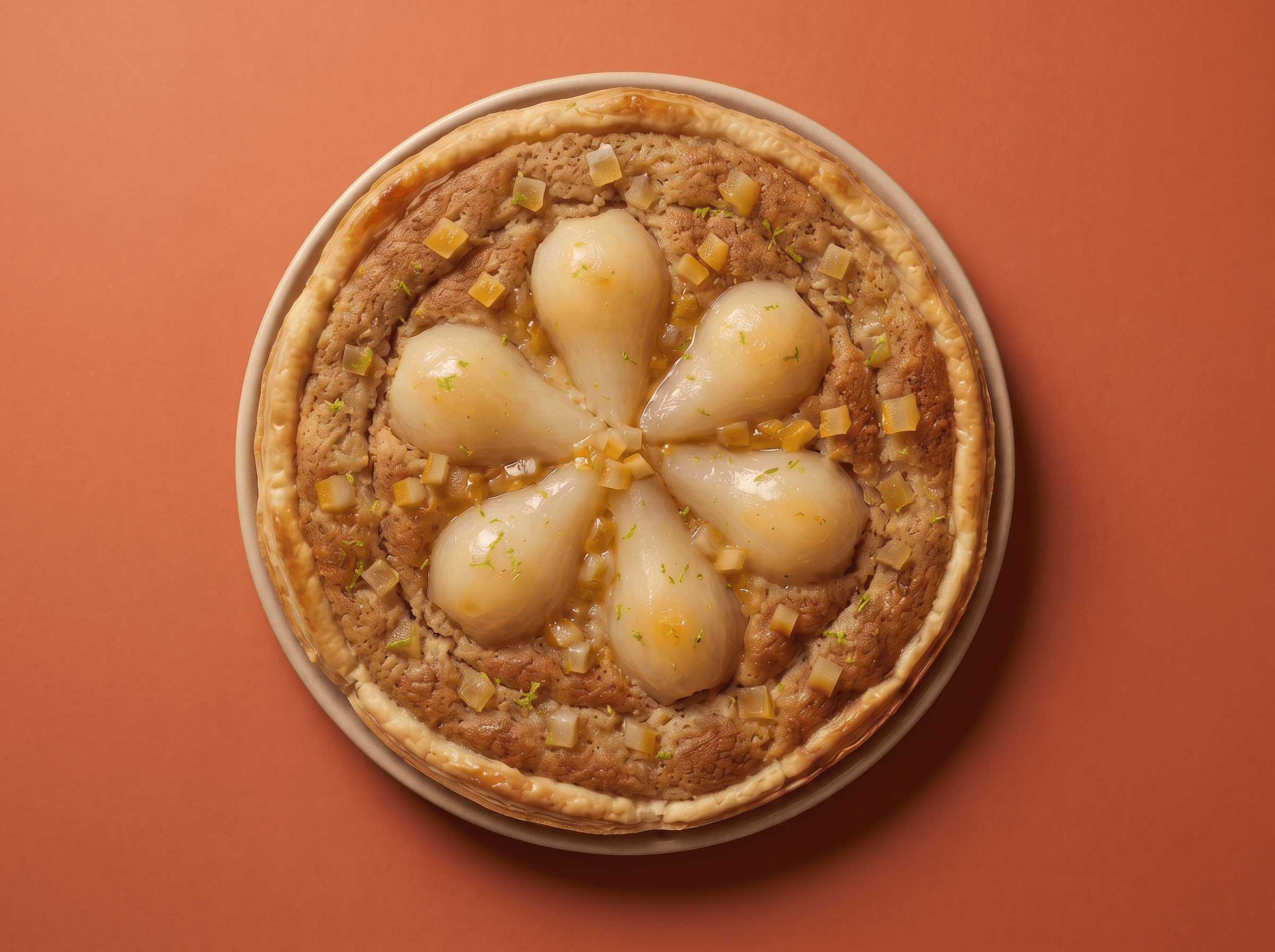 From our menuPear Tart€22.95 · Made by us, delivered chilled.
This matcha panna cotta is a silky Japanese-Italian dessert with vivid green tea flavor and a bright yuzu citrus lift. A cold slurry technique keeps the matcha color fresh and clean. It takes about 30 minutes of hands-on work, then chills overnight. Makes 4 servings.
Recipe by Christophe Rammant
Cordon Bleu Paris alumni - Two star Michelin kitchen experience
What Makes This Matcha Panna Cotta So Vivid and Silky?
Food science shows that matcha's bright green color comes from chlorophyll, which breaks down fast when exposed to high heat. By mixing the matcha powder into cold milk first to make a smooth paste, you protect that vivid jade color. Adding it to liquid that has been pulled off the heat keeps the flavor clean and grassy, not bitter or dull.
Traditional Italian panna cotta technique relies on gentle heat, never a boil. Professional culinary team know that boiling cream can split the fat and weaken the gelatin's ability to set. Keeping the temperature around 158-167°F / 70-75°C gives you that signature trembling, melt-on-your-tongue texture instead of a rubbery bounce.
Food science also tells us that yuzu's floral aroma comes from delicate volatile compounds that disappear quickly at high heat. Stirring the yuzu juice and zest in after the pan leaves the stove locks in that fresh, bright citrus lift. It is a small step that makes a big difference in how alive the dessert tastes.
Estimated nutrition per serving
Estimated from ingredient weights, not lab-tested.
- Calories
- 459
- Protein
- 6g
- Fat
- 38g
- Carbohydrates
- 22g
The weekly recipe note
Enjoyed this recipe? Get the next one first.
One new recipe each week from Christophe: global flavor, French technique, and practical home-cook timing.
By signing up, you agree to receive emails from Mr. Saucy.
Ingredients
Recipe yields 4 servings
For the Panna Cotta
| Amount | Ingredient | Notes |
|---|---|---|
| 400 g (1⅔ cups) | Heavy cream (35% fat) | full-fat for the silkiest set |
| 100 g (scant ½ cup) | Whole milk | lightens the texture slightly |
| 55 g (¼ cup) | Caster sugar | fine sugar dissolves cleanly without graininess |
| 7 g (approx. 2½ tsp) | Powdered gelatin | gives a trembling, just-set texture |
| 40 g (3 tbsp) | Cold water (for blooming gelatin) | must be cold so the gelatin blooms properly |
| 8 g (sifted) | Ceremonial-grade matcha powder | ceremonial grade gives vivid color and clean flavor without bitterness |
| 30 g (2 tbsp) | Cold whole milk (for matcha slurry) | used to dissolve matcha into a smooth paste before adding to hot cream |
| 25 g (approx. 1½ tbsp) | Yuzu juice | fresh or bottled; adds bright citrus lift |
| 3 g (from 1 yuzu) | Yuzu zest | substitute with a small amount of lemon zest if yuzu is unavailable |
| 5 g (about 1 tsp) | Neutral oil (sunflower or grapeseed) | for greasing moulds; just a thin film |
To Serve (Optional)
| Amount | Ingredient | Notes |
|---|---|---|
| 3 g (about 1 tsp) | Matcha powder | for dusting over the top just before serving |
| 80 g (about ½ cup) | Fresh raspberries or sliced strawberries | the tartness mirrors the yuzu brightness |
Instructions
Prep: Slurry and Gelatin
- 1
Make the Matcha Slurry (The Color-Saving Step)
Sift the 8 g of matcha powder into a small bowl. Add the 30 g of cold milk one teaspoon at a time, whisking after each addition until you have a completely smooth, lump-free paste. This step is non-negotiable. Adding dry matcha straight to hot liquid causes clumping and turns the color dull and brownish. The cold slurry protects the vivid green and keeps the flavor clean.
- 2
Bloom the Gelatin (Give It Time to Swell)
Sprinkle the 7 g of powdered gelatin evenly over the 40 g of cold water in a small bowl. Leave it completely untouched for 5 minutes. You will see it swell and turn spongy, which means it is ready to dissolve. Do not stir it during this time. Skipping or rushing this step is one of the most common reasons panna cotta does not set properly.
Cooking the Cream Base
- 3
Warm the Cream Gently (No Boiling)
Combine the 400 g heavy cream, 100 g whole milk, and 55 g caster sugar in a medium saucepan over medium-low heat. Stir gently until the sugar fully dissolves. Heat until you see gentle wisps of steam rising from the surface, around 158-167°F / 70-75°C. Never let it boil. Boiling can split the cream and weaken the gelatin, which means a grainy or unset dessert.
- 4
Dissolve the Gelatin (Check for Specks)
Remove the pan from the heat and immediately add the bloomed gelatin sponge. Whisk steadily until it has completely dissolved with no visible granules. Hold the pan up to the light and tilt it to check. If you see any undissolved specks, return the pan to very low heat for 30 seconds while stirring. Full dissolution is what gives you a smooth, even set.
- 5
Temper and Add the Matcha (The Gentle Blend)
Spoon 2 tablespoons of the warm cream mixture into your matcha slurry bowl and whisk vigorously to loosen the paste. Then pour the tempered matcha back into the main pan and whisk until the color is completely uniform and vivid green. Tempering, which means warming the paste gradually before adding it to the pan, prevents the cold paste from shocking the gelatin and causing uneven setting.
- 6
Add the Yuzu Off the Heat (Lock In the Aroma)
With the pan off the heat, stir in the 25 g yuzu juice and 3 g yuzu zest. The mixture should be warm but not boiling at this point. Adding citrus to boiling dairy can cause curdling, and yuzu's delicate floral aroma evaporates quickly at high heat. Adding it now keeps that fresh, bright citrus flavor fully alive in the finished dessert.
Setting and Serving
- 7
Strain and Pour Into Moulds
Pass the mixture through a fine-mesh sieve into a jug for easy pouring. This removes any matcha lumps or zest fibres for a perfectly smooth finish. Lightly oil 4 dariole moulds or ramekins (approximately 125 ml each) with a thin film of neutral oil, then divide the mixture evenly between them.
- 8
Chill Until Set (Patience Pays Off)
Let the panna cottas cool to room temperature for about 20 minutes, then cover loosely with cling film and refrigerate for a minimum of 4 hours. Overnight is ideal. Rushing the set produces a grainy texture because the gelatin network forms unevenly when cooled too fast. An overnight rest also lets the matcha and yuzu flavors mellow and blend beautifully.
- 9
Unmould to Serve (The Confident Flip)
Run a thin knife or small palette knife gently around the inside edge of each mould. Place a serving plate face-down on top, then invert with one confident motion and give a gentle shake. If it resists, dip the base of the mould in warm water for 5 seconds and try again. Alternatively, serve directly in the glasses for a stress-free, elegant presentation.
- 10
Finish and Plate (The Final Touch)
Dust lightly with matcha powder through a fine sieve. Add a few fresh raspberries or strawberry slices alongside. For an extra burst of citrus aroma, add a few drops of yuzu juice directly over the top just before bringing it to the table.
The weekly recipe note
Enjoyed this recipe? Get the next one first.
One new recipe each week from Christophe: global flavor, French technique, and practical home-cook timing.
By signing up, you agree to receive emails from Mr. Saucy.
Tips & Tricks
Your cream starts to boil before you can remove it from the heat:
Pull the pan off the burner the moment you see the first wisps of steam. Boiling drives off moisture, concentrates the gelatin unevenly, and can split the cream. Medium-low heat and close attention are all you need. If it does boil briefly, let it cool to around 158°F / 70°C before adding the gelatin.
Your matcha color looks dull, khaki, or brownish instead of vivid green:
This almost always means the matcha hit liquid that was too hot, or the cream was boiled after the matcha was added. Always use the cold slurry method and add the tempered paste to liquid that has been removed from the heat. Ceremonial-grade matcha also holds its color far better than culinary-grade.
You cannot find fresh yuzu or it is too expensive:
Good bottled yuzu juice from a Japanese brand with no additives works perfectly and is often more consistent than fresh. Look for it in Asian grocery stores or online. In a real pinch, a 50/50 blend of fresh lemon juice and mandarin juice gets you close to the same floral, tart brightness.
You are nervous about unmoulding and do not want to risk it:
Skip the moulds entirely and pour the mixture straight into small glasses, tumblers, or coupe glasses. No oiling, no flipping, no stress. This is actually the more modern presentation, and the vivid green color looks stunning through clear glass sides.
You only have 4 hours to set the panna cotta:
A 4-hour set will work, but overnight is noticeably better. The texture becomes silkier and more stable, and the matcha and yuzu flavors integrate more deeply. If you can make these the day before, do it. They keep well covered in the fridge for up to 3 days.
Your cream starts to boil before you can remove it from the heat:
Pull the pan off the burner the moment you see the first wisps of steam. Boiling drives off moisture, concentrates the gelatin unevenly, and can split the cream. Medium-low heat and close attention are all you need. If it does boil briefly, let it cool to around 158°F / 70°C before adding the gelatin.
Your matcha color looks dull, khaki, or brownish instead of vivid green:
This almost always means the matcha hit liquid that was too hot, or the cream was boiled after the matcha was added. Always use the cold slurry method and add the tempered paste to liquid that has been removed from the heat. Ceremonial-grade matcha also holds its color far better than culinary-grade.
You cannot find fresh yuzu or it is too expensive:
Good bottled yuzu juice from a Japanese brand with no additives works perfectly and is often more consistent than fresh. Look for it in Asian grocery stores or online. In a real pinch, a 50/50 blend of fresh lemon juice and mandarin juice gets you close to the same floral, tart brightness.
You are nervous about unmoulding and do not want to risk it:
Skip the moulds entirely and pour the mixture straight into small glasses, tumblers, or coupe glasses. No oiling, no flipping, no stress. This is actually the more modern presentation, and the vivid green color looks stunning through clear glass sides.
You only have 4 hours to set the panna cotta:
A 4-hour set will work, but overnight is noticeably better. The texture becomes silkier and more stable, and the matcha and yuzu flavors integrate more deeply. If you can make these the day before, do it. They keep well covered in the fridge for up to 3 days.
Frequently Asked Questions
Can I make matcha panna cotta ahead of time?
Yes, and you should. Making it the day before gives you a silkier, more stable texture as the gelatin has time to set fully and evenly. The matcha and yuzu flavors also mellow and blend overnight. Cover the moulds tightly and they will keep in the fridge for up to 3 days.
My panna cotta did not set. What went wrong?
The most likely cause is gelatin that was added to liquid above 185°F / 85°C, which can break down its setting power, or gelatin that was not fully bloomed first. Always bloom in cold water for a full 5 minutes and add it to liquid that is hot but not boiling. If it is still liquid after 2 hours in the fridge, it will not recover and you will need to start again.
Can I use agar-agar instead of gelatin to make it vegetarian?
Yes, but the texture will be firmer and slightly more brittle rather than silky and trembling. Use about 2 g of agar powder for this quantity. Unlike gelatin, agar must be dissolved in the cold cream before heating and brought to a boil to activate. The result is still delicious but texturally different from the classic wobble.
Where can I find yuzu juice?
Japanese grocery stores and well-stocked Asian supermarkets carry bottled yuzu juice reliably. Some larger supermarkets stock it in the Asian foods section. Online retailers are also a consistent option. Look for Japanese brands with no additives. In a pinch, a 50/50 blend of fresh lemon juice and mandarin juice approximates the flavor profile well.
Can I make this without individual moulds?
Absolutely. Pour the mixture into a single shallow dish, a loaf tin lined with cling film, or directly into wine glasses or small tumblers. No unmoulding is needed. Serving in glasses is actually the most stress-free approach and looks beautiful with the green color showing through the sides and the garnish on top.
Does the type of matcha really matter?
Yes, it makes a big difference here. Culinary-grade matcha is designed for baking where it competes with butter and sugar, but in a pale cream base its dull color and bitter edge will dominate. Ceremonial-grade matcha gives you that vivid jade green and a clean, grassy sweetness that makes the dessert visually striking and pleasant to eat.
Can I add white chocolate or honey to make it richer?
Yes. Melt 40 g of white chocolate into the warm cream before adding the matcha for a rounder, creamier sweetness that complements the tea beautifully. Honey, about 20 g replacing half the caster sugar, adds a floral note that pairs well with yuzu. Reduce the caster sugar proportionally to avoid over-sweetening the finished dessert.
Can I make matcha panna cotta ahead of time?
Yes, and you should. Making it the day before gives you a silkier, more stable texture as the gelatin has time to set fully and evenly. The matcha and yuzu flavors also mellow and blend overnight. Cover the moulds tightly and they will keep in the fridge for up to 3 days.
My panna cotta did not set. What went wrong?
The most likely cause is gelatin that was added to liquid above 185°F / 85°C, which can break down its setting power, or gelatin that was not fully bloomed first. Always bloom in cold water for a full 5 minutes and add it to liquid that is hot but not boiling. If it is still liquid after 2 hours in the fridge, it will not recover and you will need to start again.
Can I use agar-agar instead of gelatin to make it vegetarian?
Yes, but the texture will be firmer and slightly more brittle rather than silky and trembling. Use about 2 g of agar powder for this quantity. Unlike gelatin, agar must be dissolved in the cold cream before heating and brought to a boil to activate. The result is still delicious but texturally different from the classic wobble.
Where can I find yuzu juice?
Japanese grocery stores and well-stocked Asian supermarkets carry bottled yuzu juice reliably. Some larger supermarkets stock it in the Asian foods section. Online retailers are also a consistent option. Look for Japanese brands with no additives. In a pinch, a 50/50 blend of fresh lemon juice and mandarin juice approximates the flavor profile well.
Can I make this without individual moulds?
Absolutely. Pour the mixture into a single shallow dish, a loaf tin lined with cling film, or directly into wine glasses or small tumblers. No unmoulding is needed. Serving in glasses is actually the most stress-free approach and looks beautiful with the green color showing through the sides and the garnish on top.
Does the type of matcha really matter?
Yes, it makes a big difference here. Culinary-grade matcha is designed for baking where it competes with butter and sugar, but in a pale cream base its dull color and bitter edge will dominate. Ceremonial-grade matcha gives you that vivid jade green and a clean, grassy sweetness that makes the dessert visually striking and pleasant to eat.
Can I add white chocolate or honey to make it richer?
Yes. Melt 40 g of white chocolate into the warm cream before adding the matcha for a rounder, creamier sweetness that complements the tea beautifully. Honey, about 20 g replacing half the caster sugar, adds a floral note that pairs well with yuzu. Reduce the caster sugar proportionally to avoid over-sweetening the finished dessert.
Recipe Reviews
No reviews yet — Be the first to review this recipe!
The collection
All recipesOlive Oil Chocolate Mousse Recipe with Candied Orange
This olive oil chocolate mousse recipe makes a rich but airy dessert with dark chocolate, fruity olive oil, bright candied orange, and crisp almond tuiles. A warm sugar syrup gives the yolks body, while softly whipped cream keeps the mousse light. Plan about 5 hours, including chilling, for 4 generous servings.
300 min · Intermediate · Fusion
Celeriac Ravioli with Brown Butter and Pear
This celeriac ravioli recipe makes 24 delicate pasta pillows filled with roasted celeriac, aged Comté, mascarpone and truffle. Roast the celeriac for deep flavor, then finish the ravioli in a glossy brown-butter sauce with pear, hazelnuts and sage. Plan on 145 minutes for 4 servings, including resting and chilling.
145 min · Intermediate · Fusion
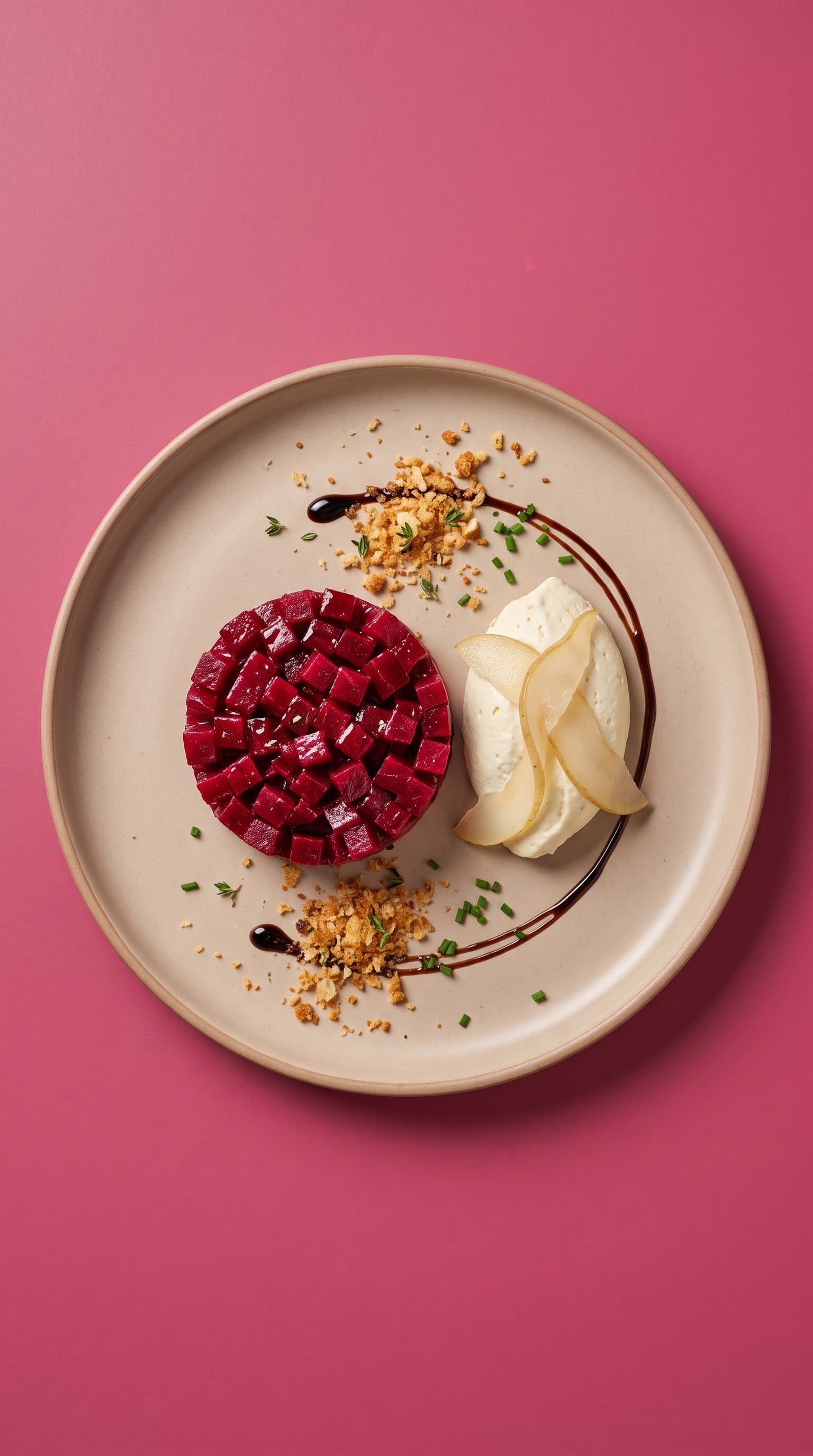
Beetroot Tartare Recipe with Whipped Goat Cheese
This beetroot tartare recipe turns sweet roasted beetroot into a bright, elegant appetizer for four. Cut the chilled beetroot into tiny cubes, dress it just before serving, and pair it with whipped goat cheese, pickled pear, and a buttery hazelnut crumb. Allow about 2 hours from roasting to plating.
120 min · Intermediate · Fusion