Crispy Double-Fried Orange Chicken with Sweet Glaze
1 hr · Medium · Serves 4-6
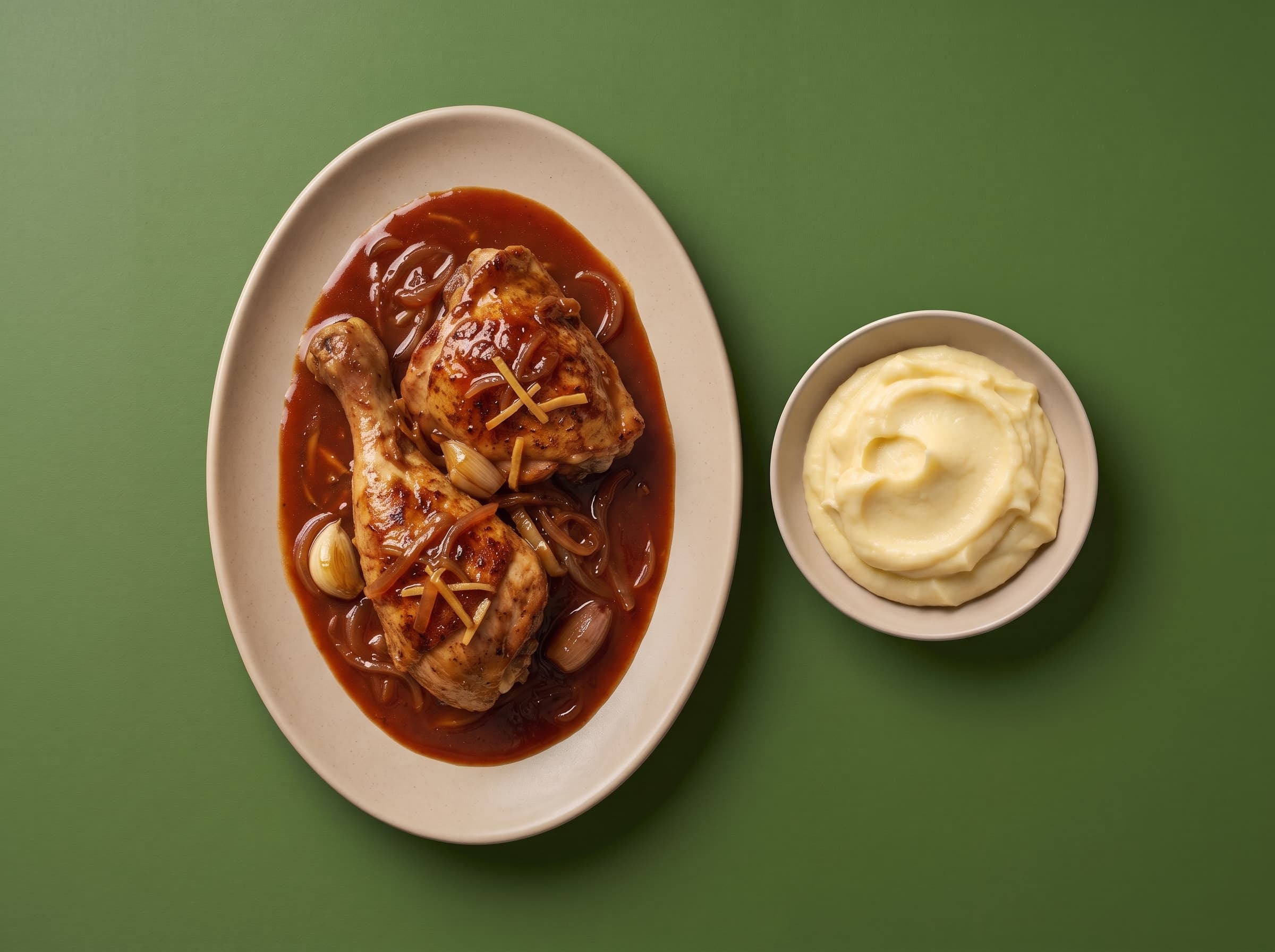 From our menuCoq au vin€22.95 · Made by us, delivered chilled.
This crispy double-fried orange chicken is a warm, comforting meal that beats takeout. We use a special two-step frying trick to make the coating shatteringly crisp, then toss it in a bright, sweet, and tangy glaze. It takes about 60 minutes to make and serves 4 to 6 people.
Recipe by Christophe Rammant
Cordon Bleu Paris alumni - Two star Michelin kitchen experience
Why Does This Orange Chicken Stay So Crispy?
Professional culinary team know that frying the chicken twice is the secret to a lasting crunch. The first fry at a lower heat cooks the meat gently and sets the starch coating in place.
Food science shows that resting the coated chicken for 10 minutes lets the cornstarch soak up moisture. This creates a strong bond to the meat so the crust does not fall off in the hot oil.
The second fry at a higher heat quickly drives out extra water. This creates tiny air bubbles that give you that glass-like, shatteringly crisp texture you love.
Estimated nutrition per serving
Estimated from ingredient weights, not lab-tested.
- Calories
- 900
- Protein
- 42g
- Fat
- 50g
- Carbohydrates
- 70g
The weekly recipe note
Enjoyed this recipe? Get the next one first.
One new recipe each week from Christophe: global flavor, French technique, and practical home-cook timing.
By signing up, you agree to receive emails from Mr. Saucy.
Ingredients
Recipe yields 4-6 servings
For the Chicken and Marinade
| Amount | Ingredient | Notes |
|---|---|---|
| 800 g (about 1.75 lbs) | Boneless, skinless chicken thighs | cut into 1-inch pieces for maximum juiciness |
| 100 g (about 2) | Large eggs | lightly beaten |
| 45 g (about 3 tablespoons) | Soy sauce | for the marinade |
| 22 g (about 1.5 tablespoons) | Shaoxing wine or dry sherry | adds depth and tenderizes |
| 7 g (about 1.5 teaspoons) | Toasted sesame oil | for the marinade |
For the Dry Coating
| Amount | Ingredient | Notes |
|---|---|---|
| 120 g (about 1 cup) | Cornstarch | for the dry coating |
| 40 g (about 1/3 cup) | All-purpose flour | for the dry coating |
| 5 g (about 1 teaspoon) | Baking powder | creates micro-bubbles for extra crunch |
| 5 g (about 1 teaspoon) | Fine sea salt | for the dry coating |
| 1 g (about 1/4 teaspoon) | White pepper | for the dry coating |
For the Orange Glaze
| Amount | Ingredient | Notes |
|---|---|---|
| 10 g (from about 2 large oranges) | Fresh orange zest | essential for aromatic oils |
| 120 g (about 1/2 cup) | Fresh orange juice | freshly squeezed from about 2 large oranges |
| 60 g (about 4 tablespoons) | Rice vinegar | provides bright, clean acidity |
| 60 g (about 4 tablespoons) | Soy sauce | for the glaze |
| 50 g (about 1/4 cup packed) | Brown sugar | adds molasses depth to the sweetness |
| 40 g (about 2 tablespoons) | Honey | adds floral sweetness and glossy sheen |
| 15 g (about 3 cloves) | Fresh garlic | finely minced |
| 15 g (about 1 tablespoon) | Fresh ginger | finely minced |
| 2 g (about 1/2 teaspoon) | Red pepper flakes | adjust to taste for mild heat |
For Frying and Thickening
| Amount | Ingredient | Notes |
|---|---|---|
| 30 g (about 2.5 tablespoons) | Cornstarch | for the thickening slurry |
| 30 g (about 2 tablespoons) | Cold water | for the thickening slurry |
| 1000 g (about 4 cups) | Neutral frying oil | peanut or canola oil, enough for 2 inches in a Dutch oven |
Instructions
Prep and Coat the Chicken
- 1
Marinate the Meat
Toss the chicken pieces with the beaten eggs, 45 g soy sauce, Shaoxing wine, and sesame oil. Let it sit for 20 minutes. This gentle soak tenderizes the meat and builds a savory flavor base.
- 2
Apply the Dry Coating
In a large bowl, whisk together the 120 g cornstarch, 40 g flour, baking powder, salt, and white pepper. Toss the marinated chicken in this mix until every piece is heavily coated.
- 3
Rest the Coated Chicken
Let the coated chicken rest on a plate for 10 minutes. This crucial step allows the cornstarch to soak up moisture and stick tightly to the meat, preventing the crust from falling off in the hot oil.
The Double-Fry Method
- 4
First Fry to Set the Crust
Heat the neutral oil in a Dutch oven to 325°F / 160°C. Fry the chicken in small, uncrowded batches for 4 to 5 minutes until pale golden and cooked through. Transfer to a wire rack to drain so it stays crisp.
- 5
Second Fry for Maximum Crunch
Increase the oil temperature to 375°F / 190°C. Flash-fry the chicken in batches for 1 to 2 minutes until deeply golden and shatteringly crisp. Return to the wire rack so the bottom does not steam and get soft.
Make the Glaze and Serve
- 6
Sauté the Aromatics
In a large skillet or wok, heat 1 teaspoon of oil over medium heat. Sauté the minced garlic, ginger, and red pepper flakes for 30 seconds until highly fragrant. We watch closely so the garlic and ginger do not burn and turn bitter.
- 7
Simmer the Orange Sauce
Add the orange juice, orange zest, rice vinegar, 60 g soy sauce, brown sugar, and honey to the skillet. Bring the mixture to a gentle simmer, stirring to dissolve the sugars completely.
- 8
Thicken the Glaze
Whisk the 30 g cornstarch and 30 g cold water together to make a smooth slurry. Slowly drizzle this into the simmering sauce while stirring constantly until it thickens to lightly coat the back of a spoon. This gives the glaze the perfect sticky texture.
- 9
Toss and Serve
Remove the sauce from the heat and immediately add the double-fried chicken. Toss vigorously and quickly to coat every piece in the glossy glaze, then serve at once with toasted sesame seeds and sliced scallions.
The weekly recipe note
Enjoyed this recipe? Get the next one first.
One new recipe each week from Christophe: global flavor, French technique, and practical home-cook timing.
By signing up, you agree to receive emails from Mr. Saucy.
Tips & Tricks
Your fried chicken gets soggy on the bottom.:
Always drain fried chicken on a wire rack rather than paper towels. Paper towels trap steam against the bottom, which quickly destroys the crisp micro-crust you worked hard to create.
The coating falls off during frying.:
Do not skip the 10-minute resting period for the coated chicken. This hydration phase is the scientific secret to a coating that adheres perfectly and fries up with a glass-like crunch.
The orange glaze becomes watery.:
Keep the glaze warm but not boiling when you toss the chicken in it. If the sauce is too hot or simmers too long after thickening, it will break down and lose its glossy texture.
You do not have a deep-fry thermometer.:
Test the oil by dropping in a small pinch of the dry coating. If it sizzles vigorously and floats to the top within 3 seconds, the oil is ready for the first fry.
Your fried chicken gets soggy on the bottom.:
Always drain fried chicken on a wire rack rather than paper towels. Paper towels trap steam against the bottom, which quickly destroys the crisp micro-crust you worked hard to create.
The coating falls off during frying.:
Do not skip the 10-minute resting period for the coated chicken. This hydration phase is the scientific secret to a coating that adheres perfectly and fries up with a glass-like crunch.
The orange glaze becomes watery.:
Keep the glaze warm but not boiling when you toss the chicken in it. If the sauce is too hot or simmers too long after thickening, it will break down and lose its glossy texture.
You do not have a deep-fry thermometer.:
Test the oil by dropping in a small pinch of the dry coating. If it sizzles vigorously and floats to the top within 3 seconds, the oil is ready for the first fry.
Frequently Asked Questions
Can I use chicken breast instead of thighs for this orange chicken?
Yes, but chicken breast is leaner and dries out faster. If substituting, reduce the first fry time by about one minute and monitor closely. Thighs are highly recommended for their natural juiciness and ability to withstand double-frying without becoming tough.
Why did my coating fall off during frying?
This usually happens if the chicken was too wet before dredging or if the coated chicken did not rest. Letting the dredged chicken rest for 10 minutes allows the cornstarch to soak up moisture and bind to the meat, creating a secure, crisp crust.
Can I prepare any part of this dish ahead of time?
You can double-fry the chicken up to four hours in advance. To serve, re-crisp it in a 400°F / 200°C oven for 10 minutes. However, always prepare the orange glaze fresh right before serving to ensure the brightest flavor and perfect glossy consistency.
My sauce turned out too thin or too thick. How do I fix it?
If too thin, whisk a small amount of additional cornstarch slurry and simmer for another minute. If too thick, stir in a tablespoon of warm water or orange juice. The ideal consistency should lightly coat the back of a spoon.
Can I use chicken breast instead of thighs for this orange chicken?
Yes, but chicken breast is leaner and dries out faster. If substituting, reduce the first fry time by about one minute and monitor closely. Thighs are highly recommended for their natural juiciness and ability to withstand double-frying without becoming tough.
Why did my coating fall off during frying?
This usually happens if the chicken was too wet before dredging or if the coated chicken did not rest. Letting the dredged chicken rest for 10 minutes allows the cornstarch to soak up moisture and bind to the meat, creating a secure, crisp crust.
Can I prepare any part of this dish ahead of time?
You can double-fry the chicken up to four hours in advance. To serve, re-crisp it in a 400°F / 200°C oven for 10 minutes. However, always prepare the orange glaze fresh right before serving to ensure the brightest flavor and perfect glossy consistency.
My sauce turned out too thin or too thick. How do I fix it?
If too thin, whisk a small amount of additional cornstarch slurry and simmer for another minute. If too thick, stir in a tablespoon of warm water or orange juice. The ideal consistency should lightly coat the back of a spoon.
Recipe Reviews
No reviews yet — Be the first to review this recipe!
The collection
All recipesOlive Oil Chocolate Mousse Recipe with Candied Orange
This olive oil chocolate mousse recipe makes a rich but airy dessert with dark chocolate, fruity olive oil, bright candied orange, and crisp almond tuiles. A warm sugar syrup gives the yolks body, while softly whipped cream keeps the mousse light. Plan about 5 hours, including chilling, for 4 generous servings.
300 min · Intermediate · Fusion
Celeriac Ravioli with Brown Butter and Pear
This celeriac ravioli recipe makes 24 delicate pasta pillows filled with roasted celeriac, aged Comté, mascarpone and truffle. Roast the celeriac for deep flavor, then finish the ravioli in a glossy brown-butter sauce with pear, hazelnuts and sage. Plan on 145 minutes for 4 servings, including resting and chilling.
145 min · Intermediate · Fusion
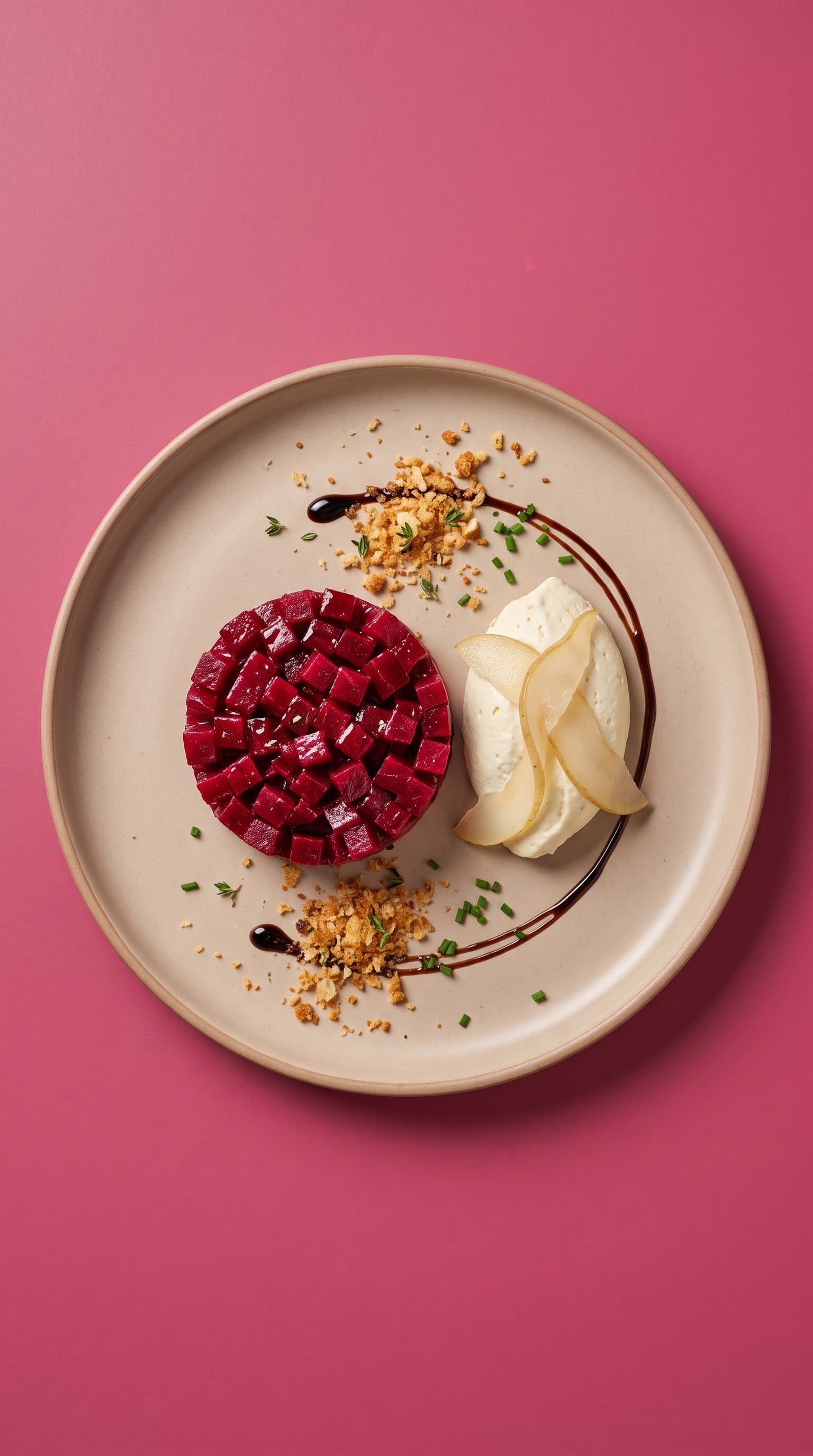
Beetroot Tartare Recipe with Whipped Goat Cheese
This beetroot tartare recipe turns sweet roasted beetroot into a bright, elegant appetizer for four. Cut the chilled beetroot into tiny cubes, dress it just before serving, and pair it with whipped goat cheese, pickled pear, and a buttery hazelnut crumb. Allow about 2 hours from roasting to plating.
120 min · Intermediate · Fusion