Belgian Shrimp Curry with Thai Coconut Cream Sauce
45 min · Medium · Serves 4
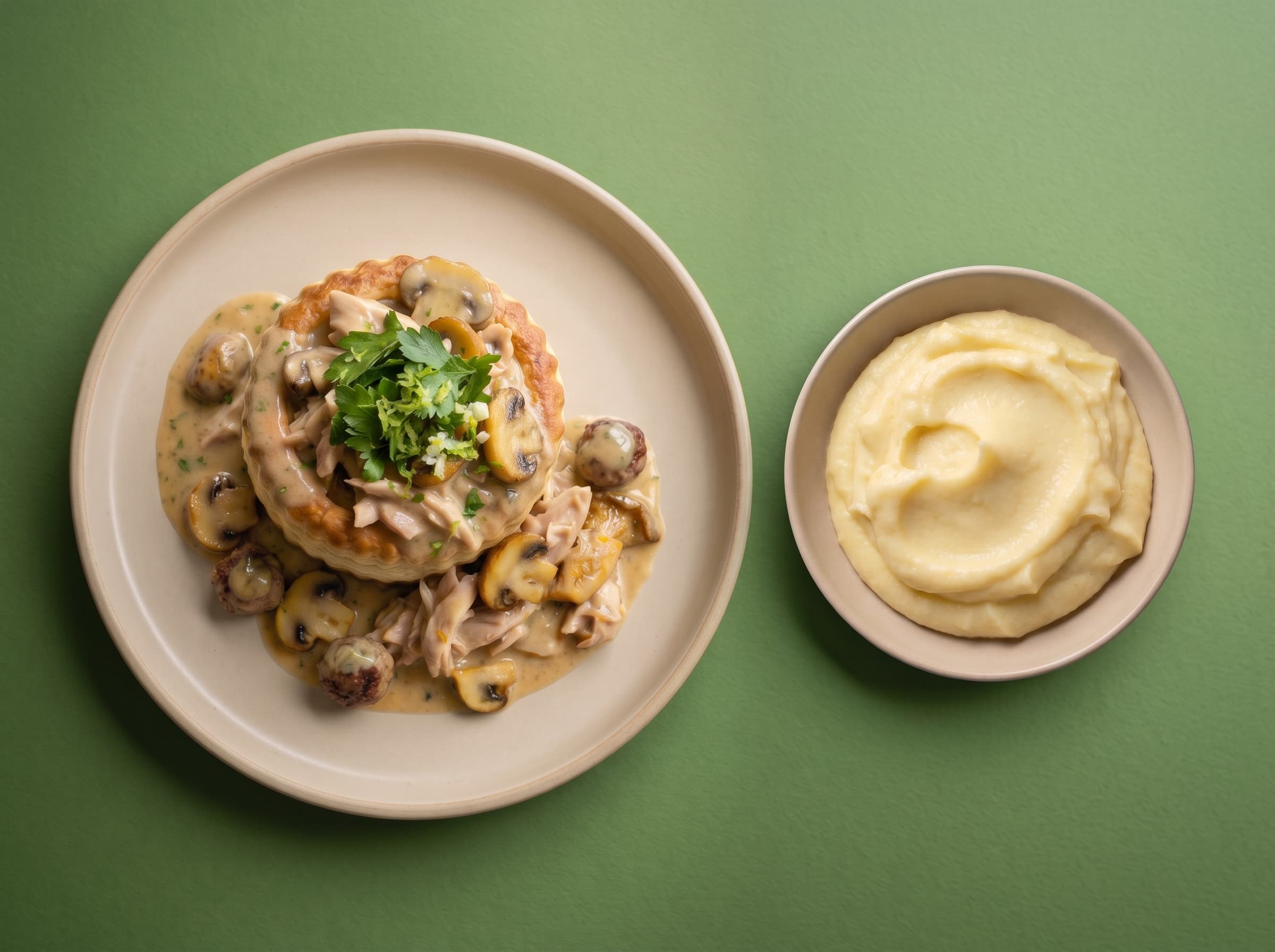 From our menuVol-au-Vent East meets West€19.95 · Made by us, delivered chilled.
This Belgian-inspired shrimp curry blends Flemish bistro tradition with Thai aromatics. Butter-sautéed shallots and a white wine deglaze meet red curry paste, cracked coconut cream, lemongrass, and kaffir lime in one rich, fragrant sauce. Ready in 45 minutes and serves 4 hungry people.
Recipe by Christophe Rammant
Cordon Bleu Paris alumni - Two star Michelin kitchen experience
What Makes This Shrimp Curry Taste So Much Deeper Than Regular Curry?
Traditional Thai cooking teaches us to crack the coconut cream before adding any liquid. You heat the thick cream until the oil separates and glistens on the surface. This step concentrates the fat and unlocks flavor compounds that stay locked away when you skip it. The result is a sauce with real body and depth, not a thin, watery coconut taste.
Professional culinary team know that frying curry paste in fat before adding liquid is the single biggest difference between a flat sauce and a fragrant one. The fat-soluble spices and chili compounds in the paste only release their full aroma when they hit hot butter or oil. Stirring paste straight into liquid skips this step and leaves flavor on the table.
Food science shows that the classic French technique of finishing with cold butter, known as monter au beurre, creates a glossy, velvety sauce by forming a smooth emulsion. Adding lime juice off the heat preserves its bright citrus notes, which would turn bitter if cooked. Together, these two finishing moves lift the whole dish and keep every bite feeling fresh.
Estimated nutrition per serving
Estimated from ingredient weights, not lab-tested.
- Calories
- 933
- Protein
- 35g
- Fat
- 47g
- Carbohydrates
- 87g
The weekly recipe note
Enjoyed this recipe? Get the next one first.
One new recipe each week from Christophe: global flavor, French technique, and practical home-cook timing.
By signing up, you agree to receive emails from Mr. Saucy.
Ingredients
Recipe yields 4 servings
For the Scampi
| Amount | Ingredient | Notes |
|---|---|---|
| 800 g | large raw scampi (shell-on, 16/20 count) | peeled and deveined, tails on for presentation - shell-on weight before peeling |
| 30 g (2 tablespoons) | neutral oil (sunflower or grapeseed) | for searing the scampi |
| 5 g (1 teaspoon) | flaky sea salt | for seasoning scampi before searing |
For the Curry Sauce
| Amount | Ingredient | Notes |
|---|---|---|
| 60 g (4 tablespoons) | unsalted butter | divided: 40 g for sautéing, 20 g cold for finishing |
| 120 g (about 4 medium) | shallots | finely minced - the Flemish aromatic base |
| 20 g (about 4 cloves) | garlic cloves | finely minced |
| 60 g (2 stalks) | lemongrass stalks | outer leaves removed, white part only, bruised and finely sliced |
| 30 g | galangal (or fresh ginger as substitute) | peeled and finely grated - galangal preferred for authentic Thai lift |
| 45 g (about 3 heaped tablespoons) | red Thai curry paste (store-bought Mae Ploy or homemade) | fry in fat before adding liquids |
| 150 g (about 2/3 cup) | dry white wine | a Flemish Chardonnay or dry Muscadet - the classic Belgian deglaze |
| 200 g (about 3/4 cup) | coconut cream (full-fat, not coconut milk) | use the thick top layer from a chilled can - for cracking the fat |
| 150 g (about 2/3 cup) | heavy cream (35% fat) | adds the Flemish richness and rounds the coconut sharpness |
| 20 g (about 1.5 tablespoons) | fish sauce (Tiparos or Megachef) | replaces salt and adds deep umami |
| 15 g (1 tablespoon) | palm sugar (or light brown sugar) | balances the heat and acidity |
| 6 g (about 8 leaves) | kaffir lime leaves | 4 leaves torn into the sauce, 4 finely chiffonaded for garnish |
| 30 g (about 1.5 limes) | fresh lime juice | added off heat to preserve brightness |
For Serving and Garnish
| Amount | Ingredient | Notes |
|---|---|---|
| 320 g (about 1.5 cups) | jasmine rice (dry weight) | or crusty white bread for the classic Flemish mop - your choice |
| 15 g (small handful) | Thai basil leaves | torn, for garnish - do not cook |
| 20 g (1 large) | fresh red chili | thinly sliced on the bias for garnish and heat control |
Instructions
Prep and Rice
- 1
Start the Rice First
Cook your jasmine rice according to package instructions - typically a 1:1.5 rice to water ratio. Bring to a boil, cover, and simmer for 12 minutes, then rest off the heat for 5 minutes with the lid on. Starting the rice now means everything will be ready at the same time.
- 2
Dry the Scampi (The Most Important Prep Step)
Pat the peeled scampi completely dry with paper towels and press firmly. Season lightly with flaky sea salt. Surface moisture is the enemy of a good sear - even a small amount of water will cause the scampi to steam in the pan instead of caramelize, and you lose the golden crust that adds flavor and texture contrast to the rich sauce.
Sear the Scampi
- 3
Get the Pan Screaming Hot
Place a wide, heavy pan - stainless steel or cast iron works best - over high heat until you see a faint shimmer rising from the surface. This takes about 2 minutes. Add the 30 g of neutral oil and let it heat for 30 seconds more. A properly hot pan is what creates the golden crust.
- 4
Sear in Batches (Do Not Crowd the Pan)
Add the scampi in a single layer, working in two batches if needed. Crowding the pan drops the temperature and causes steaming instead of searing. Cook for 60 to 90 seconds per side until pink and lightly golden at the edges. They should be just barely cooked through - slightly underdone is correct here because they will finish in the hot sauce. Remove to a plate and set aside.
Build the Curry Sauce
- 5
Soften the Shallots in Butter (Keep the Fond)
Reduce the heat to medium and add 40 g of butter to the same pan. Leave the brown bits - called fond - on the bottom of the pan. That is pure flavor. Once the butter foams, add the minced shallots and cook gently for 4 to 5 minutes, stirring often, until they are soft, translucent, and sweet-smelling but not browned.
- 6
Add the Thai Aromatics
Add the minced garlic, sliced lemongrass, and grated galangal. Cook for 2 minutes, stirring constantly, until fragrant and the raw edge is gone. Your kitchen should smell extraordinary at this point. The lemongrass and galangal are the backbone of the Thai character in this sauce.
- 7
Bloom the Curry Paste (The Flavor Unlock Step)
Push the aromatics to the side of the pan and add the red curry paste directly onto the bare pan surface. Fry the paste in the residual butter for 60 to 90 seconds, stirring and pressing it against the hot surface. This step is critical: frying the paste in fat blooms the fat-soluble flavor compounds in the chilies and spices, releasing far more depth than simply stirring paste into liquid.
- 8
Deglaze with White Wine (The Flemish Technique)
Pour in the white wine and stir vigorously to lift all the fond from the bottom of the pan. Let it bubble and reduce by half, about 2 to 3 minutes. The wine's acidity cuts through the fat, carries the aromatics into the sauce, and creates the flavor bridge between the European and Thai elements of this dish.
- 9
Crack the Coconut Cream (Do Not Skip This)
Add the thick coconut cream and stir over medium-high heat for 3 to 4 minutes without adding anything else. You are looking for the cream to separate slightly - the oil will begin to glisten on the surface and the mixture will look a little broken. This is correct and intentional. Traditional Thai cooking uses this technique to concentrate the coconut fat and flavor, giving the sauce real body instead of a thin, watery coconut taste.
- 10
Add the Heavy Cream and Kaffir Lime
Add the heavy cream and stir to combine - it re-emulsifies the sauce and adds the Flemish richness that makes this dish feel familiar and satisfying. Add 4 torn kaffir lime leaves and let the sauce simmer gently for 5 to 6 minutes at around 185°F / 85°C until it coats the back of a spoon.
- 11
Season with Fish Sauce and Palm Sugar
Add the fish sauce and palm sugar gradually and taste as you go. The fish sauce replaces salt entirely and adds a savory depth that is impossible to replicate with regular salt. The palm sugar rounds the heat. The sauce should taste rich, fragrant, mildly spicy, and balanced between salty, sweet, and citrus.
Finish and Serve
- 12
Return the Scampi (Watch the Clock)
Nestle the seared scampi back into the sauce and cook for just 60 to 90 seconds over medium heat until heated through and fully cooked to 145°F / 63°C internally. Do not overcook - scampi go from perfectly plump to rubbery in under a minute.
- 13
Finish with Lime and Cold Butter (The Glossy Finish)
Remove the pan from the heat. Stir in the fresh lime juice and the remaining 20 g of cold butter. The lime juice brightens everything and the cold butter creates a glossy, velvety finish - this is the classic French monter au beurre technique applied to a Thai sauce. Remove and discard the lemongrass pieces and whole kaffir lime leaves.
- 14
Plate and Garnish (The Garnish Does Real Work)
Serve immediately over jasmine rice or alongside crusty bread. Garnish with the finely chiffonaded kaffir lime leaves, torn Thai basil, and sliced fresh red chili. The raw herbs and citrus from the lime leaves cut through the richness and keep each bite feeling alive - this garnish is not decoration.
The weekly recipe note
Enjoyed this recipe? Get the next one first.
One new recipe each week from Christophe: global flavor, French technique, and practical home-cook timing.
By signing up, you agree to receive emails from Mr. Saucy.
Tips & Tricks
Your scampi turn out steamed and pale instead of golden:
The pan was not hot enough or the scampi were still wet. Dry them twice with paper towels before seasoning, and wait until you see a faint shimmer rising from the pan surface before adding the oil. A properly hot pan gives you caramelization in 60 to 90 seconds.
Your sauce tastes thin and mildly sweet instead of rich and complex:
You likely skipped cracking the coconut cream or did not fry the curry paste long enough. Both steps are non-negotiable. Crack the coconut cream until the oil visibly separates, and press the curry paste against the hot pan for a full 60 to 90 seconds before adding any liquid.
You cannot find Mae Ploy red curry paste at your local store:
Look for it at any Asian supermarket - it is the benchmark for store-bought quality and worth the trip. Avoid supermarket own-brand curry pastes, which are typically mild, starchy, and lack aromatic complexity. In a pinch, Maesri is a decent second choice.
Your sauce becomes too thick while simmering:
Loosen it with a small splash of warm water or a little extra coconut cream. Never add cold liquid to a hot cream sauce - the temperature shock can cause it to split. Add warm liquid gradually and stir gently.
You are cooking for a dinner party and do not want last-minute stress:
Make the full sauce up to the point of adding the scampi, then cool and refrigerate it. The flavors actually deepen overnight as the lemongrass and kaffir lime continue to infuse. The next day, reheat the sauce gently, sear fresh scampi, and finish with lime juice and cold butter.
The sauce is too spicy for some of your guests:
Reduce the red curry paste to 25 to 30 g and skip the fresh chili garnish. The sauce will still have full aromatic depth from the lemongrass, galangal, and kaffir lime. Serve chili oil on the side so heat lovers can add their own.
Your scampi turn out steamed and pale instead of golden:
The pan was not hot enough or the scampi were still wet. Dry them twice with paper towels before seasoning, and wait until you see a faint shimmer rising from the pan surface before adding the oil. A properly hot pan gives you caramelization in 60 to 90 seconds.
Your sauce tastes thin and mildly sweet instead of rich and complex:
You likely skipped cracking the coconut cream or did not fry the curry paste long enough. Both steps are non-negotiable. Crack the coconut cream until the oil visibly separates, and press the curry paste against the hot pan for a full 60 to 90 seconds before adding any liquid.
You cannot find Mae Ploy red curry paste at your local store:
Look for it at any Asian supermarket - it is the benchmark for store-bought quality and worth the trip. Avoid supermarket own-brand curry pastes, which are typically mild, starchy, and lack aromatic complexity. In a pinch, Maesri is a decent second choice.
Your sauce becomes too thick while simmering:
Loosen it with a small splash of warm water or a little extra coconut cream. Never add cold liquid to a hot cream sauce - the temperature shock can cause it to split. Add warm liquid gradually and stir gently.
You are cooking for a dinner party and do not want last-minute stress:
Make the full sauce up to the point of adding the scampi, then cool and refrigerate it. The flavors actually deepen overnight as the lemongrass and kaffir lime continue to infuse. The next day, reheat the sauce gently, sear fresh scampi, and finish with lime juice and cold butter.
The sauce is too spicy for some of your guests:
Reduce the red curry paste to 25 to 30 g and skip the fresh chili garnish. The sauce will still have full aromatic depth from the lemongrass, galangal, and kaffir lime. Serve chili oil on the side so heat lovers can add their own.
Frequently Asked Questions
Can I use frozen shrimp or scampi for this curry?
Yes, and most scampi sold in Belgium are previously frozen anyway. Thaw them overnight in the fridge, never in water. The key is to dry them extremely well after thawing - frozen scampi release more moisture than fresh, which is the main enemy of a good sear. Pat them dry twice if needed.
Can I make the sauce ahead of time?
Absolutely. The sauce actually improves overnight as the lemongrass and kaffir lime continue to infuse. Make the full sauce up to the point of adding the scampi, cool and refrigerate. The next day, reheat gently, sear fresh scampi, and finish with lime juice and cold butter. This is the recommended approach for a dinner party.
Why white wine instead of just using more coconut cream or stock?
The white wine deglaze is the Flemish technique that defines this dish. The wine's acidity lifts the fond from the pan, carries the aromatics into the sauce, and adds a brightness that coconut cream alone cannot provide. It also creates a flavor bridge between the European and Thai elements of the sauce.
What if I cannot find galangal?
Fresh ginger is the best substitute - use the same quantity of 30 g. Galangal has a more piney, slightly medicinal quality compared to ginger's warmer, spicier profile, but ginger will still give you the aromatic lift you need. Dried galangal powder is a distant third option - use half the quantity and add it with the curry paste.
Is this dish very spicy?
It is mildly to moderately spicy as written. The 45 g of red curry paste gives warmth and fragrance without overwhelming heat, and the coconut cream and heavy cream soften the spice level considerably. To make it milder, reduce the paste to 25 to 30 g and skip the fresh chili garnish.
Rice or bread - what is more authentic to the Flemish style?
Classically, Belgian scampi met currysaus is served with white rice and crusty bread to mop the sauce. Frites are less traditional for this specific dish. For an elevated presentation, press jasmine rice into a small ramekin and unmold it onto the plate - it looks restaurant-quality and takes 30 seconds of extra effort.
What is the difference between this and a regular Thai shrimp curry?
The Flemish technique sets it apart. A standard Thai shrimp curry skips the butter-sautéed shallots, white wine deglaze, and heavy cream finish. This recipe layers those European techniques over a proper Thai aromatic base, giving you a sauce that is richer and more complex than either tradition produces on its own.
Can I use coconut milk instead of coconut cream?
You can, but the sauce will be noticeably thinner and less rich. Coconut cream has a much higher fat content, which is what you need for cracking and for building a sauce with real body. If coconut cream is unavailable, use the thick layer that settles at the top of a chilled, unshaken can of full-fat coconut milk.
Can I use frozen shrimp or scampi for this curry?
Yes, and most scampi sold in Belgium are previously frozen anyway. Thaw them overnight in the fridge, never in water. The key is to dry them extremely well after thawing - frozen scampi release more moisture than fresh, which is the main enemy of a good sear. Pat them dry twice if needed.
Can I make the sauce ahead of time?
Absolutely. The sauce actually improves overnight as the lemongrass and kaffir lime continue to infuse. Make the full sauce up to the point of adding the scampi, cool and refrigerate. The next day, reheat gently, sear fresh scampi, and finish with lime juice and cold butter. This is the recommended approach for a dinner party.
Why white wine instead of just using more coconut cream or stock?
The white wine deglaze is the Flemish technique that defines this dish. The wine's acidity lifts the fond from the pan, carries the aromatics into the sauce, and adds a brightness that coconut cream alone cannot provide. It also creates a flavor bridge between the European and Thai elements of the sauce.
What if I cannot find galangal?
Fresh ginger is the best substitute - use the same quantity of 30 g. Galangal has a more piney, slightly medicinal quality compared to ginger's warmer, spicier profile, but ginger will still give you the aromatic lift you need. Dried galangal powder is a distant third option - use half the quantity and add it with the curry paste.
Is this dish very spicy?
It is mildly to moderately spicy as written. The 45 g of red curry paste gives warmth and fragrance without overwhelming heat, and the coconut cream and heavy cream soften the spice level considerably. To make it milder, reduce the paste to 25 to 30 g and skip the fresh chili garnish.
Rice or bread - what is more authentic to the Flemish style?
Classically, Belgian scampi met currysaus is served with white rice and crusty bread to mop the sauce. Frites are less traditional for this specific dish. For an elevated presentation, press jasmine rice into a small ramekin and unmold it onto the plate - it looks restaurant-quality and takes 30 seconds of extra effort.
What is the difference between this and a regular Thai shrimp curry?
The Flemish technique sets it apart. A standard Thai shrimp curry skips the butter-sautéed shallots, white wine deglaze, and heavy cream finish. This recipe layers those European techniques over a proper Thai aromatic base, giving you a sauce that is richer and more complex than either tradition produces on its own.
Can I use coconut milk instead of coconut cream?
You can, but the sauce will be noticeably thinner and less rich. Coconut cream has a much higher fat content, which is what you need for cracking and for building a sauce with real body. If coconut cream is unavailable, use the thick layer that settles at the top of a chilled, unshaken can of full-fat coconut milk.
Recipe Reviews
No reviews yet — Be the first to review this recipe!
The collection
All recipesVenison Fillet Recipe with Blackberry Juniper Jus
This venison fillet recipe gives you tender, rosy meat with a quick sear and gentle roasting. Serve it with silky celeriac mousseline, honey-glazed carrots, blackberry-juniper jus, and crisp hazelnuts. Plan about 3 hours for cooking and resting, plus advance chilling if you dry-season the venison overnight. It serves 4.
180 min · Intermediate · Belgium
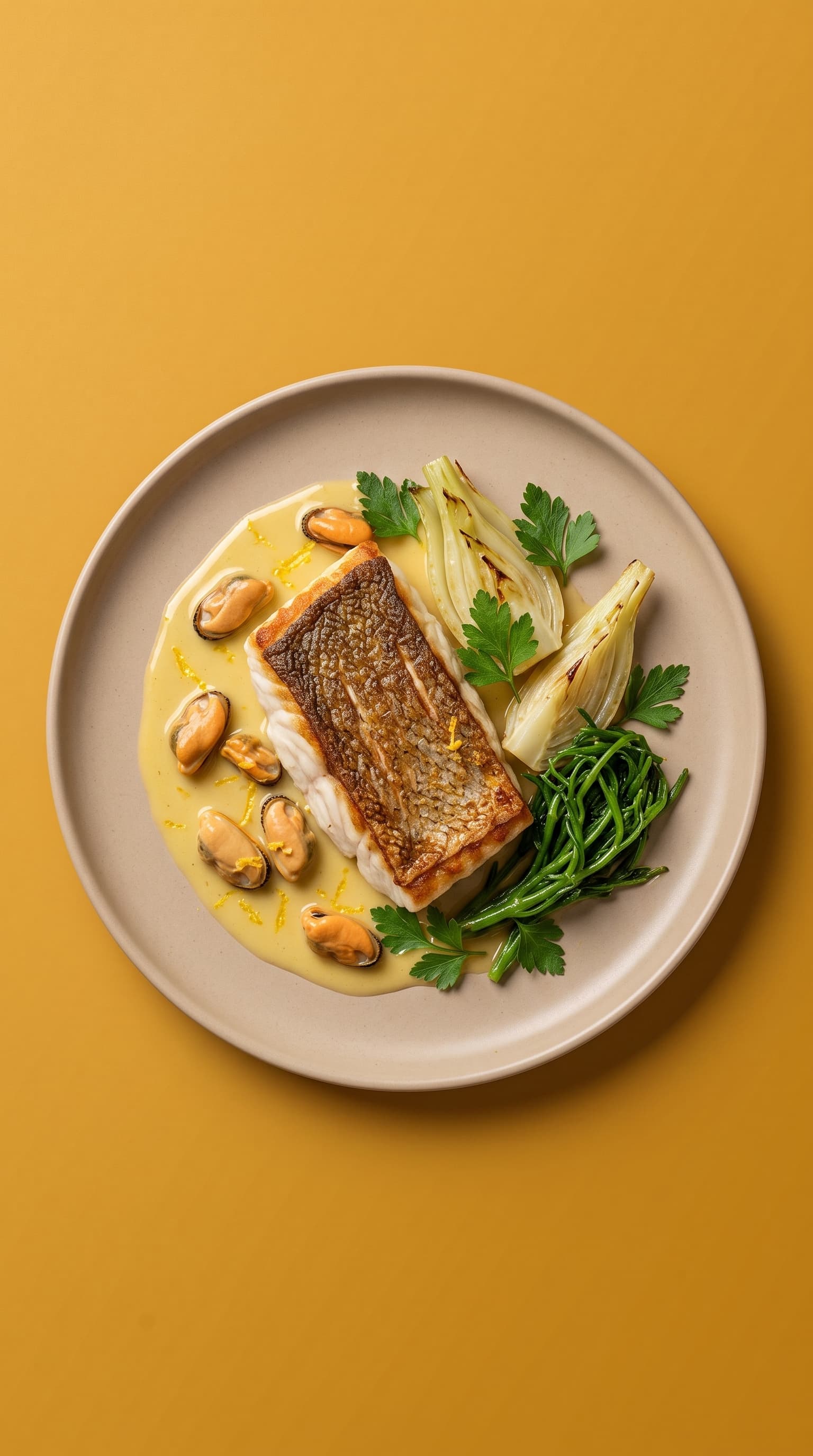
John Dory Recipe with Saffron Mussel Sauce
This John Dory recipe pairs crisp, golden skin with sweet confit fennel, tender sea aster, and a silky saffron mussel sauce. Steam the mussels first, reduce their liquor, and finish the sauce with cold butter. The dish takes about 1 hour 45 minutes and serves 4 for a special dinner.
105 min · Intermediate · Belgium
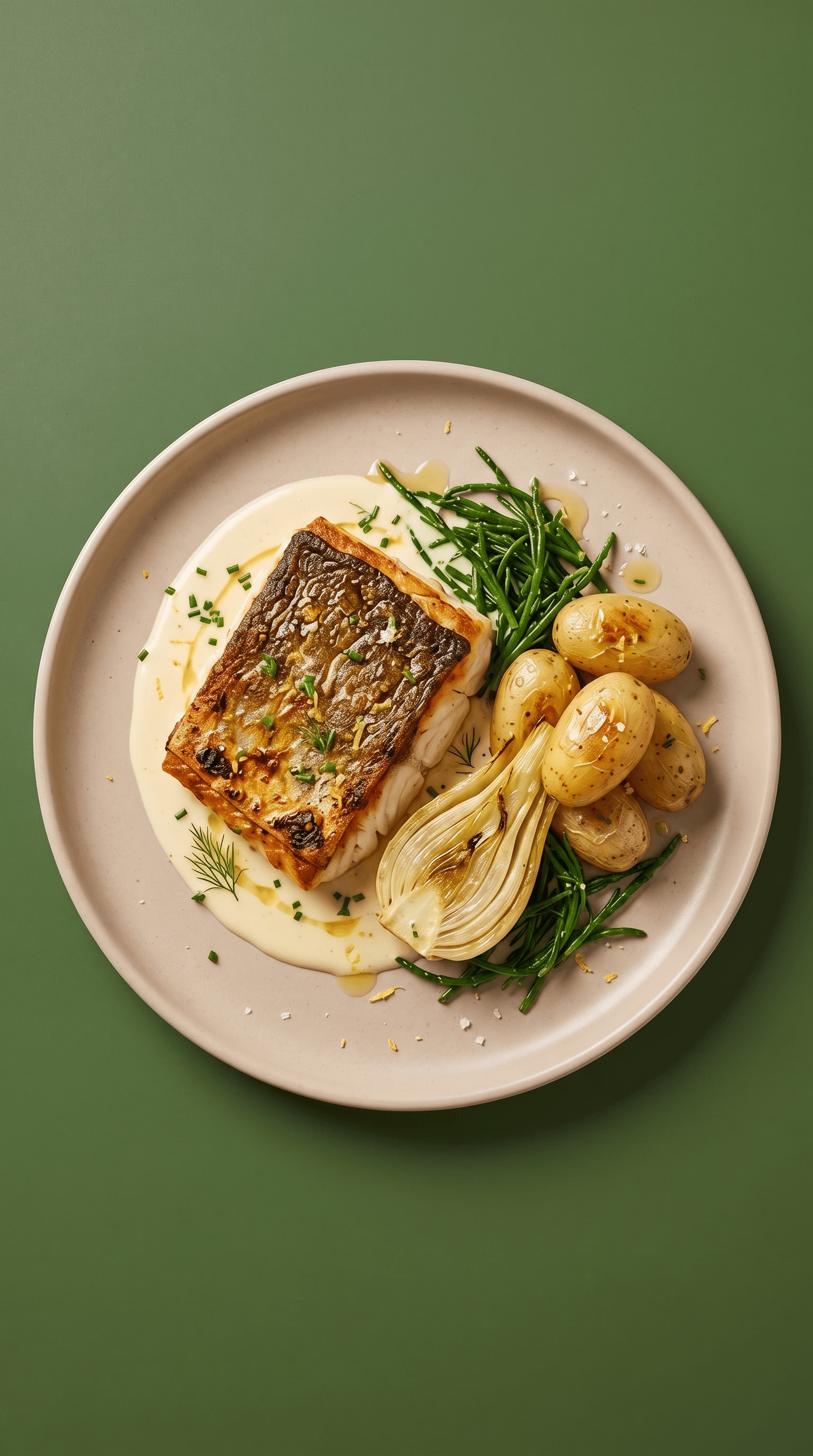
Roasted Turbot Recipe with Vermouth Beurre Blanc and Fennel
This roasted turbot recipe pairs a crisp-skinned, oven-finished fillet with a silky vermouth beurre blanc, buttery braised fennel, and confit-style baby potatoes. The trick is a hard sear for color, then a gentle 180°C / 356°F oven finish so the delicate flesh stays moist. It takes about 90 minutes total and serves 4.
90 min · Intermediate · Belgium