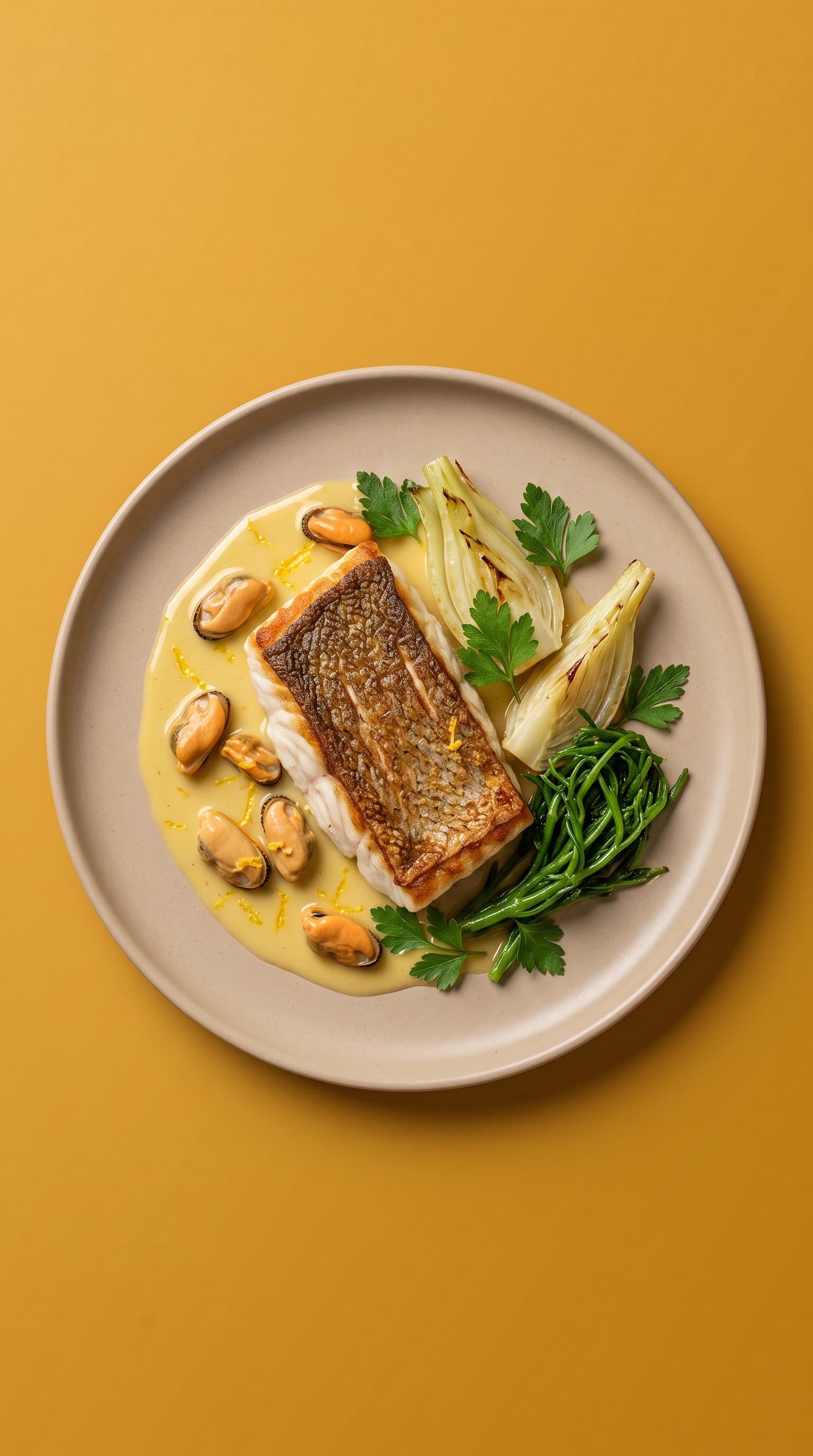
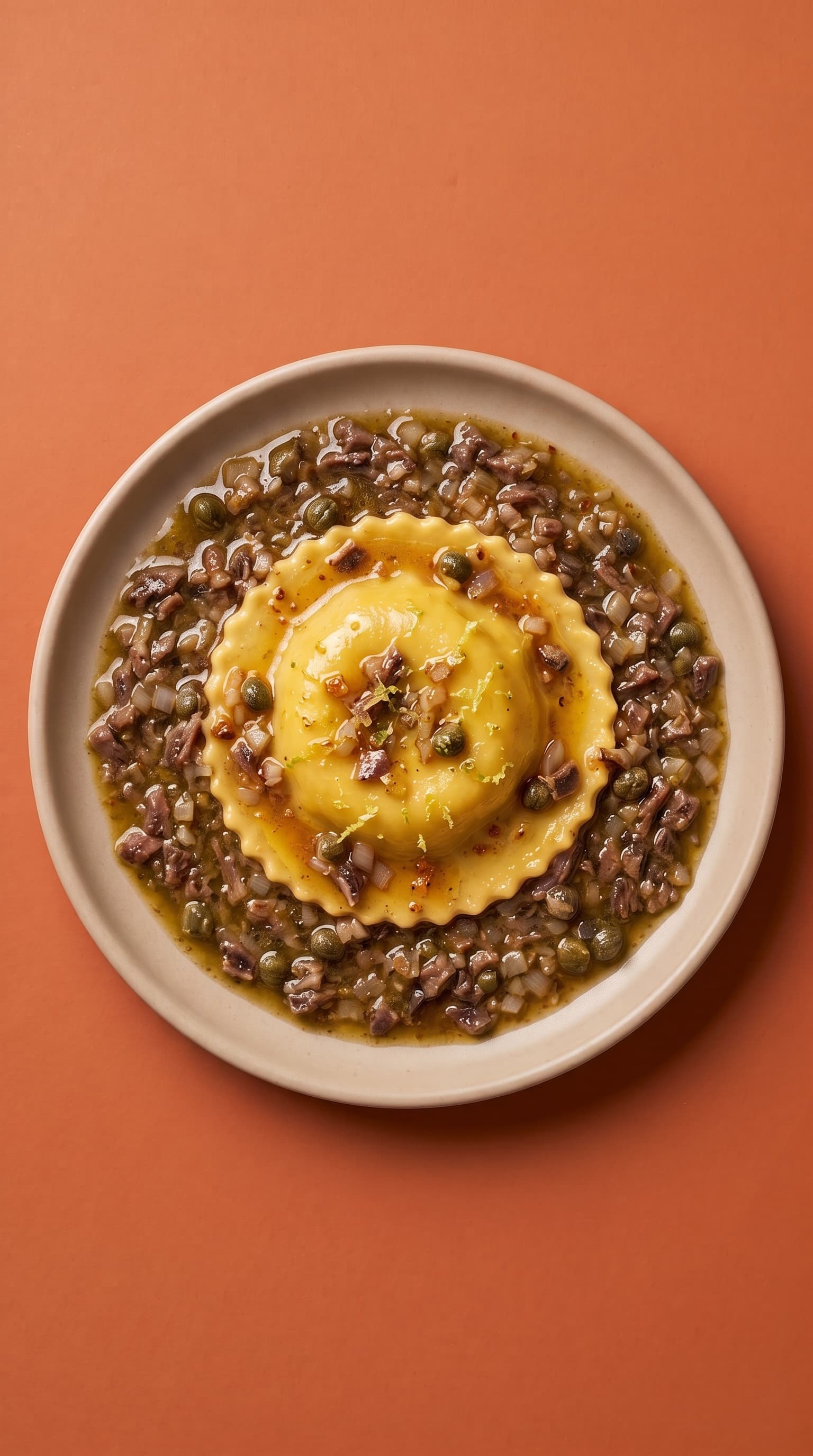
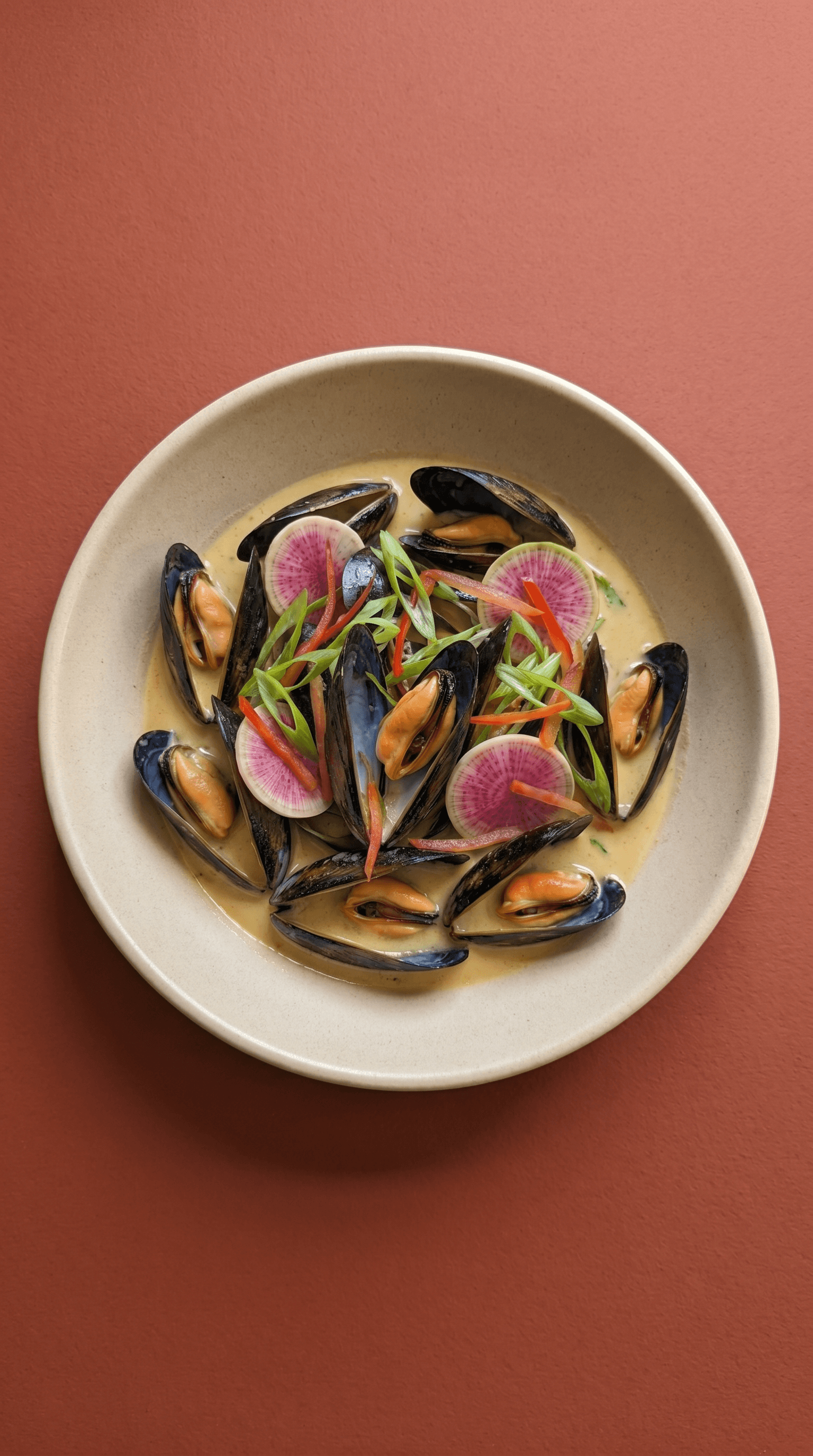
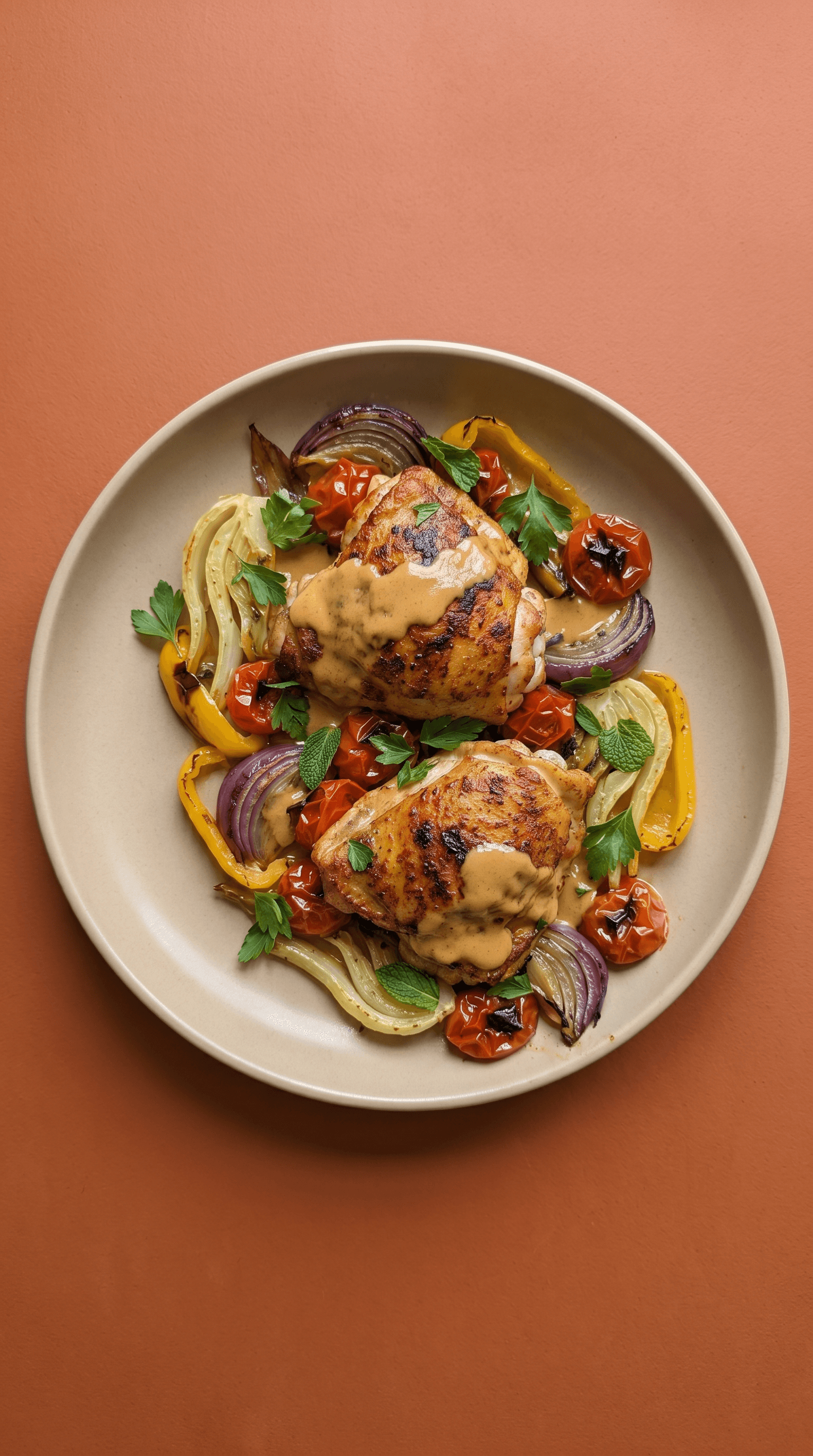
Korean food is bold and layered: fermentation, gochujang, sesame, garlic, and sauces with real depth. Christophe meets it with French technique, and that is where the two click.
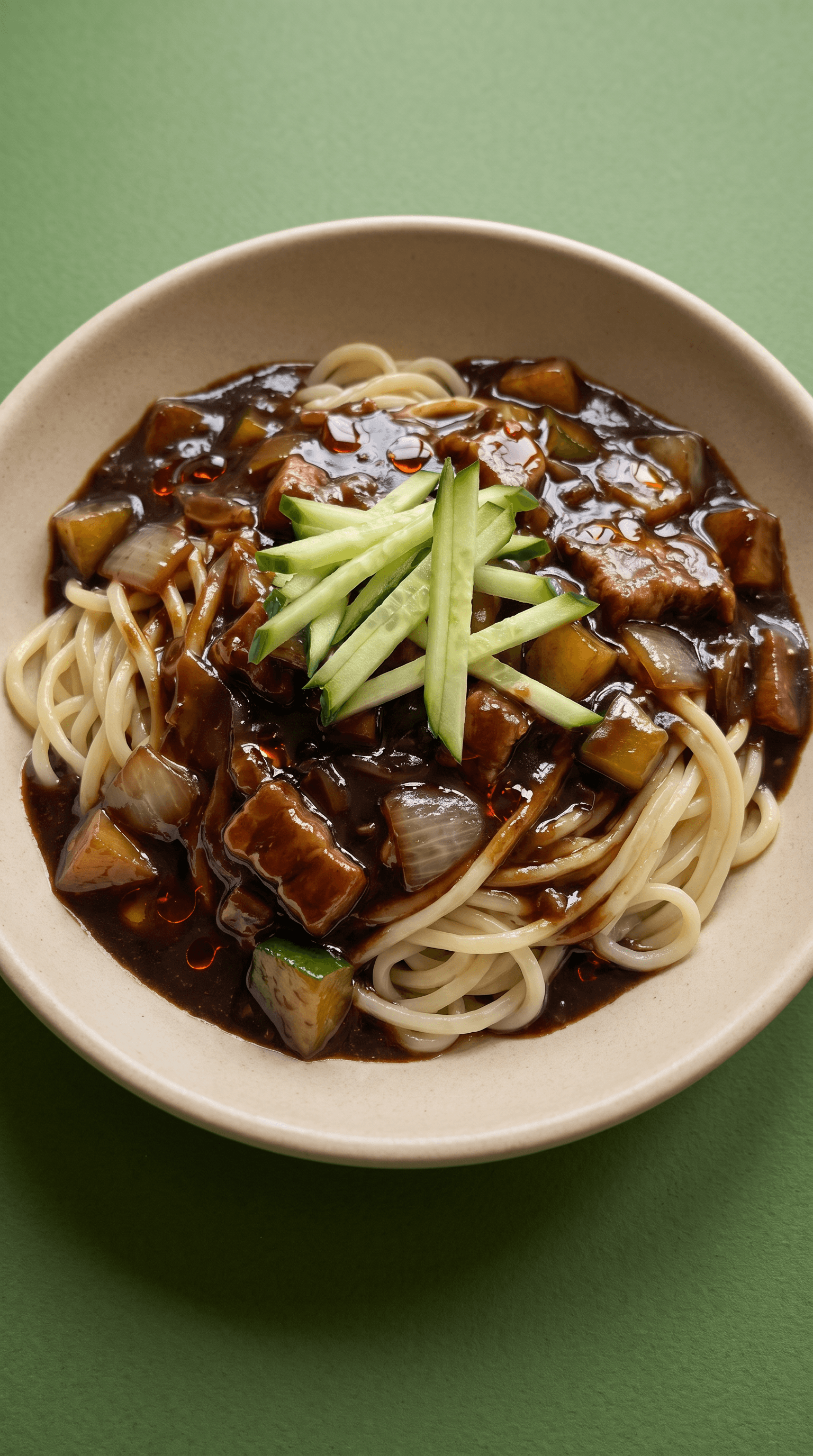
Jajangmyeon is Korea's favorite comfort noodle dish—thick wheat noodles smothered in a glossy black bean sauce with tender pork and vegetables. The secret is frying the fermented paste first to remove bitterness, then slow-caramelizing onions for sweetness. Ready in about an hour, this recipe serves 4 and tastes even better than your favorite Korean restaurant.
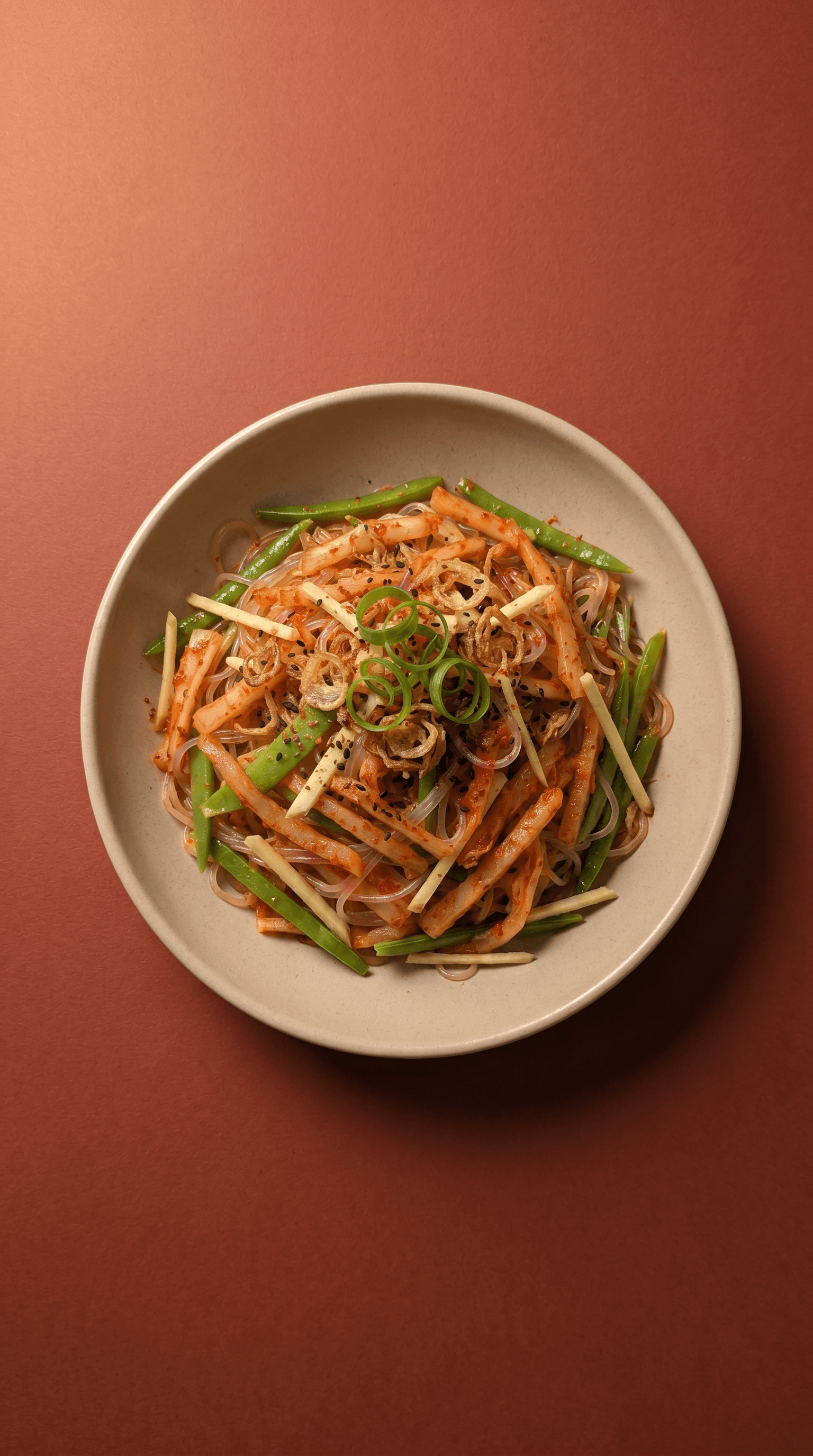
This Korean-fusion salad combines chewy glass noodles with tangy kimchi and sweet ginger in a refreshing cold dish. The key technique is cutting everything into thin matchsticks so each bite has perfect balance. Ready in 30 minutes, it serves 4 as a light starter or side dish that wakes up your taste buds.
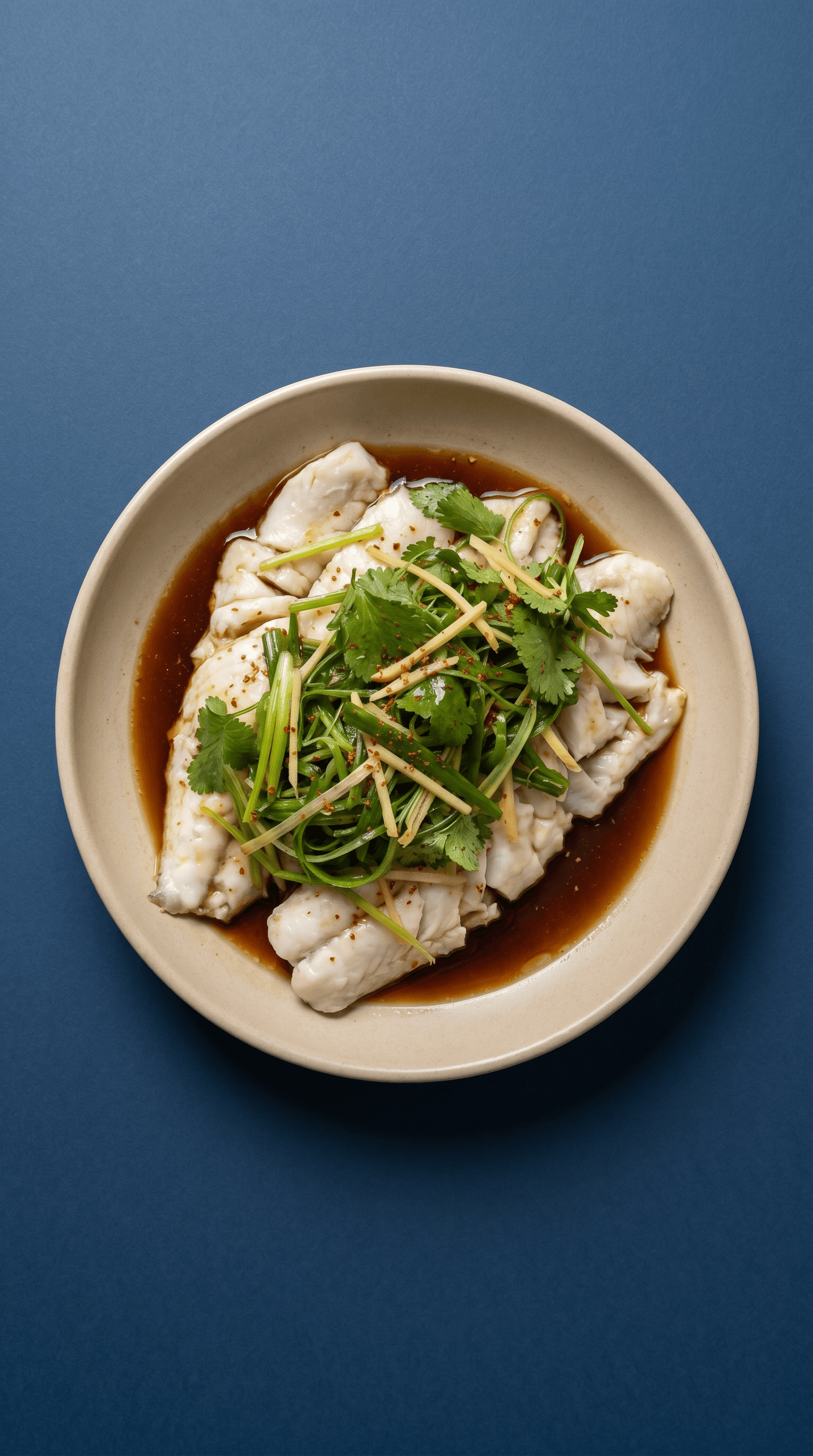
This is a light, elegant steamed fish dish that combines Japanese sake-steaming with Korean aromatics. Fresh sea bream gets gently cooked in sake vapors, then topped with crispy scallions, ginger, and cilantro that get flash-cooked with sizzling hot oil. The whole dish takes just 25 minutes and serves 4 people with restaurant-quality results.
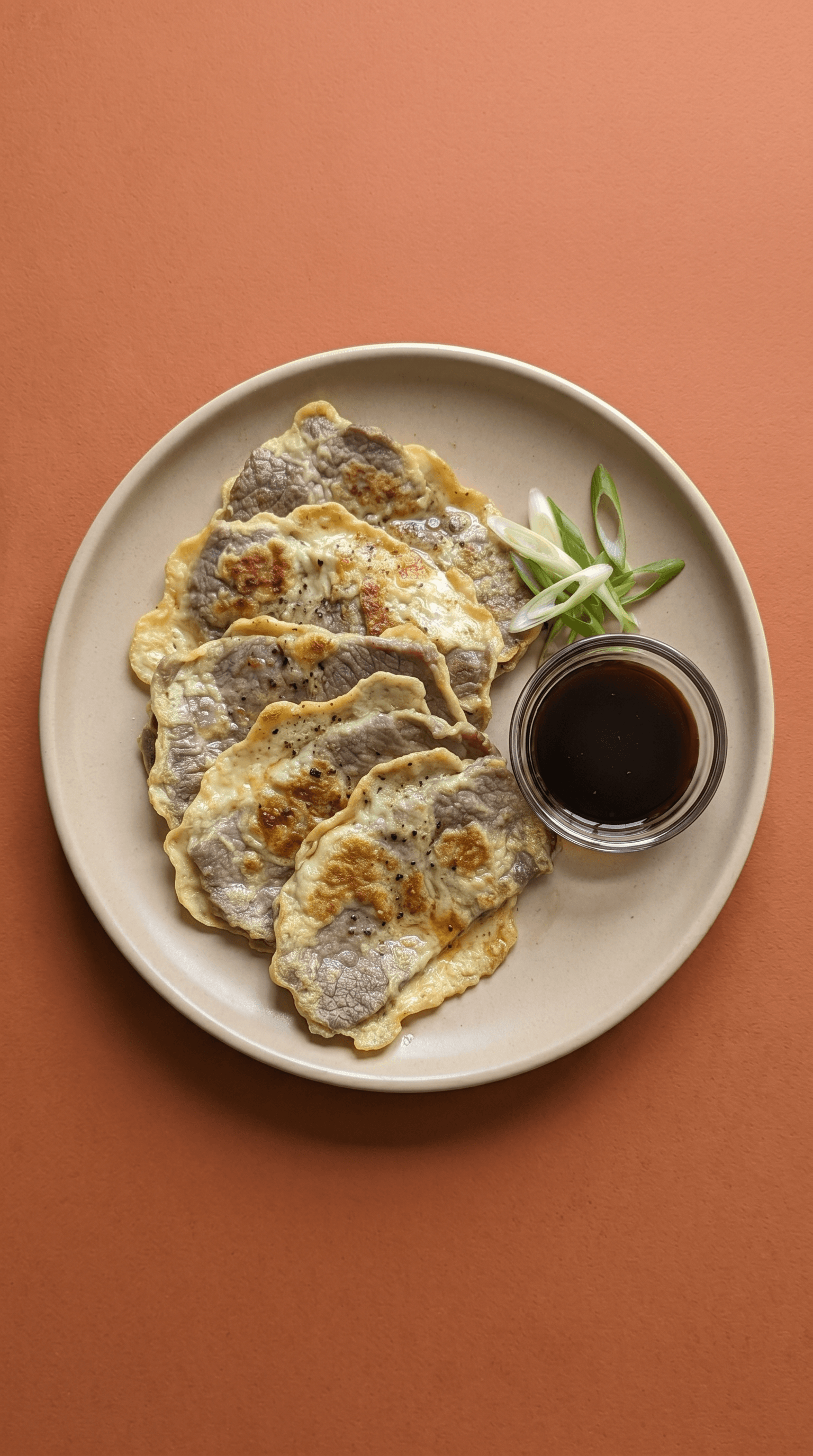
Beef Jeon is a Korean pan-fried dish where paper-thin beef slices get a delicate egg coating that creates a soft, golden crust. The secret is gentle heat and a light flour dusting that helps the egg stick perfectly. Ready in 30 minutes, this elegant appetizer serves 2-4 people and works beautifully for special occasions.
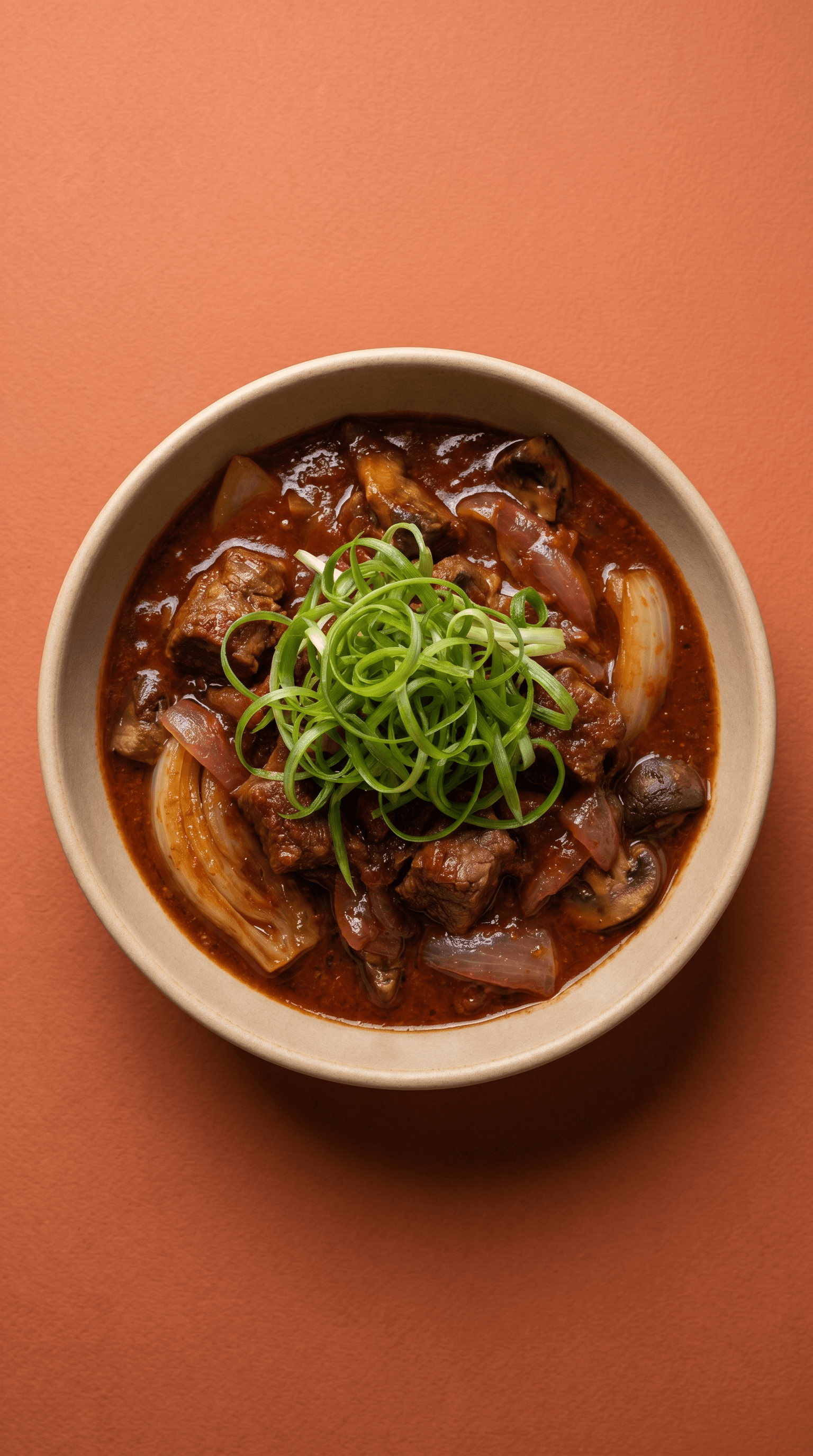
This Korean-inspired beef stew swaps tomato paste for spicy, fermented gochujang, creating deep umami flavors through slow braising. You'll master browning meat, sweating aromatics in the drippings, and deglazing with red wine. The dish takes about 2.5 hours and serves 4-6 people, finished with a bright marinated scallion topping that cuts through the richness.
150 min · Intermediate
About this collection
Asia runs deep in how Christophe cooks. Sometimes the Korean note is the whole dish — a deep gochujang in a beef stew. Sometimes it sits invisibly underneath, lifting richness and balance without announcing itself. The point is never to copy a tradition exactly; it is to respect it and let French method sharpen it.
Technique
Expect patient reductions, fermented depth used sparingly, balanced sweetness and heat, and finishing touches that keep the sauce glossy.
Mains with glossy sauces, fermented depth, and dishes that want rice and people around the table. A small collection, each recipe chosen for balance. Browse the Korean recipes above.