

Thai Fishcakes with Fresh Anchovy-Cilantro Herb Dressing
Prefer not to cook?
Order Thai Fishcakes with Fresh Anchovy-Cilantro Herb Dressing as a ready-made meal and get it delivered to your door.
Order this meal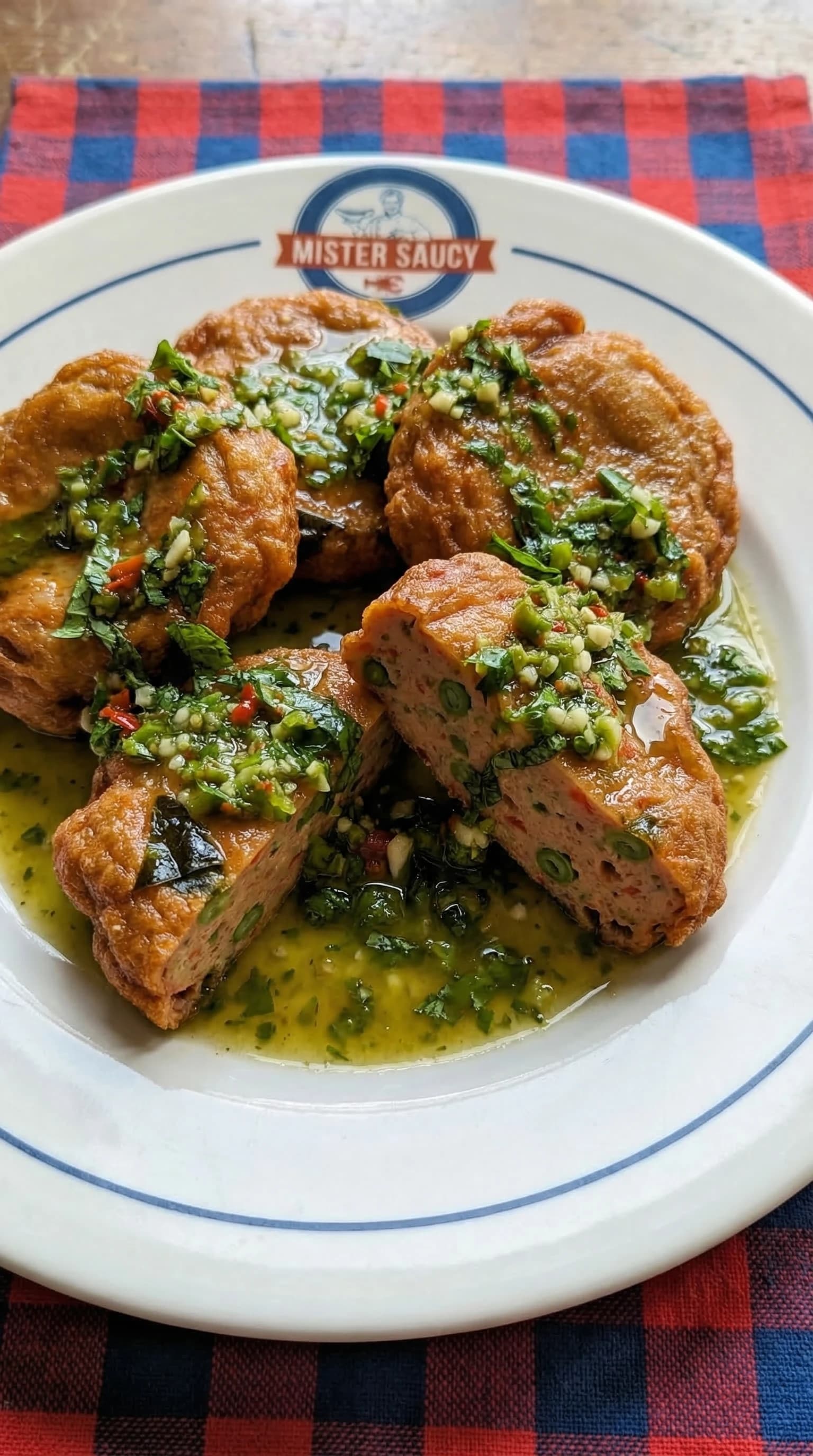
These Thai fishcakes stay classic and bouncy, but now get topped with a lighter, fresher anchovy-cilantro herb dressing instead of a warm melted anchovy oil. The anchovies are chopped and kept whole, while lime juice, Datu Puti vinegar, and a little water make the sauce brighter and less oily.

Recipe by Mr Saucy aka Christophe
Christophe is a culinary professional with expertise in French and global cuisine. He has developed recipes and cooking techniques that bridge traditional methods with modern home cooking approaches. Christophe focuses on making classic culinary techniques accessible to home cooks through clear instruction and practical applications. He studied at Le Cordon Bleu Paris and has work experience at a two star Michelin restaurant.
Homecook turned pro with a Cordon Bleu Paris graduate
Quick Info
What Makes These Fishcakes So Bouncy and Fresh-Tasting?
Traditional Thai technique shows that slapping the fish paste against the bowl aligns the protein fibers called myosin. This creates the signature springy texture that makes Tod Mun Pla different from regular fish patties—it's bouncy, not dense.
Keeping the fish ice-cold during processing prevents the proteins and fats from separating. When fish gets warm too early, you end up with a grainy, broken texture instead of that smooth, sticky paste that holds together perfectly when fried.
The new herb dressing stays brighter because the anchovies are chopped instead of melted, and the oil is balanced with cane vinegar, lime juice, and water. That gives you a lighter, sharper finish with more freshness and less heaviness.
Ingredients
Recipe yields 4 (appetizer portions) servings
For the Fishcakes
| Amount | Ingredient | Notes |
|---|---|---|
| 500 g (1 lb) | firm white fish fillets | Snapper, Cod, or Tilapia—chilled and cut into small chunks |
| 50 g (3 tablespoons) | red curry paste | Maesri or Mae Ploy brands recommended |
| 50 g (1 large) | egg | lightly beaten |
| 80 g (1/2 cup) | long beans or green beans | finely sliced into thin rounds |
| 5 g (4-5 leaves) | kaffir lime leaves | deveined and sliced into hair-thin slivers |
| 15 g (1 tablespoon) | fish sauce | for the fishcake base |
| 10 g (2 teaspoons) | palm sugar | finely shaved |
For the Cilantro-Garlic Oil
| Amount | Ingredient | Notes |
|---|---|---|
| 80 g (1/3 cup) | neutral oil | grapeseed or rice bran oil |
| 40 g (1 cup packed) | fresh cilantro | leaves and stems, blanched and shocked |
| 15 g (3-4 cloves) | garlic cloves | minced, divided between oil and dressing |
For the Fresh Anchovy Herb Dressing
| Amount | Ingredient | Notes |
|---|---|---|
| 20 g (about 4-5 fillets) | anchovy fillets in oil | finely chopped; keep distinct |
| 20 g (1/4 cup) | fresh Thai basil and mint | finely chopped |
| 5 g (2-3 chilies) | green bird's eye chilies | adjust to preferred heat level |
| 25 g (1 1/2 tablespoons) | lime juice | freshly squeezed |
| 20 g (1 tablespoon plus 1 teaspoon) | Filipino cane vinegar | Datu Puti preferred |
| 15 g (1 tablespoon) | water | to loosen the dressing |
| 45-60 g (3-4 tablespoons) | cilantro-garlic oil | use 45-60 g depending on how loose you want it |
Instructions
Make the Cilantro-Garlic Oil
- 1
Blanch and Shock the Cilantro
Bring a small pot of water to a rolling boil. Drop the cilantro in for exactly 10 seconds, then immediately plunge it into ice water. This quick blanch locks in the bright green color while the ice bath stops the cooking instantly so the herbs don't turn brown.
- 2
Blend the Herbal Oil
Squeeze the cilantro completely dry with your hands—any water left will make the oil cloudy. Blend it with the neutral oil and half the minced garlic until smooth and vibrant green. Strain through a fine mesh strainer or cheesecloth to remove any bits. Set aside 45-60 g for the dressing.
Prepare the Fishcake Paste
- 3
Process the Fish Base
Pulse the chilled fish chunks in a food processor with red curry paste, egg, fish sauce, and palm sugar until it forms a thick, sticky paste. Keeping the fish cold is critical—warm fish breaks down and gets grainy instead of smooth. Stop when it looks like thick peanut butter.
- 4
Slap the Paste (The Bounce Trick)
Transfer the paste to a bowl and slap it hard against the sides for 2-3 minutes. This traditional Thai technique aligns the protein fibers to create that signature bouncy texture. You'll feel it get firmer and more elastic as you work it.
- 5
Fold in the Aromatics
Gently fold in the sliced long beans and kaffir lime leaves by hand. Don't overmix—you want these to stay in distinct pieces for crunch and fresh citrus bursts when you bite into the fishcakes.
Make the Fresh Anchovy Herb Dressing
- 6
Build the Dressing Base
In a mortar and pestle, pound the green chilies and remaining garlic into a rough paste. Transfer to a bowl if needed, then stir in the chopped basil, mint, lime juice, Filipino cane vinegar, water, and 45-60 g of the cilantro-garlic oil until lightly emulsified.
- 7
Add the Anchovies
Fold in the finely chopped anchovies at the end. Do not heat them and do not pound them into the dressing—you want small distinct pieces throughout rather than a melted sauce.
Fry and Serve
- 8
Shape the Fishcakes
Wet your hands with cold salted water to prevent sticking. Shape the fish paste into small, flat discs about 4 cm (1.5 inches) wide and 1 cm (1/2 inch) thick. The flatter shape helps them cook evenly and puff up nicely.
- 9
Deep Fry Until Golden and Puffy
Heat neutral oil in a deep fryer or heavy pot to 170°C / 340°F. Fry the fishcakes in batches for 3-4 minutes until they puff up and turn golden brown. The puffing means the air you trapped during slapping is expanding—that's what creates the bouncy texture inside.
- 10
Drain and Top with Dressing
Drain the fishcakes briefly on paper towels and serve immediately while hot. Top each one with a generous spoonful of the fresh anchovy-cilantro herb dressing for a bright, savory finish.
Tips & Tricks
If your cilantro oil turns brown instead of bright green: Make sure the cilantro is completely dry after shocking it in ice water. Even a little moisture causes oxidation that turns the oil dull. Squeeze it hard in a clean kitchen towel before blending.
If your fishcakes are grainy instead of smooth: The fish got too warm during processing. Always use chilled fish straight from the fridge, and work quickly. If your kitchen is hot, chill the food processor bowl in the freezer for 10 minutes first.
If you're not sure if the seasoning is right: Fry a tiny marble-sized piece of the paste first and taste it. Adjust the fish sauce for saltiness or palm sugar for sweetness before shaping the rest of the batch. It's much easier to fix now than after everything is fried.
If the paste sticks to your hands while shaping: Wet your hands with cold salted water between each fishcake. The salt prevents sticking and the cold keeps the paste firm. Re-wet as needed—it makes shaping so much easier.
If your fishcakes are tough and rubbery: You over-processed the fish or slapped it too long. Bounciness comes from aligned proteins, but too much work makes them tight and rubbery. Pulse just until sticky, and slap for only 2-3 minutes.
If you don't have a mortar and pestle for the dressing: Finely mince the chilies and garlic together on a cutting board, then mash with the flat side of your knife. Stir everything together in a bowl, adding the chopped anchovies at the end so they stay distinct.
If the dressing feels too oily: Add a small splash of water, extra lime juice, or a touch more Datu Puti vinegar and stir again. The goal is a loose, bright dressing, not a heavy oil sauce.
Frequently Asked Questions
Why use homemade cilantro oil instead of olive oil?
Olive oil has a distinct peppery, Mediterranean flavor that clashes with delicate Thai curry paste. A neutral oil infused with cilantro and garlic gives you a cleaner, more integrated flavor that complements the fish and herbs instead of competing with them.
Can I make the fishcake paste ahead of time?
Yes, but only for a few hours. Make the paste, shape the fishcakes, and refrigerate them on a parchment-lined tray for up to 4 hours before frying. The herb dressing can also be made a few hours ahead and kept chilled; just stir it again before serving.
What can I use if I can't find kaffir lime leaves?
Mix fresh lime zest with a tiny amount of minced lemongrass to get those high-citrus notes that make Thai food taste authentic. Use about 1 teaspoon of zest plus 1/2 teaspoon of lemongrass for every 4-5 kaffir lime leaves. It's not identical, but it's close.
Can I use anchovy paste instead of whole fillets?
You can, but chopped anchovy fillets are better here. This dressing is meant to stay fresh and textured, with little savory pieces of anchovy throughout rather than a fully smooth or melted sauce.
Why are my fishcakes rubbery instead of bouncy?
There's a fine line between bouncy and rubbery. Bounciness comes from the slapping technique that develops myosin proteins. If they're tough, you either over-processed the fish in the blender or used a fish that was too dry and lean. Cod and tilapia work better than super-lean fish like sole.
Can I bake these instead of deep frying?
You can, but you'll lose the puffed texture and golden crust that makes these special. If you must bake, brush them with oil and bake at 200°C / 400°F for 15-18 minutes, flipping halfway. They'll be firmer and less bouncy, but still tasty.
What's the best oil temperature for frying?
Exactly 170°C / 340°F. Too hot and the outside burns before the inside cooks. Too cool and they absorb oil and get greasy instead of crispy. Use a thermometer—guessing leads to soggy fishcakes.
How do I know when the fishcakes are done frying?
They'll puff up noticeably and turn a deep golden brown all over. This takes 3-4 minutes. If you cut one open, the inside should be opaque white with no translucent bits.