

Soy-Butter Glazed Beef Tenderloin with Korean-Style Oyster Mushroom and Mint Salad
Prefer not to cook?
Order Soy-Butter Glazed Beef Tenderloin with Korean-Style Oyster Mushroom and Mint Salad as a ready-made meal and get it delivered to your door.
Order this meal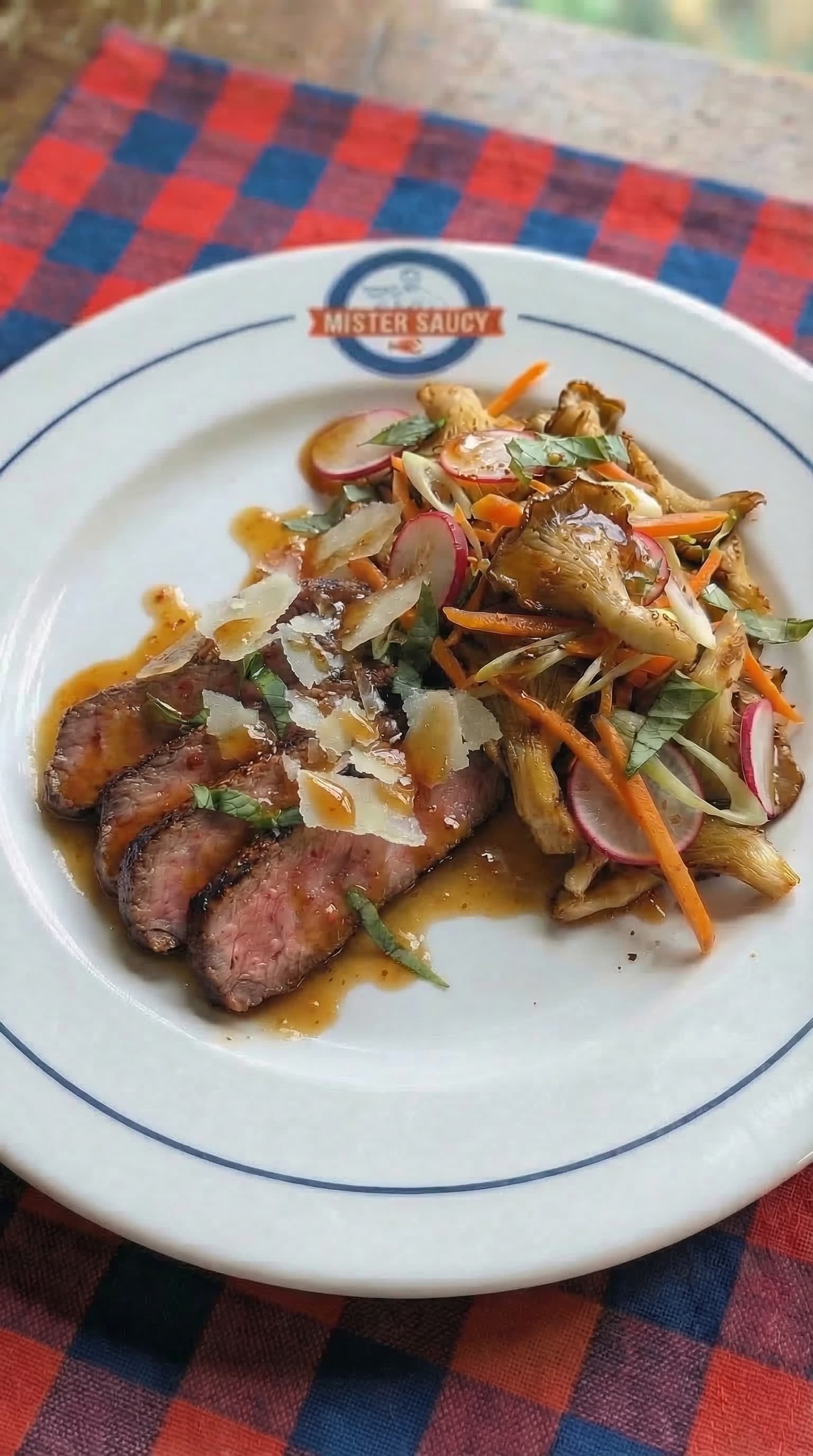
This fusion appetizer combines ultra thin slices of seared beef tenderloin with a fresh mushroom salad dressed in lime, olive oil, sesame oil, mint, and fried garlic in just 40 minutes. The finishing sauce is built with saké, reduced marinade, chicken broth, and cold butter for a glossy, refined finish.

Recipe by Mr Saucy aka Christophe
Christophe is a culinary professional with expertise in French and global cuisine. He has developed recipes and cooking techniques that bridge traditional methods with modern home cooking approaches. Christophe focuses on making classic culinary techniques accessible to home cooks through clear instruction and practical applications. He studied at Le Cordon Bleu Paris and has work experience at a two star Michelin restaurant.
Homecook turned pro with a Cordon Bleu Paris graduate
Quick Info
How Does This Create Restaurant-Quality Flavor So Quickly?
Traditional French technique called 'monter au beurre' transforms a reduced saké, marinade, and chicken broth base into a silky, glossy sauce. By whisking cold butter into the warm liquid off the heat, you create a stable emulsion that lightly thickens without turning greasy.
Food science shows that flash-frying at high heat creates a deep crust through the Maillard reaction while keeping the center rare and tender. The brief 15-minute marinade seasons the surface without overwhelming the beef or turning it mushy.
Professional chefs know that cooking mushrooms in a dry, smoking-hot pan first drives out their moisture and concentrates their natural umami. Dressing them with lime, olive oil, sesame oil, mint, and fried garlic keeps the salad fresh, aromatic, and bright against the rich beef.
Ingredients
Recipe yields 4 servings
For the Beef and Marinade
| Amount | Ingredient | Notes |
|---|---|---|
| 400 g (14 oz) | beef tenderloin | center cut, trimmed and cut into 2-inch thick medallions |
| 12 g (about 2 teaspoons) | soy sauce | Japanese Shoyu, for the beef marinade only |
| 30 g (2 tablespoons) | honey | for the beef marinade and pan sauce |
| 10 g (2 teaspoons) | rice vinegar | for the beef marinade |
| 40 g (about 2 tablespoons plus 2 teaspoons) | water | added to the marinade, 10 g per person |
| 60 g (1/4 cup) | saké | for deglazing the pan |
| 120 g (1/2 cup) | chicken broth | for reducing into the final sauce |
| 45 g (3 tablespoons) | unsalted butter | cold, cubed for mounting the sauce |
| 30 g (2 tablespoons) | neutral oil | grapeseed or canola, for high-heat searing |
| 20 g (about 3/4 oz) | Parmesan cheese | shaved very thin for finishing |
For the Mushroom Salad
| Amount | Ingredient | Notes |
|---|---|---|
| 200 g (7 oz) | oyster mushrooms | torn into bite-sized strips |
| 5 g (1 tablespoon) | gochugaru | Korean chili flakes, adjust for heat preference |
| 50 g (1 small) | carrot | julienned for color |
| 40 g (2-3 radishes) | red radish | thinly sliced into rounds |
| 20 g (2 stalks) | scallions | sliced on a long bias |
| 20 g (about 1 tablespoon plus 1 teaspoon) | lime juice | 5 g per person for the dressing |
| 20 g (about 1 tablespoon plus 1 teaspoon) | olive oil | 5 g per person for the dressing |
| 12 g (about 2 1/2 teaspoons) | sesame oil | 3 g per person for the dressing |
| 15 g (about 1/2 cup loosely packed) | fresh mint leaves | chiseled, divided between dressing and garnish |
| 12 g (4 teaspoons) | fried garlic | about 1 teaspoon per person |
| 4 wedges | lime wedges | 1/4 lime per person, for squeezing at the table |
Instructions
Marinate the Beef
- 1
Make the Quick Marinade
Whisk together 12 g soy sauce, 30 g (2 tablespoons) honey, 10 g (2 teaspoons) rice vinegar, and 40 g water in a shallow dish. This seasons the beef lightly while keeping the marinade fluid enough to use later in the pan sauce.
- 2
Coat the Beef (Timing Matters)
Add the beef medallions to the marinade and turn to coat evenly. Set a timer for exactly 15 minutes. Any longer and the vinegar will start breaking down the protein fibers too much, turning your tender beef mushy instead of silky.
Prepare the Mushroom Salad
- 3
Dry-Sear the Mushrooms (Build Umami)
Heat a large pan over high heat until smoking hot. Add the torn oyster mushrooms in a single layer without any oil. Let them sit undisturbed for 2-3 minutes until they release their moisture and turn golden brown on the bottom. This concentrates their natural umami flavor before dressing them.
- 4
Make the Lime-Mint Dressing
In a bowl, combine 20 g lime juice, 20 g olive oil, 12 g sesame oil, chiseled mint, 12 g fried garlic, and gochugaru. This dressing is intentionally soy-free and brightens the earthy mushrooms and rich beef.
- 5
Add the Fresh Vegetables (Keep the Crunch)
Just before serving, fold the warm mushrooms with the julienned carrots, sliced radishes, and scallions, then toss with the lime-mint dressing. Adding the vegetables at the last moment ensures they stay crisp and vibrant.
Sear the Beef and Make the Glaze
- 6
Dry and Sear the Beef (Get That Crust)
Remove the beef from the marinade and pat completely dry with paper towels—excess moisture prevents a proper crust. Heat 30 g (2 tablespoons) neutral oil in a cast iron skillet over high heat until smoking. Sear the beef for 1-2 minutes per side until deeply browned but still rare in the center, around 120-125°F / 49-52°C internally for that tataki-style texture.
- 7
Deglaze and Reduce the Sauce Base
Transfer the beef to a cutting board to rest briefly. Deglaze the hot pan with 60 g (1/4 cup) saké, scraping up any browned bits. Add the reserved marinade and let it reduce for about 1 minute—it goes quickly.
- 8
Add Broth and Mount the Butter
Add 120 g (1/2 cup) chicken broth and simmer until reduced by half. Remove the pan completely from the heat, then whisk in the cold butter cubes a little at a time, waiting for each piece to melt before adding the next. This creates a glossy, lightly thickened sauce that coats the beef without becoming heavy.
Plate and Serve
- 9
Slice Ultra Thin and Arrange
Slice the rested beef ultra thinly against the grain, tagliata-style, and arrange on plates next to the dressed mushroom salad. Spoon over the saké-butter sauce, finish with fresh mint and thin Parmesan shavings, and serve with 1/4 lime per person for squeezing over at the table.
Tips & Tricks
If your butter sauce breaks and looks greasy: The pan was too hot when you added the butter. Always remove the pan completely from the heat before whisking in cold butter. The milk solids separate from the fat if they boil. If it does break, whisk in 1 tablespoon of cold broth or water off the heat to bring it back together.
If your mushrooms are soggy instead of golden: Don't crowd the pan. If the mushrooms are too close together, they steam instead of brown and lose that essential meaty texture. Cook them in batches if needed, and make sure your pan is smoking hot before adding them.
If your beef doesn't have a good crust: Pat the beef completely dry with paper towels after marinating. Even a thin layer of moisture on the surface prevents proper browning. Also make sure your pan is truly smoking hot before the beef goes in.
If your mint loses its freshness: Add most of the mint at the last second before serving, or reserve part of it for garnish. Mint bruises quickly and tastes brightest when cut just before plating.
If your sauce gets too dark or sticky: After deglazing with saké, add the marinade and reduce it only briefly, about 1 minute. Then add the chicken broth and reduce by half. The honey in the marinade can darken quickly if you let that first reduction go too far.
If your Parmesan clumps or overpowers the dish: Use very thin shavings rather than grated Parmesan, and add them just before serving over the warm sliced beef. That gives you a light savory accent without covering the crust or muddying the clean look of the plate.
Frequently Asked Questions
Can I use a different cut of beef?
Yes! While tenderloin is prized for its soft texture, you can use sirloin or flat iron steak. Just make sure you slice it very thinly against the grain after searing to keep it tender, since these cuts have more muscle fiber than tenderloin. They'll have more beefy flavor but slightly less melt-in-your-mouth texture.
Why did my glaze separate and look greasy?
This happens when the pan is too hot when you add the butter. The milk solids separate from the fat if they boil. Always remove the pan completely from the heat source before whisking in your cold butter cubes a little at a time. The temperature difference creates a stable emulsion that looks smooth, glossy, and light rather than greasy.
Is the gochugaru necessary for the salad?
Gochugaru provides a unique smoky, mild heat and beautiful red color that's central to the Korean-inspired flavor profile. If you must substitute, use Aleppo pepper or a small amount of crushed red pepper flakes, but know the flavor will shift slightly. Gochugaru has a fruity sweetness that regular chili flakes don't have.
Can I make any of this ahead of time?
Yes, partially! You can julienne the vegetables, chisel the mint, and mix the lime, olive oil, sesame oil, and fried garlic dressing up to 1 day ahead and store them covered in the fridge. The mushrooms can be cooked ahead and dressed shortly before serving. But the beef must be seared, sliced ultra thin, and the butter sauce made right before serving for the best texture and temperature.
What if I don't have a cast iron skillet?
Any heavy-bottomed pan works as long as it can handle high heat. Stainless steel is great. Avoid nonstick pans for this recipe because they can't get hot enough to create a proper crust, and the coating can break down at the high temperatures needed for flash-frying.
How do I know when the beef is done?
For rare tataki-style beef, aim for 120-125°F / 49-52°C internally. It should feel soft when you press it, like the fleshy part of your palm below your thumb when your hand is relaxed. The outside will be deeply browned and crusty while the center stays ruby red and tender.
Why does the recipe call for such a short marinating time?
Tenderloin is already incredibly tender, so it doesn't need long marinating to break down. The 15-minute marinade is just enough for light seasoning and caramelization. Any longer and the acid from the vinegar starts denaturing the proteins too much, making the texture mushy instead of silky.
How do I slice the beef ultra thin?
Use a very sharp knife and slice across the grain after a brief rest, while the beef is still slightly warm. That makes it easier to cut the meat into delicate, tagliata-style ultra thin slices without tearing.
How do I add the Parmesan on top?
Use a vegetable peeler or sharp knife to shave thin curls from a wedge of Parmesan, then scatter them over the warm sliced beef right before serving. The residual warmth softens the cheese slightly and gives the dish a savory, nutty finish.
Why are lime wedges served on the side?
They let each person adjust the final acidity to taste. A squeeze of fresh lime right before eating brightens both the mushroom salad and the rich butter sauce.