

Pigeon aux Raisins à la Mode de Flandres (Classical Edition)
Prefer not to cook?
Order Pigeon aux Raisins à la Mode de Flandres (Classical Edition) as a ready-made meal and get it delivered to your door.
Order this meal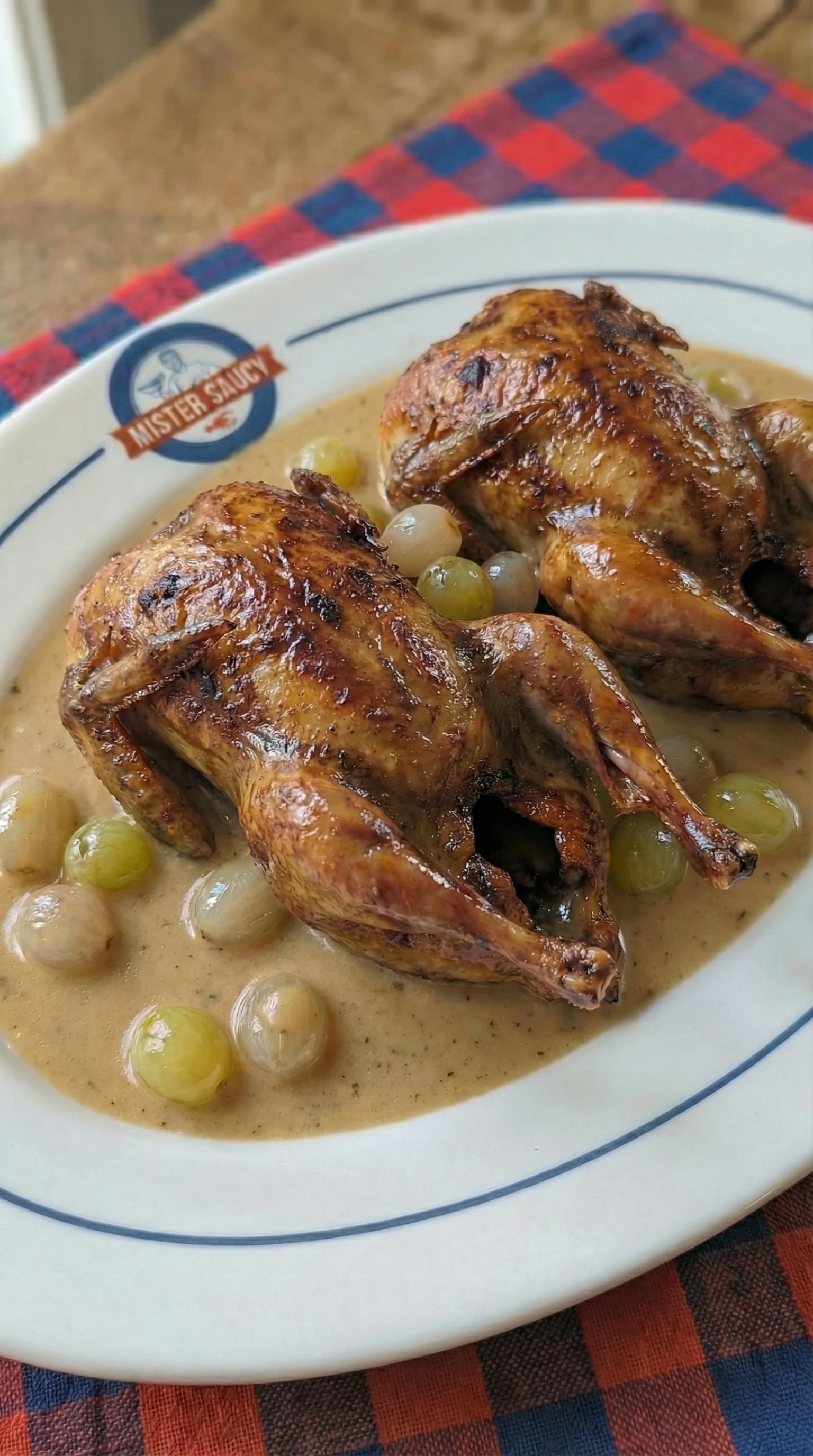
This is a traditional Flemish pigeon dish with sweet white grapes and a silky sauce. The key trick is slow-roasting at low heat (285°F / 140°C) for tender, fall-off-the-bone meat, then finishing the sauce with rice flour, sour cream, and a little reserved grape syrup. This version serves 4 with about 1 pigeon per person, roughly 300 g each.

Recipe by Mr Saucy aka Christophe
Christophe is a culinary professional with expertise in French and global cuisine. He has developed recipes and cooking techniques that bridge traditional methods with modern home cooking approaches. Christophe focuses on making classic culinary techniques accessible to home cooks through clear instruction and practical applications. He studied at Le Cordon Bleu Paris and has work experience at a two star Michelin restaurant.
Homecook turned pro with a Cordon Bleu Paris graduate
Quick Info
How Does This Create Such Tender Meat and Silky Sauce?
Traditional French technique shows that low-temperature roasting at 285°F / 140°C breaks down the tough connective tissue in game birds without drying out the delicate breast meat. The gentle heat and regular basting keep everything moist and succulent.
Rice flour gives the sauce a polished, glossy texture without making it heavy. Sour cream adds tang and roundness, while the reduced stock supplies depth and body.
A little reserved syrup from the canned grapes balances the gamey depth of the pigeon and ties the fruit element directly into the sauce for a more coherent sweet-savory result.
Ingredients
Recipe yields 4 servings
For the Pigeons
| Amount | Ingredient | Notes |
|---|---|---|
| 1200 g (approximately 4 birds) | whole pigeons | cleaned, at room temperature; about 1 pigeon per person |
| 68 g (about 4 1/2 tablespoons) | clarified butter | for high-heat searing |
| 8 g (to taste) | salt and white pepper | — |
For the Sauce
| Amount | Ingredient | Notes |
|---|---|---|
| 60 g (about 3 medium) | shallots | finely minced |
| 21 g (about 2 tablespoons) | rice flour | for a silky, glossy finish |
| 75 g (about 5 tablespoons) | Cognac | for deglazing and depth |
| 150 g (about 2/3 cup) | dry white wine | Riesling or Pinot Gris, adds necessary acidity |
| 375 g (about 1 1/2 cups) | rich poultry or game stock | the foundation of the sauce |
| 90 g (about 6 tablespoons) | sour cream | stirred in off heat for a gentle tangy finish |
| 225 g (about 1 1/2 cups) | canned depitted white grapes | drained, reserving some syrup, provides signature sweetness |
| 45 g (3 tablespoons) | grape syrup | reserved from the can for balancing sweetness |
| 15 g (1 large bundle) | bouquet garni | thyme, bay leaf, parsley stems, tied with kitchen twine |
Instructions
Prep and Sear the Pigeons
- 1
Season the Birds Deeply
Season the pigeons generously inside and out with salt and white pepper. This step is crucial because the salt needs time to penetrate the meat during the slow roast, building flavor from the inside out.
- 2
Sear Until Golden Brown
Heat the clarified butter in a heavy Dutch oven over medium-high heat until shimmering. Sear the pigeons on all sides until golden brown—this creates the savory fond (those brown bits stuck to the pan) that will become the base of your sauce. Work in batches if needed so the birds brown rather than steam.
- 3
Build the Aromatic Base
Remove the pigeons and set aside. Add the minced shallots to the same pot and sauté until translucent, about 2 minutes. The residual heat and fat will soften them without browning.
Deglaze and Slow-Roast
- 4
Deglaze with Alcohol
Pour in the Cognac and white wine, scraping the bottom of the pan vigorously with a wooden spoon. All those flavorful brown bits dissolve into the liquid, creating the foundation of your sauce.
- 5
Set Up for Low and Slow
Return the pigeons to the pot along with the poultry stock and bouquet garni. Cover with a tight-fitting lid to trap moisture—this creates a gentle steam environment that keeps the meat from drying out.
- 6
Roast at Low Temperature
Transfer to a preheated 285°F / 140°C oven and roast for 75 to 90 minutes. Baste the birds every 20 minutes with the cooking liquid—this regular moisture bath is what makes the meat fall-off-the-bone tender without drying the delicate breast.
Finish the Sauce
- 7
Reduce and Concentrate
Remove the pigeons and keep warm. Strain the cooking liquid through a fine-mesh strainer into a saucepan, then reduce by one-third over medium heat. This concentrates all the flavors and creates a more intense base.
- 8
Stabilize with Rice Flour
Whisk the rice flour into 2 tablespoons of cold stock or water to create a smooth slurry. Stir this into the simmering reduction—the rice starch thickens the sauce without making it pasty or heavy.
- 9
Simmer Until Glossy
Let the sauce simmer for 1 to 2 minutes after adding the slurry, whisking as needed, until it becomes smooth, lightly thickened, and glossy.
- 10
Finish with Sour Cream and Grapes
Take the sauce off the heat and whisk in the sour cream until smooth, then add the drained grapes and 2 to 3 tablespoons of the reserved grape syrup. Adjust seasoning with salt and white pepper, then serve the pigeons immediately, napped with the luxurious sauce.
Tips & Tricks
If your sauce looks grainy or lumpy: Whisk the rice flour slurry until completely smooth before adding it to the pan. If needed, pass the finished sauce through a fine-mesh sieve for a silkier texture.
If the sauce is too thick: Thin it with a splash of the reserved grape syrup or a little stock. The syrup adds a hint of extra sweetness that complements the dish perfectly.
If you don't have rice flour: Use cornstarch instead—it also creates a glossy finish. Mix 1 tablespoon cornstarch with 2 tablespoons cold water and add it the same way. Avoid wheat flour, which makes the sauce cloudy and heavy.
If the sour cream worries you: Take the sauce off the heat before whisking it in. Gentle heat keeps it smooth and gives the sauce a rounded tang without curdling.
If the pigeon breast is drying out: Baste more frequently—every 15 minutes instead of 20. The regular moisture keeps the delicate breast meat from overcooking while the legs and thighs become tender.
If you're planning portions: Use about 1 pigeon per person, around 300 g cleaned weight each, rather than the smaller 200 g estimate.
Frequently Asked Questions
Can I make this ahead of time?
Partial. You can roast the pigeons up to 1 day ahead and refrigerate them covered. Make the sauce fresh on serving day for the best texture. Reheat the birds gently in a 250°F / 120°C oven while you finish the sauce.
Why use rice flour instead of regular flour?
Rice flour provides a more stable, translucent finish that doesn't mask the delicate flavor of the pigeon. Regular wheat flour can turn pasty and make the sauce look cloudy, while rice flour gives you that professional mirror shine.
Will the sauce still be rich without liver?
Yes. The reduced stock, sour cream, and gentle sweet-savory balance from the grapes and syrup still create a full, elegant sauce without needing liver.
What if I can't find pigeon?
Use Cornish game hens or quail instead. The technique works the same way—just adjust the roasting time. Game hens need about 60 minutes, quail only 45 minutes. Check for doneness at 165°F / 74°C internally.
Can I use fresh grapes instead of canned?
Yes, but blanch them first. Drop fresh seedless white grapes in boiling water for 30 seconds, then shock in ice water. This softens them slightly so they blend better with the warm sauce. If using fresh grapes, add a small spoonful of sugar or a splash of juice to replace the sweetness of the canned grape syrup.
Why is there no butter at the end?
Because the sauce is already enriched with sour cream and a well-reduced stock. Finishing without butter keeps the sauce cleaner and slightly lighter while still giving you plenty of body.
What if my sauce looks lumpy?
Whisk the rice flour with cold stock or water until completely smooth before adding it. If needed, strain the finished sauce for an extra-refined texture.
Do I really need to baste every 20 minutes?
Yes. Regular basting is essential for achieving that fall-off-the-bone texture without drying out the delicate breast meat. Set a timer so you don't forget—it only takes 30 seconds each time.
How much pigeon should I buy per person?
For this version, yes—plan on about 1 cleaned pigeon per person, roughly 300 g each, for a proper main-course serving.