Whole Burrata alla Puttanesca
55 min · Medium · Serves 4
 From our menuVitello Tonnato€17.50 · Made by us, delivered chilled.
This stunning Italian appetizer places a whole, creamy burrata at the center of a warm, briny puttanesca relish made with cherry tomatoes, anchovy, olives, capers, and grilled artichoke hearts. The secret is temperature: a warm sauce beside cool cheese creates magic. Ready in 20 minutes and serves 4.
Recipe by Christophe Rammant
Cordon Bleu Paris alumni - Two star Michelin kitchen experience
Why Does Warm Sauce Next to Cold Cheese Make This So Special?
Traditional Italian technique knows that contrast is everything. Serving the burrata at room temperature lets the creamy inside flow naturally, while the warm puttanesca around it creates a beautiful push and pull of temperatures, textures, and flavors. Food science shows that fat carries flavor best when it is slightly warm, so both the olive oil in the sauce and the cream inside the cheese taste more expressive this way.
Professional chefs use a two-step anchovy trick here. Melting finely chopped anchovy into the hot oil first builds a deep, savory base that you taste in every bite. Then folding in coarser pieces at the very end keeps little pops of salty, briny flavor throughout the sauce so it never feels flat or one-note.
Food science shows that tomatoes cooked briefly over higher heat blister and collapse just enough to release their juice without turning into a heavy pasta sauce. That bright, loose texture is exactly what burrata needs beside it — something vivid and a little sharp to balance all that rich, milky creaminess.
Estimated nutrition per serving
Estimated from ingredient weights, not lab-tested.
- Calories
- 354
- Protein
- 15g
- Fat
- 30g
- Carbohydrates
- 8g
The weekly recipe note
Enjoyed this recipe? Get the next one first.
One new recipe each week from Christophe: global flavor, French technique, and practical home-cook timing.
By signing up, you agree to receive emails from Mr. Saucy.
Ingredients
Recipe yields 4 servings
The Star
| Amount | Ingredient | Notes |
|---|---|---|
| 250 g (1 whole ball) | burrata | take it out of the fridge 30 to 45 minutes before serving so it reaches room temperature |
For the Puttanesca Relish
| Amount | Ingredient | Notes |
|---|---|---|
| 250 g (about 1½ cups) | cherry tomatoes | mixed colors if available, halved |
| 20 g (about 4 small cloves) | confit garlic cloves | whole or halved; save 10 g of their oil if you have it |
| 25 g (about 6 to 8 fillets) | anchovy fillets in oil | divide into two portions: finely chop two-thirds for melting into the oil, and coarsely chop the rest to fold in at the end |
| 20 g (about 2 tablespoons) | capers | rinsed and lightly dried |
| 70 g (about ½ cup) | black olives | Gaeta, Taggiasca, or Kalamata; pitted and torn |
| 90 g (about ½ cup) | grilled artichoke hearts in oil | well drained and halved or quartered |
| 35 g (about 2½ tablespoons) | extra virgin olive oil | divided; use 20 g for cooking and 15 g for finishing; reduce slightly if using oil from the confit garlic or artichokes |
| 1 g (about ¼ teaspoon) | dried chili flakes | adjust to your heat preference |
| 6 g (about 1 teaspoon) | red wine vinegar | optional; use only if the tomatoes taste very sweet or flat |
To Finish
| Amount | Ingredient | Notes |
|---|---|---|
| 10 g (about a small handful) | fresh basil | small leaves picked |
| 2 g (a small pinch) | flaky sea salt | use sparingly — the anchovy, capers, olives, and artichokes are already salty |
| 1 g (a few cracks) | black pepper | freshly cracked |
Instructions
Before You Start
- 1
Temper the Burrata (The Most Important Step)
Take the burrata out of the fridge 30 to 45 minutes before you plan to serve. A cold burrata stays tight and firm — the creamy stracciatella inside will not flow the way it should. Room temperature lets it soften so it spills out beautifully when you open it at the table.
- 2
Prep Your Anchovy (The Two-Cut Trick)
Divide your anchovy fillets into two piles. Finely chop about two-thirds of them until they are almost a paste — these will melt into the oil and build the deep savory base. Coarsely chop the remaining third into small pieces — these go in at the very end to give little bursts of salty flavor in every bite.
Build the Puttanesca Relish
- 3
Warm the Garlic Oil (Perfume, Don't Brown)
Pour 20 g of olive oil into a sauté pan and set it over medium-low heat. Add the confit garlic cloves and warm them gently for about 1 minute. Because confit garlic is already cooked, you are just waking up its sweet, mellow aroma in the oil — not cooking it further. If it starts to sizzle hard or color, turn the heat down.
- 4
Melt the First Anchovy (Build the Savory Base)
Add the finely chopped anchovy to the warm oil and stir gently for about 30 to 60 seconds. Watch it dissolve into the oil — it will seem to disappear, and that is exactly right. This is the flavor foundation of puttanesca: a deep, savory, salty richness that coats every other ingredient in the pan.
- 5
Add the Briny Vegetables (Quick Bloom)
Add the chili flakes, capers, torn olives, and drained artichoke hearts. Stir everything together and cook for just 30 to 60 seconds. The brief contact with the hot, flavored oil wakes up the aromatics and brings all the preserved vegetables together without overcooking them or making them mushy.
- 6
Blister the Tomatoes (Bright, Not Jammy)
Add the cherry tomatoes cut side down and raise the heat to medium. Cook for 3 to 5 minutes without stirring too much — you want them to blister and partially collapse, releasing their juice into a loose, glossy sauce. The goal is vivid and fresh-tasting, not a thick stew. Season carefully with black pepper and only a tiny pinch of flaky salt if needed, remembering that the anchovy, olives, and capers are already very salty.
- 7
Fold in the Second Anchovy and Balance (The Finishing Touch)
Take the pan off the heat or reduce to the lowest setting. Fold in the coarsely chopped anchovy pieces — the residual warmth softens them slightly while keeping their texture intact. If the tomatoes taste flat or very sweet, add the red wine vinegar now. A small splash sharpens everything and stops the dish from feeling too rich. Let the relish sit for 2 to 3 minutes until it is warm rather than hot — a sauce that is too hot will melt and collapse the burrata the moment it touches it.
Plate and Serve
- 8
Compose the Plate (Frame the Star)
Place the whole burrata in the center of a shallow plate. Spoon the warm puttanesca relish around it and just a little over the top of the cheese — enough to show what is coming, but not so much that it buries the burrata. Scatter the fresh basil leaves over everything and drizzle the remaining 15 g of olive oil around the plate. The burrata should look like the centerpiece it is.
- 9
Open the Burrata at the Table (The Big Moment)
Carry the plate to the table whole. Just before eating, use a spoon or your fingers to gently tear open the top of the burrata skin. The creamy stracciatella inside will spill out into the warm puttanesca around it. Opening it too early in the kitchen lets all that beautiful creaminess spread and flatten before anyone sees it — save the drama for the table.
The weekly recipe note
Enjoyed this recipe? Get the next one first.
One new recipe each week from Christophe: global flavor, French technique, and practical home-cook timing.
By signing up, you agree to receive emails from Mr. Saucy.
Tips & Tricks
Your sauce is too hot when you go to plate:
Let it sit off the heat for 2 to 3 minutes before spooning it around the burrata. A sauce that is too hot tightens the burrata skin and causes the creamy inside to leak out and spread before you even reach the table.
Your tomato relish tastes too salty:
Remember that anchovy, capers, olives, and preserved artichokes all bring salt to the party. Rinse the capers well, drain the artichokes thoroughly, and hold back on adding any extra salt until the very end after everything is combined and you have tasted it.
Your tomato relish looks thick and jammy like pasta sauce:
You cooked the tomatoes too long or over too high a heat. Pull them off the heat sooner — you want them just blistered and loosely collapsed, still holding some shape and brightness. The relish should be spoonable, not spreadable.
You do not have confit garlic:
Use 1 to 2 raw garlic cloves, very thinly sliced. Cook them gently in the oil over low heat for 2 to 3 minutes until soft and just barely golden before adding the anchovy. Do not let them brown or they will turn bitter.
Your burrata is still cold and firm when you go to serve:
You need to temper it longer next time — 30 to 45 minutes at room temperature is the minimum. In a pinch, place the sealed burrata bag in a bowl of lukewarm water for 10 minutes to gently bring up the temperature.
The sauce tastes flat even after seasoning:
Add a small splash of red wine vinegar — about half a teaspoon — off the heat. Acidity wakes up all the other flavors and cuts through the richness of the olive oil and cheese without making the dish taste sharp or aggressive.
Your sauce is too hot when you go to plate:
Let it sit off the heat for 2 to 3 minutes before spooning it around the burrata. A sauce that is too hot tightens the burrata skin and causes the creamy inside to leak out and spread before you even reach the table.
Your tomato relish tastes too salty:
Remember that anchovy, capers, olives, and preserved artichokes all bring salt to the party. Rinse the capers well, drain the artichokes thoroughly, and hold back on adding any extra salt until the very end after everything is combined and you have tasted it.
Your tomato relish looks thick and jammy like pasta sauce:
You cooked the tomatoes too long or over too high a heat. Pull them off the heat sooner — you want them just blistered and loosely collapsed, still holding some shape and brightness. The relish should be spoonable, not spreadable.
You do not have confit garlic:
Use 1 to 2 raw garlic cloves, very thinly sliced. Cook them gently in the oil over low heat for 2 to 3 minutes until soft and just barely golden before adding the anchovy. Do not let them brown or they will turn bitter.
Your burrata is still cold and firm when you go to serve:
You need to temper it longer next time — 30 to 45 minutes at room temperature is the minimum. In a pinch, place the sealed burrata bag in a bowl of lukewarm water for 10 minutes to gently bring up the temperature.
The sauce tastes flat even after seasoning:
Add a small splash of red wine vinegar — about half a teaspoon — off the heat. Acidity wakes up all the other flavors and cuts through the richness of the olive oil and cheese without making the dish taste sharp or aggressive.
Frequently Asked Questions
Can I make the puttanesca part ahead of time?
Yes! Make the relish several hours ahead or even the day before and store it covered in the fridge. Rewarm it gently on the stove before serving. If it looks too thick, stir in a small spoon of olive oil to loosen it. Always fold in the coarsely chopped anchovy at the very end so it keeps its texture.
Should I cut the burrata open in the kitchen or at the table?
Always at the table. Once you split the burrata, the creamy inside starts spreading immediately and the visual drama is gone. Opening it tableside preserves the temperature contrast between the cool cheese and warm sauce, and gives everyone that satisfying moment of watching it spill open.
Why does my sauce taste too salty?
Puttanesca ingredients stack up salt very quickly — anchovy, capers, olives, and preserved artichokes are all naturally salty. Rinse your capers well, drain the artichokes thoroughly, and taste the sauce before adding any extra salt. The burrata's milky richness will soften the saltiness once everything is on the plate together.
Can I serve this dish cold instead of warm?
You can, but warm is much better. A gently warm relish activates the aroma of the olive oil, garlic, and anchovy and creates a lovely contrast with the cool cheese. A fully cold garnish flattens the dish and makes the fat in both the sauce and the cheese feel heavy and dull rather than expressive.
What tomatoes work best if my cherry tomatoes are not very good?
Use the ripest small tomatoes you can find. If fresh tomatoes are out of season or tasteless, substitute good-quality canned whole peeled tomatoes, cut into large pieces and cooked briefly until just collapsed. If the tomatoes lack brightness, a few drops of red wine vinegar will bring the balance back.
What if I cannot find burrata?
Fresh mozzarella is the closest substitute — use the best quality you can find and let it come to room temperature the same way. It will not have the flowing creamy center that makes burrata so special, but the flavor combination with the puttanesca relish will still be delicious.
How do I know when the tomatoes are cooked just right?
Look for tomatoes that are blistered and slightly collapsed but still holding their shape — not fully broken down into a sauce. They should release some juice into the pan to form a loose, glossy coating around the other ingredients. The whole process takes just 3 to 5 minutes over medium heat.
Can I add pasta to this and make it a main course?
Yes, easily. Cook the puttanesca relish the same way, then toss it with cooked spaghetti or linguine and a splash of pasta water to loosen the sauce. Skip the burrata on top and use torn fresh mozzarella instead, or simply finish with good olive oil and basil. It serves 2 to 3 as a pasta main.
Can I make the puttanesca part ahead of time?
Yes! Make the relish several hours ahead or even the day before and store it covered in the fridge. Rewarm it gently on the stove before serving. If it looks too thick, stir in a small spoon of olive oil to loosen it. Always fold in the coarsely chopped anchovy at the very end so it keeps its texture.
Should I cut the burrata open in the kitchen or at the table?
Always at the table. Once you split the burrata, the creamy inside starts spreading immediately and the visual drama is gone. Opening it tableside preserves the temperature contrast between the cool cheese and warm sauce, and gives everyone that satisfying moment of watching it spill open.
Why does my sauce taste too salty?
Puttanesca ingredients stack up salt very quickly — anchovy, capers, olives, and preserved artichokes are all naturally salty. Rinse your capers well, drain the artichokes thoroughly, and taste the sauce before adding any extra salt. The burrata's milky richness will soften the saltiness once everything is on the plate together.
Can I serve this dish cold instead of warm?
You can, but warm is much better. A gently warm relish activates the aroma of the olive oil, garlic, and anchovy and creates a lovely contrast with the cool cheese. A fully cold garnish flattens the dish and makes the fat in both the sauce and the cheese feel heavy and dull rather than expressive.
What tomatoes work best if my cherry tomatoes are not very good?
Use the ripest small tomatoes you can find. If fresh tomatoes are out of season or tasteless, substitute good-quality canned whole peeled tomatoes, cut into large pieces and cooked briefly until just collapsed. If the tomatoes lack brightness, a few drops of red wine vinegar will bring the balance back.
What if I cannot find burrata?
Fresh mozzarella is the closest substitute — use the best quality you can find and let it come to room temperature the same way. It will not have the flowing creamy center that makes burrata so special, but the flavor combination with the puttanesca relish will still be delicious.
How do I know when the tomatoes are cooked just right?
Look for tomatoes that are blistered and slightly collapsed but still holding their shape — not fully broken down into a sauce. They should release some juice into the pan to form a loose, glossy coating around the other ingredients. The whole process takes just 3 to 5 minutes over medium heat.
Can I add pasta to this and make it a main course?
Yes, easily. Cook the puttanesca relish the same way, then toss it with cooked spaghetti or linguine and a splash of pasta water to loosen the sauce. Skip the burrata on top and use torn fresh mozzarella instead, or simply finish with good olive oil and basil. It serves 2 to 3 as a pasta main.
Recipe Reviews
No reviews yet — Be the first to review this recipe!
The collection
All recipes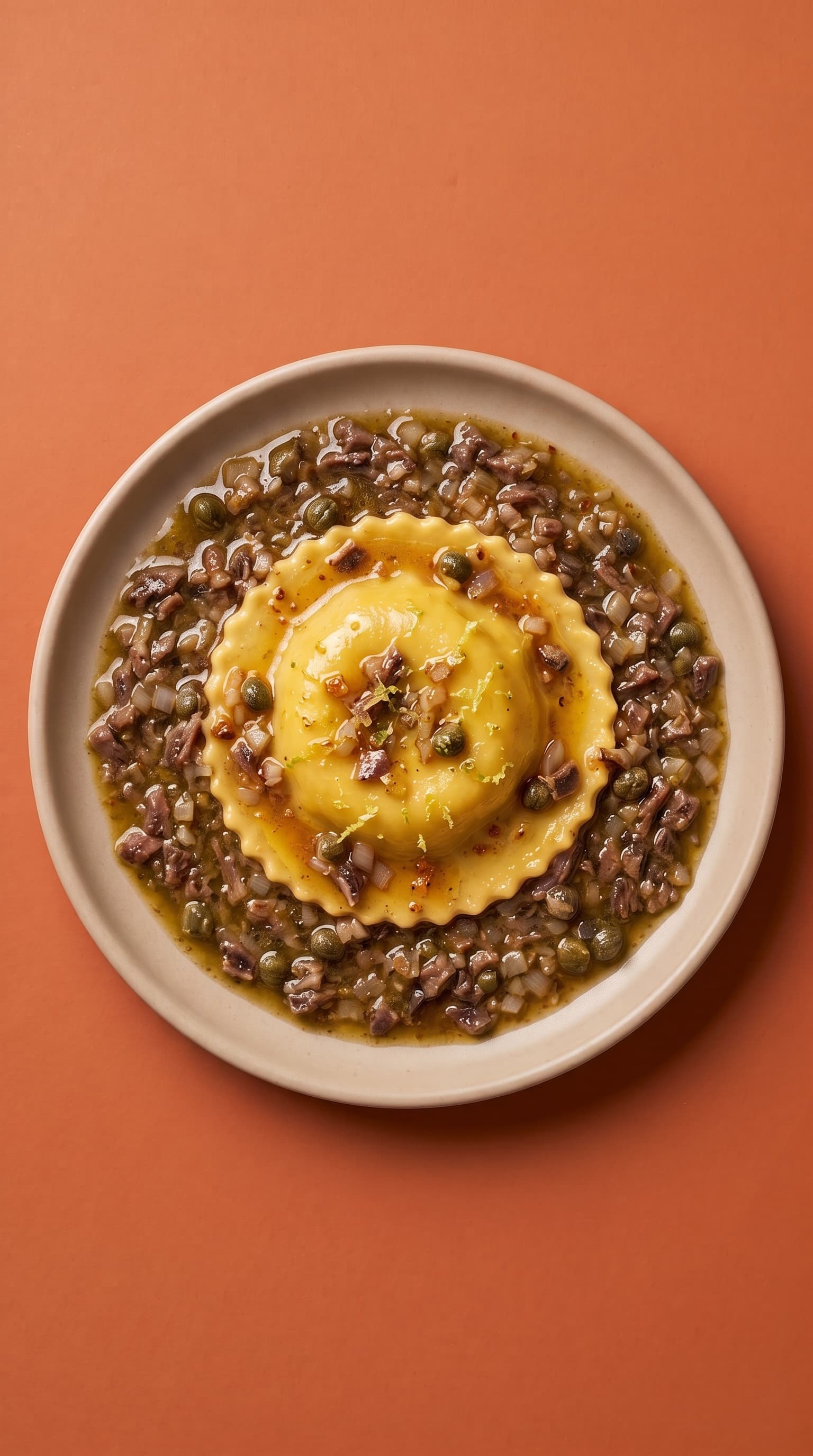
Egg Yolk Ravioli with Brown Butter Anchoïade
This showstopper egg yolk ravioli wraps a whole runny yolk inside a thin golden pasta parcel, then drowns it in nutty brown butter with anchovy, capers, and lemon. The key trick is a ricotta ring that cradles and protects the yolk. Ready in about 75 minutes, it serves 4 as a stunning appetizer.
75 min · Intermediate · Italy
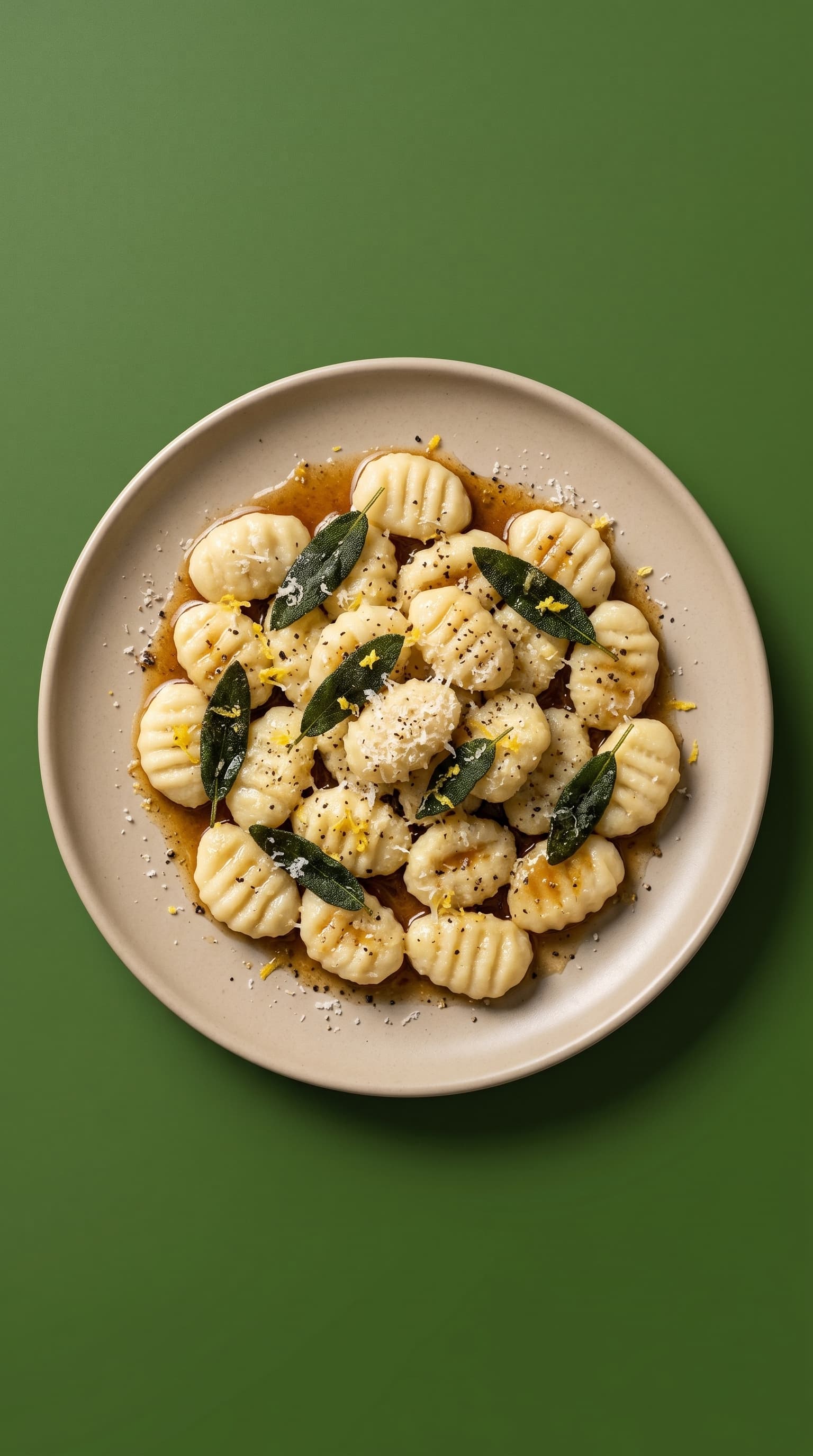
Classic Potato Gnocchi with Brown Butter and Sage
This classic potato gnocchi recipe gives you soft, pillowy dumplings every time. The secret is baking the potatoes to keep them dry, so you use less flour. Ready in about 90 minutes, this comforting dish serves 4 and pairs perfectly with a rich, nutty brown butter sauce.
90 min · Intermediate · Italy
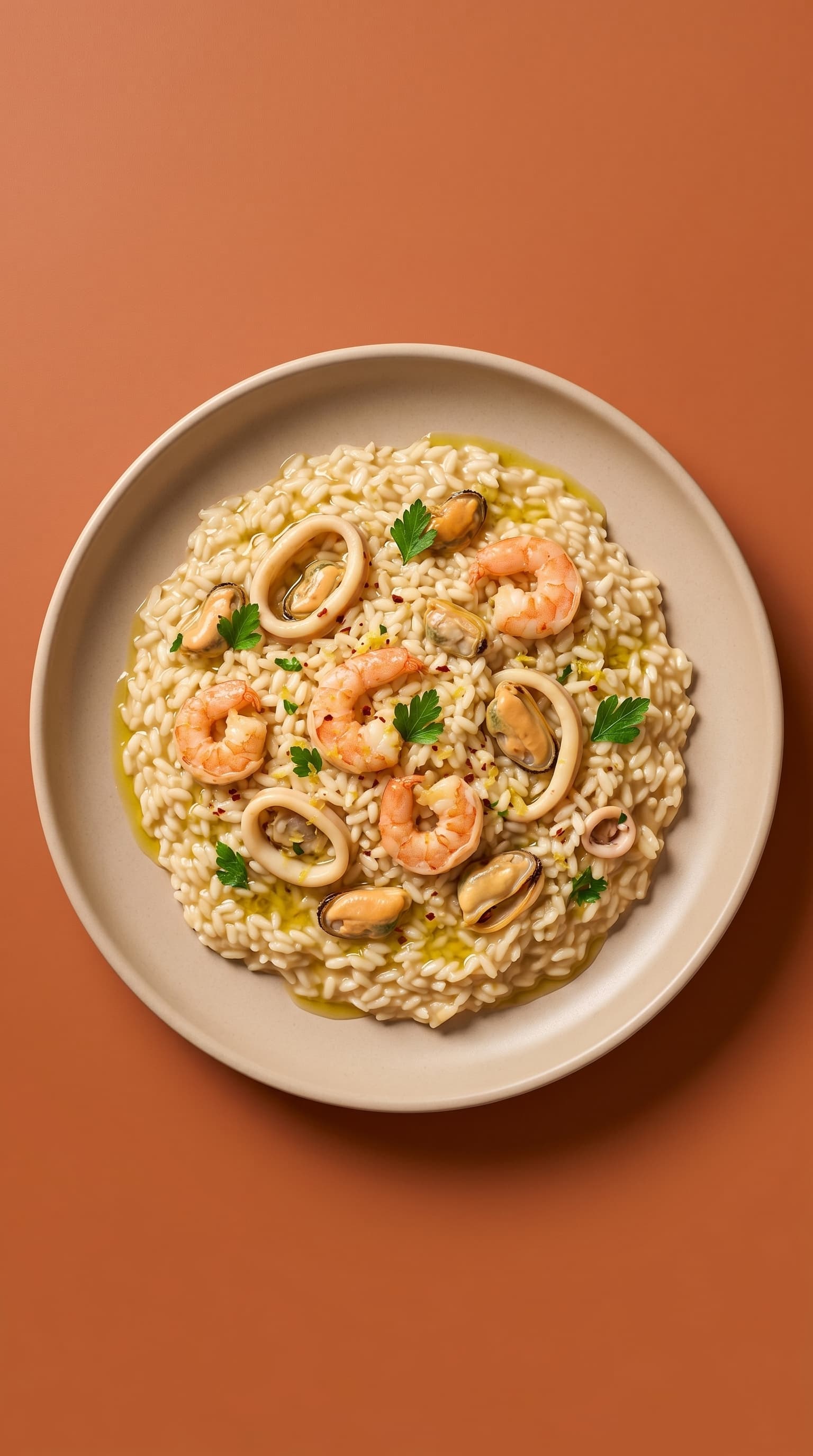
Seafood Risotto ai Frutti di Mare, the Italian Way
This classic Italian seafood risotto is built on a rich homemade broth from toasted prawn shells, cooked ladle by ladle with Carnaroli rice, and finished with a cold-butter mantecatura for silky creaminess without cream or cheese. Every seafood goes in at the perfect moment. Ready in about 75 minutes. Serves 4.
75 min · Intermediate · Italy