

Traditional Sichuan Dan Dan Noodles
Prefer not to cook?
Order Traditional Sichuan Dan Dan Noodles as a ready-made meal and get it delivered to your door.
Order this meal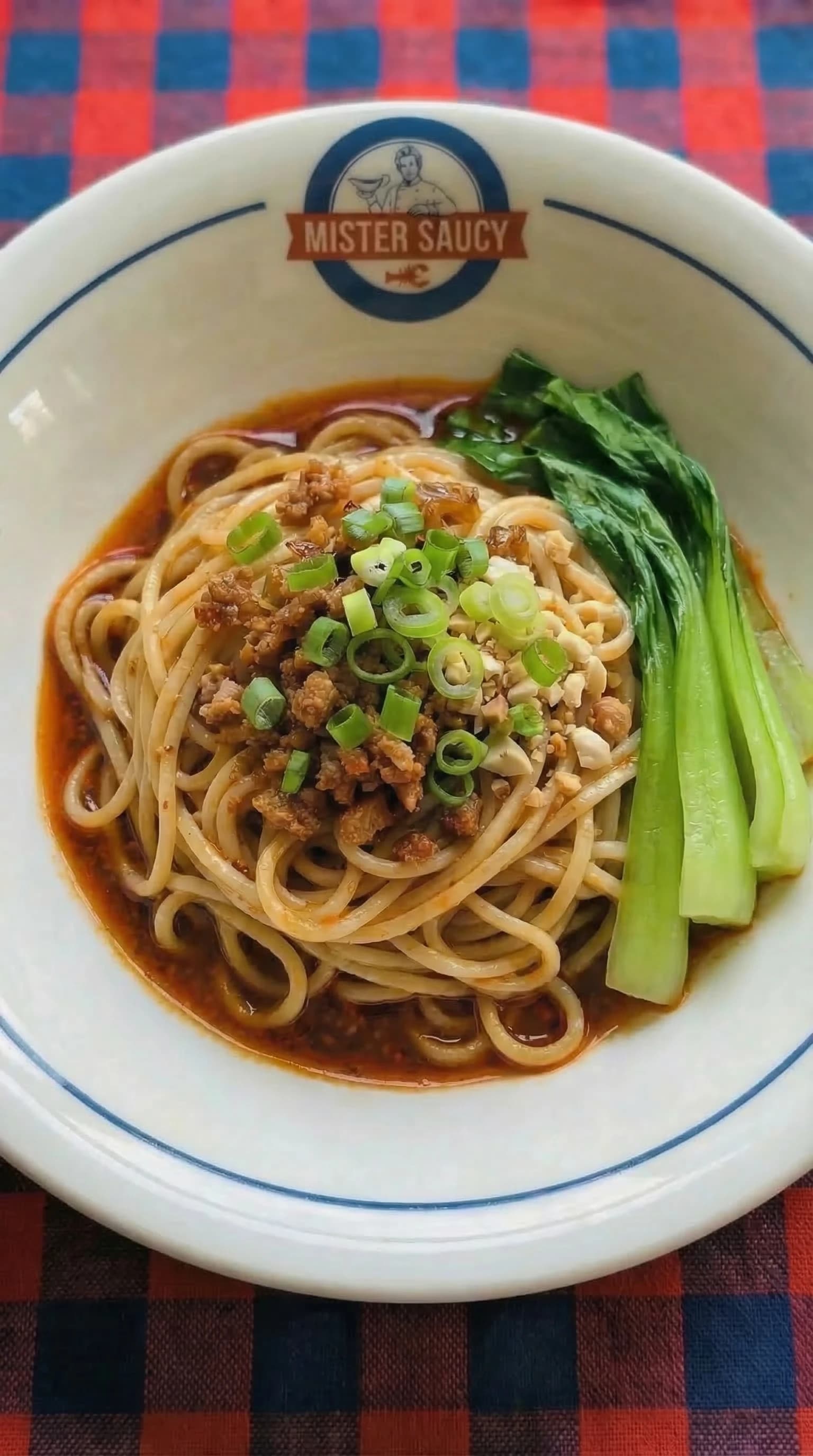
Dan Dan Noodles are a famous Sichuan street food built on a creamy, spicy sesame sauce topped with crispy pork and chewy noodles. The secret is building the sauce right in the bowl before the noodles go in. Ready in about 35 minutes, this recipe serves 2 hungry people, with steamed bok choy served on the side as garnish.

Recipe by Mr Saucy aka Christophe
Christophe is a culinary professional with expertise in French and global cuisine. He has developed recipes and cooking techniques that bridge traditional methods with modern home cooking approaches. Christophe focuses on making classic culinary techniques accessible to home cooks through clear instruction and practical applications. He studied at Le Cordon Bleu Paris and has work experience at a two star Michelin restaurant.
Homecook turned pro with a Cordon Bleu Paris graduate
Quick Info
What Makes Dan Dan Noodles So Addictively Good?
Traditional Sichuan cooking is built on the 'ma la' principle — the word 'ma' means numbing and 'la' means spicy. Sichuan peppercorns create a gentle tingling on your tongue while chili oil brings the burn. Together, they wake up every taste bud you have and keep you coming back for another bite.
Food science shows that warm liquid is the key to a silky sesame sauce. Chinese sesame paste is thick and stubborn on its own. When you whisk in warm stock one spoonful at a time, the heat loosens the paste and lets it blend into a smooth, creamy coating that clings to every noodle strand.
Professional chefs know that the best flavor comes from building in layers. The sauce sits in the bowl first, the hot noodles go on top, and the crispy pork crowns everything. When you toss it all together at the table, every ingredient meets at once and the dish comes alive.
Ingredients
Recipe yields 2 servings
For the Noodles
| Amount | Ingredient | Notes |
|---|---|---|
| 250 g | Fresh thin wheat noodles (or dried thin wheat noodles) | Fresh noodles cook faster and have a better texture; dried work well too |
For the Crispy Pork Topping
| Amount | Ingredient | Notes |
|---|---|---|
| 150 g | Pork shoulder or belly, hand-minced | Hand-mincing gives better texture than pre-ground; ask your butcher or do it yourself with a sharp knife |
| 50 g | Sui Mi Ya Cai (Yibin preserved mustard greens) | Found at Asian grocery stores; this is non-negotiable for authenticity — see FAQ for substitutes |
| 15 g (1 tablespoon) | Shaoxing rice wine | Used to deglaze the pork and add aromatic depth |
| 15 g (1 tablespoon) | Neutral oil (vegetable or canola) | For frying the pork topping |
For the Sesame-Chili Sauce
| Amount | Ingredient | Notes |
|---|---|---|
| 40 g (2½ tablespoons) | Chinese sesame paste (zhima jiang) | Do NOT substitute with Middle Eastern tahini — Chinese sesame paste is made from toasted sesame seeds and has a deeper, nuttier flavor |
| 45 g (3 tablespoons) | Chili oil with flakes (hong you) | Use a good quality Sichuan chili oil; homemade is best but Lao Gan Ma works well |
| 30 g (2 tablespoons) | Light soy sauce | Do not use dark soy sauce here — light soy provides clean, salty umami without muddying the sauce color |
| 5 g (1 teaspoon) | Sichuan peppercorns, whole | Toast and grind fresh for maximum numbing 'ma' effect — pre-ground loses potency quickly |
| 10 g (2 teaspoons) | Chinkiang black vinegar (Zhenjiang vinegar) | Adds a subtle acidic lift that balances the richness of the sesame paste |
| 15 g (about 3–4 cloves) | Garlic cloves, finely minced | Raw garlic is traditional and provides a sharp, pungent counterpoint |
| 60 g (¼ cup) | Warm chicken stock or water | Warm liquid is essential for emulsifying the sesame paste into a silky sauce |
| 10 g (2 teaspoons) | Sesame oil (toasted) | A few drops to finish the sauce and garnish — use sparingly as it is very potent |
For Garnish
| Amount | Ingredient | Notes |
|---|---|---|
| 30 g (3 tablespoons) | Roasted peanuts, roughly crushed | Provides essential crunch and richness; toast them yourself for best flavor |
| 20 g (about 2 stalks) | Scallions (spring onions), thinly sliced | Both white and green parts; the green tops add freshness and color |
| 100 g | Bok choy, steamed | Steam until just tender and serve alongside the noodles as a simple green garnish |
Instructions
Prep: Toast and Build
- 1
Toast the Sichuan Peppercorns (The Numbing Magic)
Put the Sichuan peppercorns in a dry skillet over medium heat. Shake the pan constantly for 1–2 minutes until you smell a floral, citrusy aroma and see a little wisp of smoke. Pour them out immediately — they burn fast. Grind to a fine powder using a mortar and pestle or spice grinder. Freshly ground peppercorns give you that authentic tingling, numbing sensation on your tongue that makes this dish so special. Pre-ground powder from a jar simply cannot match it.
- 2
Mix the Sauce in the Bowls (The Right Order Matters)
In a mixing bowl, combine the sesame paste, chili oil, light soy sauce, black vinegar, minced garlic, ground Sichuan pepper, and sesame oil. Now slowly whisk in the warm chicken stock or water one tablespoon at a time — the warmth is what loosens the thick sesame paste and turns it into a smooth, silky sauce. If you add cold liquid, the paste will seize up and go lumpy. Taste it: it should be rich, spicy, nutty, and a little tangy. Divide the sauce evenly between your two serving bowls and set them aside.
Cooking: The Crispy Pork
- 3
Sear the Pork (Don't Touch It Yet)
Heat the neutral oil in a wok or heavy skillet over high heat until it just starts to shimmer — around 375°F / 190°C. Add the hand-minced pork and spread it out in one layer. Now leave it alone for 60–90 seconds. Resist the urge to stir. This undisturbed contact with the hot pan creates deep golden browning that builds rich, savory flavor. Once the bottom is golden and starting to crisp, break it up and stir occasionally until all the pink is gone and the pork looks golden and slightly crispy throughout.
- 4
Add the Mustard Greens and Deglaze (The Flavor Bomb)
Add the Sui Mi Ya Cai (preserved mustard greens) to the pork in the pan. Stir-fry together over high heat for 1–2 minutes — you'll hear a satisfying sizzle and smell a wonderful savory aroma. Pour in the Shaoxing wine and stir quickly to lift all the tasty browned bits from the bottom of the pan. Keep cooking until all the liquid has evaporated and the mixture looks dry and crispy, not wet. This is your topping, and it should have real texture and crunch. Remove from heat and set aside.
Finishing: Noodles and Assembly
- 5
Cook the Noodles (Timing Is Everything)
Bring a large pot of unsalted water to a rolling boil. Cook the noodles according to the package — fresh thin noodles take about 2–3 minutes, dried take 4–6 minutes. You want them al dente: soft but with a little chew when you bite through. Drain well in a colander and do NOT rinse them with water. The light starch coating on the noodles is what helps the sauce grip every strand. Shake the colander vigorously to get rid of as much water as possible.
- 6
Steam the Bok Choy (Simple Side Garnish)
Steam the bok choy for 2–4 minutes, depending on size, until just tender but still bright green. Drain well so it doesn't water down the plate. Keep it to the side — this is a garnish and fresh green counterpoint, not part of the noodle toss.
- 7
Build the Bowls (Layer It Up)
Divide the hot drained noodles between the two bowls, placing them right on top of the sauce you prepared earlier. Spoon a generous mound of the crispy pork and mustard green mixture on top of each bowl. Scatter the crushed roasted peanuts and sliced scallions over everything. Add the steamed bok choy on the side of each bowl or plate. Serve immediately while the noodles are hot and the pork is still crispy.
- 8
Toss Before Eating (This Step Is Not Optional)
Before you take a single bite, use chopsticks or a fork to toss everything together vigorously — lift from the bottom and fold the sauce up through the noodles for about 30 seconds. This is how Dan Dan Noodles are meant to be eaten. The tossing coats every noodle strand with the sesame-chili sauce, spreads the pork and peanuts throughout, and creates the full, unified flavor the dish is famous for. Eat right away while everything is hot. Leave the bok choy on the side as a garnish.
Tips & Tricks
If Your sauce is too thick and won't coat the noodles smoothly: Whisk in warm stock or water one teaspoon at a time until it loosens up. Cold liquid will make the sesame paste seize, so always use warm. The sauce should be thick enough to coat a spoon but thin enough to flow when you toss the noodles.
If Your sesame paste goes lumpy when you add the liquid: Don't panic — this just means the liquid was added too fast or was too cold. Add more warm water a teaspoon at a time and whisk hard. It will come back together into a smooth, creamy sauce with a little patience.
If Your pork steams and turns grey instead of browning and crisping: Two things cause this: the pan wasn't hot enough, or the pork was ground too fine. Make sure your oil is shimmering before the pork goes in, and hand-mince the pork yourself for a coarser texture. Coarser pieces brown; fine powder steams.
If Your noodles clump into a sticky ball after draining: Have your sauce already in the bowls before you even start cooking the noodles. Move quickly from draining to assembling. If you need an extra minute, toss the drained noodles with a few drops of neutral oil to keep them separate.
If The dish is too spicy for your taste: Start with just 1 tablespoon of chili oil in the sauce and taste before adding more. You can also cut the Sichuan peppercorn to half a teaspoon. The sesame paste and savory pork will still carry the dish beautifully — the heat is adjustable, but don't skip the peppercorns entirely or you'll lose the signature numbing quality.
If You want to get ahead and prep this before guests arrive: Make the sauce up to 24 hours ahead and store it covered in the fridge. It actually tastes better after 30 minutes as the garlic mellows. When you're ready to serve, whisk in a splash of warm water to loosen it back up, then cook the noodles and pork fresh to order.
Frequently Asked Questions
I can't find Sui Mi Ya Cai (preserved mustard greens). What can I substitute?
The closest swap is finely chopped Tianjin preserved vegetable (dong cai), also found at Asian grocery stores. In a pinch, use finely minced cornichons or salted radish — they give a similar salty, slightly fermented note. Avoid kimchi as it's too strong and will overpower the other flavors.
Can I use tahini instead of Chinese sesame paste?
Technically yes, but the flavor will be noticeably different. Chinese sesame paste uses deeply toasted seeds, giving it a darker color and a richer, almost peanut-butter-like depth. Tahini is lighter and more neutral. If you use tahini, stir in an extra teaspoon of toasted sesame oil to bring back some of that roasted richness.
Can I make this vegetarian?
Absolutely. Replace the pork with finely crumbled firm tofu or finely diced shiitake mushrooms — both get wonderfully crispy in a hot wok. Swap the chicken stock for vegetable stock in the sauce. The Ya Cai and sesame-chili sauce provide so much flavor that you genuinely won't miss the meat.
Why do my noodles clump together after draining?
This happens when noodles sit too long after draining. The fix is simple: have your sauce already waiting in the bowls before you cook the noodles, and move fast from draining to assembling. A light toss with a few drops of neutral oil right after draining also buys you an extra minute if needed.
How spicy is this dish traditionally, and can I tone it down?
Authentic Sichuan Dan Dan Noodles are quite spicy and intensely numbing — that's the whole point. But you can absolutely dial it back. Reduce the chili oil to 1 tablespoon and the Sichuan peppercorn to half a teaspoon. The dish will still be complex and delicious; the sesame and savory pork flavors will simply shine more.
Can I use dried noodles instead of fresh?
Yes, dried thin wheat noodles work very well and are easier to find. Look for Chinese wheat noodles in the Asian grocery aisle. In a real pinch, thin Italian spaghetti cooked al dente is a reasonable emergency substitute — the texture is close enough for a satisfying home cook's version.
Can I make any part of this ahead of time?
Yes — the sesame-chili sauce is the best thing to make ahead. It keeps in the fridge for up to 24 hours and actually improves as the garlic mellows. Whisk in a little warm water before using since it thickens when cold. Cook the noodles and pork fresh right before serving for the best texture.
What does 'ma la' mean and why does it matter?
'Ma' means numbing and 'la' means spicy in Chinese. Together they describe the signature Sichuan flavor experience: Sichuan peppercorns create a gentle tingling numbness on your lips and tongue, while chili oil brings the burning heat. Both sensations together are what make this dish so unique and craveable — neither one alone is the same.