

Poulet rôti aux herbes dans un Green Egg avec salsa verde européenne
Pas envie de cuisiner ?
Commandez Poulet rôti aux herbes dans un Green Egg avec salsa verde européenne en plat prêt à déguster, livré directement chez vous.
Commander ce plat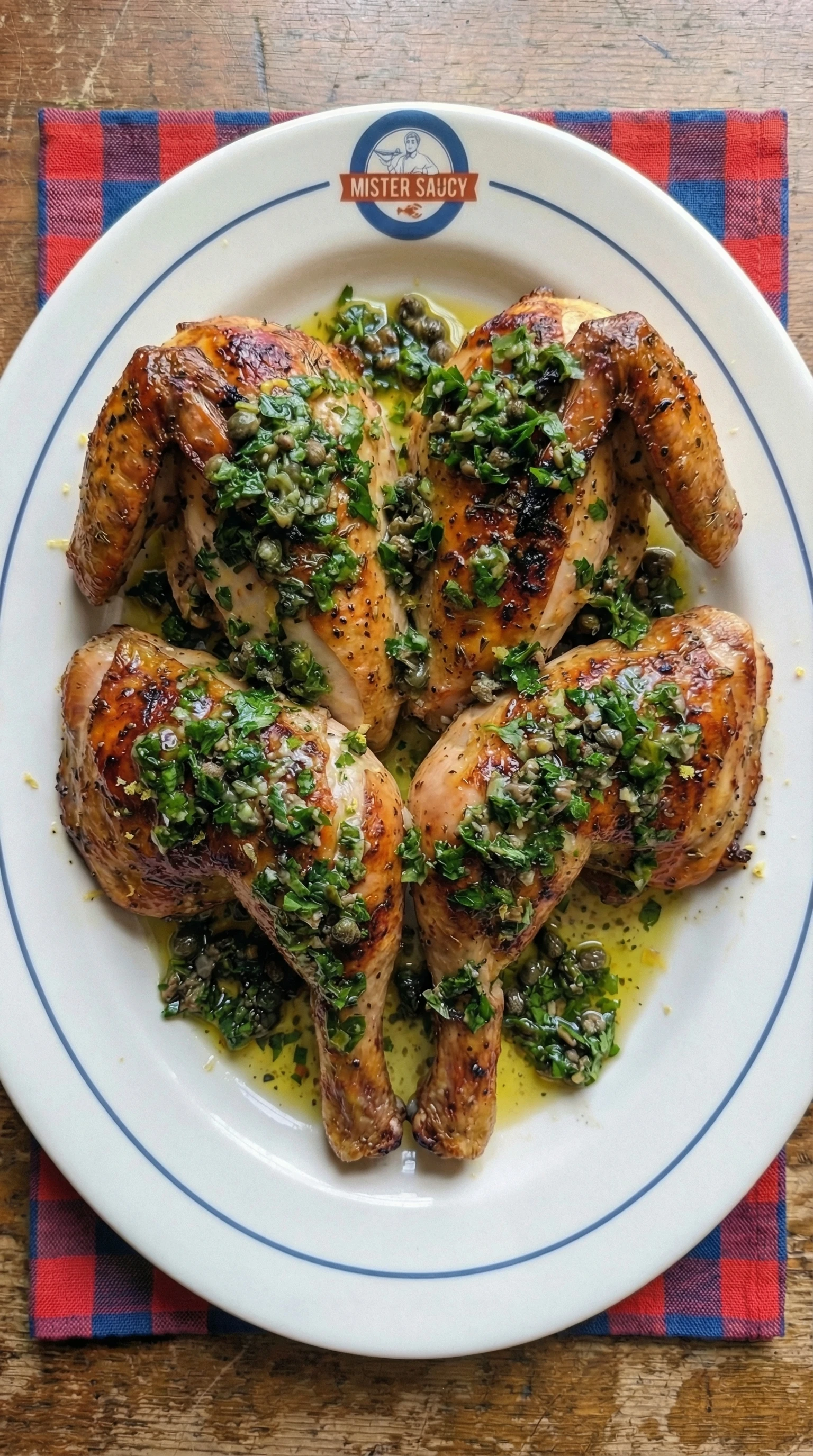
Il s'agit d'un poulet entier frotté d'herbes et de sel, puis rôti sur un grill en céramique jusqu'à ce que la peau devienne dorée et croustillante. Le secret réside dans la saumure sèche pendant la nuit et la cuisson à chaleur indirecte douce à 190°C (375°F). Une sauce persillée vive avec des câpres et des anchois coupe à travers la viande riche et fumée. Prend environ 2 heures au total et sert 4 à 6 personnes.

Recette par Mr Saucy aka Christophe
Christophe est un professionnel culinaire spécialisé dans la cuisine française et internationale. Il a développé des recettes et des techniques de cuisine qui relient les méthodes traditionnelles aux approches modernes de la cuisine à domicile. Christophe se concentre sur la rendre les techniques culinaires classiques accessibles aux cuisiniers amateurs grâce à des instructions claires et des applications pratiques.
Diplômé du Cordon Bleu Paris avec une expérience dans un restaurant deux étoiles Michelin
Info Rapide
Comment cela crée-t-il une peau croustillante digne d'un restaurant ?
La technique française traditionnelle montre que la saumure sèche retire l'humidité de la peau du poulet pendant la nuit. Lorsque la surface est complètement sèche, la chaleur élevée du grill peut la rendre croustillante au lieu de la cuire à la vapeur. Les chefs professionnels savent que c'est le secret de ce croustillant vitreux que l'on trouve dans les restaurants gastronomiques.
Le Big Green Egg fonctionne comme un four à convection haut de gamme car les parois en céramique maintiennent la chaleur uniformément tout autour de la volaille. La science alimentaire montre que la chaleur indirecte cuit la viande en douceur tandis que l'air chaud circulant rend la peau croustillante sans la brûler. C'est pourquoi la poitrine reste juteuse tandis que la peau devient dorée.
La salsa verde froide crée un contraste de température qui réveille les papilles. L'acidité vive du vinaigre et le punch salé des anchois équilibrent le poulet riche et gras. Ce mariage chaud-froid est une technique européenne classique qui rend chaque bouchée plus intéressante que la précédente.
Ingrédients
Recette pour 4-6 portions
Pour le poulet
| Quantité | Ingrédient | Notes |
|---|---|---|
| 1.8 kg (4 lbs) | poulet entier élevé en plein air | à température ambiante pour une cuisson uniforme |
| 36 g (2½ cuillères à soupe) | sel kasher | pour la saumure sèche |
| 8 g (1 cuillère à soupe) | Herbes de Provence séchées | thym, romarin, sarriette et lavande |
| 5 g (1 cuillère à café) | poudre d'ail | la poudre d'ail résiste mieux à la brûlure que l'ail frais à haute température |
| 4 g (1 cuillère à café) | grains de poivre noir | fraîchement concassés pour les huiles aromatiques |
| 6 g (d'1 gros citron) | zeste de citron | — |
Pour la salsa verde
| Quantité | Ingrédient | Notes |
|---|---|---|
| 60 g (1 tasse) | persil plat | finement haché |
| 120 g (½ tasse) | huile d'olive extra vierge | de haute qualité pour l'émulsion de la sauce |
| 20 g (2 cuillères à soupe) | câpres au vinaigre | égouttés et hachés |
| 10 g (3-4 filets) | filets d'anchois | écrasés en pâte pour une profondeur umami |
| 15 g (1 cuillère à soupe) | vinaigre de vin rouge | pour apporter le punch acide nécessaire |
Instructions
La veille (saumurage à sec)
- 1
Préparer le rub aux herbes
Mélangez le sel, les Herbes de Provence, la poudre d'ail, le poivre concassé et le zeste de citron dans un petit bol. Cette saumure sèche retire l'humidité de la peau pendant la nuit pour qu'elle devienne croustillante à la cuisson sur le grill au lieu de rester molle et caoutchouteuse.
- 2
Assaisonner sous la peau
Séchez complètement le poulet avec du papier absorbant. Décoller délicatement la peau au-dessus de la poitrine et des cuisses en glissant vos doigts en dessous. Frottez le mélange d'herbes directement sur la viande sous la peau et partout à l'extérieur. Assaisonner sous la peau permet à la saveur de pénétrer profondément dans la viande, et pas seulement en surface.
- 3
Sécher à l'air au réfrigérateur
Placez le poulet sans couverture sur une grille posée sur une plaque de cuisson. Réfrigérez pendant au moins 4 heures ou toute la nuit. Cette technique professionnelle assèche complètement la peau pour que la chaleur élevée puisse la rendre dorée et croustillante au lieu de la cuire à la vapeur.
Jour de la cuisson
- 4
Préparer le grill pour une cuisson indirecte
Installez votre Big Green Egg avec le ConvEGGtor (support de plaque) en place et portez la température à 190°C (375°F). Le ConvEGGtor bloque les flammes directes pour que le poulet rôtisse avec l'air chaud circulant comme dans un four à convection. Cela cuit la volaille uniformément sans brûler le dessous.
- 5
Ficeler le poulet
Attachez les pattes ensemble fermement avec de la ficelle de boucher et rentrez les bouts des ailes sous le corps. La technique française traditionnelle montre que le ficelage protège la viande blanche délicate du dessèchement pendant que les cuisses plus épaisses atteignent leur température de sécurité de 74°C (165°F).
- 6
Rôtir jusqu'à ce qu'il soit doré
Placez le poulet sur une grille au-dessus d'un plat de récupération de jus et faites-le rôtir pendant 60 à 75 minutes. Le poulet est cuit lorsque la partie la plus épaisse de la cuisse atteint 74°C (165°F) sur un thermomètre à viande et que la peau est d'un brun doré profond. Le plat de récupération attrape la graisse pour éviter les flammes ou la fumée amère.
- 7
Laisser reposer le poulet
Retirez le poulet du grill et laissez-le reposer pendant 15 minutes avant de le découper. La science alimentaire montre que ce temps de repos permet aux jus de se redistribuer dans la viande pour qu'ils ne s'écoulent pas tous sur la planche à découper lorsque vous le tranchez.
Préparer la salsa verde et servir
- 8
Préparer la sauce
Pendant que le poulet repose, écrasez les filets d'anchois en pâte avec le dos d'une fourchette. Mélangez le persil, les câpres, les anchois écrasés, le vinaigre de vin rouge et l'huile d'olive jusqu'à obtenir une sauce verte éclatante. Les anchois se dissolvent et ajoutent une saveur profonde et savoureuse sans goût de poisson.
- 9
Découper et servir
Découpez le poulet en 4 morceaux. Disposez-les sur un plat chaud et versez une généreuse quantité de salsa verde froide par-dessus. Le contraste de température entre le poulet chaud et fumé et la sauce froide et vive rend chaque bouchée plus intéressante.
Astuces & Conseils
Si la peau de votre poulet ne devient pas croustillante : Assurez-vous d'avoir bien séché le poulet avant d'appliquer le rub et laissez-le sécher à l'air libre sans couverture au réfrigérateur. Toute humidité en surface fera cuire la peau à la vapeur au lieu de la rendre croustillante. Plus la peau est sèche, plus elle devient croustillante.
Si le dessus du poulet dore trop vite : Couvrez la poitrine avec du papier aluminium en laissant un espace. Le Big Green Egg conserve très bien la chaleur et parfois le dessus reçoit plus de chaleur que le dessous. Le papier aluminium ralentit le brunissement pour que l'intérieur puisse rattraper son retard.
Si vous voulez une saveur plus fumée : Ajoutez quelques branches de romarin frais directement sur les charbons chauds environ 15 minutes avant la fin de la cuisson du poulet. Cela donne une touche de fumée herbacée subtile qui n'écrase pas la salsa verde fraîche.
Si votre salsa verde devient vert olive terne : Préparez la sauce fraîche juste avant de servir. L'acidité du vinaigre finira par ternir la couleur vive du persil si elle repose trop longtemps. Une sauce fraîche reste d'un vert éclatant et a un goût plus vif.
Si vous n'avez pas de thermomètre à viande : Percez la peau entre la cuisse et le corps avec un couteau. Les jus doivent être complètement clairs sans aucune trace de rose. De plus, faites bouger le pilon—il doit se déplacer facilement dans son articulation lorsque le tissu conjonctif s'est décomposé.
Si vous n'avez pas de ConvEGGtor : Placez des briques ou une pierre à pizza sur le cercle de feu, puis posez un plat de récupération de jus par-dessus. L'objectif est de bloquer la chaleur directe des charbons pour que le poulet rôtisse avec une circulation d'air chaud au lieu d'être exposé directement aux flammes.
Questions Fréquemment Posées
Puis-je utiliser des herbes fraîches dans le rub sec au lieu d'herbes séchées ?
Non, utilisez des herbes séchées pour le rub. Les herbes fraîches contiennent trop d'eau et brûleront ou deviendront amères à la température de rôtissage. La chaleur élevée du grill est trop agressive pour les feuilles fraîches et délicates. Gardez vos herbes fraîches pour la salsa verde où leur saveur vive et crue ressort vraiment.
Pourquoi utiliser des anchois si je n'aime pas le poisson ?
Les anchois ne donnent pas un goût de poisson à la sauce—ils se dissolvent et ajoutent une saveur salée profonde appelée umami. Les chefs professionnels les utilisent comme assaisonnement secret qui apporte une base équilibrant le vinaigre piquant et les câpres. Vous ne sentirez pas le poisson, juste une sauce plus riche et complexe.
Puis-je préparer ce plat à l'avance ?
En partie. Vous pouvez préparer la saumure sèche du poulet jusqu'à 24 heures à l'avance et le conserver au réfrigérateur. La salsa verde doit être préparée fraîche juste avant de servir pour qu'elle reste d'un vert éclatant. Vous pouvez hacher le persil et préparer les autres ingrédients à l'avance, puis les mélanger au dernier moment.
Que faire si je n'ai pas de Big Green Egg ?
Vous pouvez rôtir ce poulet dans un four classique à 190°C (375°F) pendant le même temps. Vous n'obtiendrez pas la saveur fumée subtile, mais la technique de saumurage à sec fonctionne parfaitement. Placez le poulet sur une grille au-dessus d'une lèchefrite et suivez les mêmes indications de température.
Comment savoir si le poulet est cuit sans thermomètre ?
Percez la peau entre la cuisse et le corps avec un couteau bien aiguisé. Les jus doivent être complètement clairs sans aucune trace de rose. De plus, saisissez le pilon et faites-le bouger—il doit se déplacer facilement dans son articulation. Cela signifie que le tissu conjonctif s'est décomposé et que le poulet est bien cuit.
Puis-je sauter l'étape du ficelage ?
Vous pouvez, mais la viande blanche risque de sécher avant que les cuisses ne soient cuites. La technique française traditionnelle montre que le ficelage maintient la volaille compacte pour que tout cuise au même rythme. Cela ne prend qu'une minute et fait une réelle différence pour garder la viande blanche juteuse.
Par quoi puis-je remplacer les anchois ?
Essayez 1 cuillère à soupe de pâte de miso ou 2 cuillères à café de sauce soja pour obtenir cette même saveur umami profonde. La sauce ne sera pas exactement la même, mais vous obtiendrez tout de même cette base savoureuse qui équilibre l'acidité. Ajoutez une pincée de sel supplémentaire pour compenser la saumure des anchois.
Pourquoi la recette demande-t-elle de la poudre d'ail au lieu d'ail frais ?
L'ail frais brûle facilement à haute température de rôtissage et devient amer. La poudre d'ail contient moins d'humidité, donc elle grille au lieu de carboniser. Vous obtenez la saveur de l'ail sans le goût de brûlé. C'est une astuce professionnelle pour les rubs secs sur le grill.