Classical Brunoise Garlic Butter Fried Rice
25 min · Easy · Serves 4
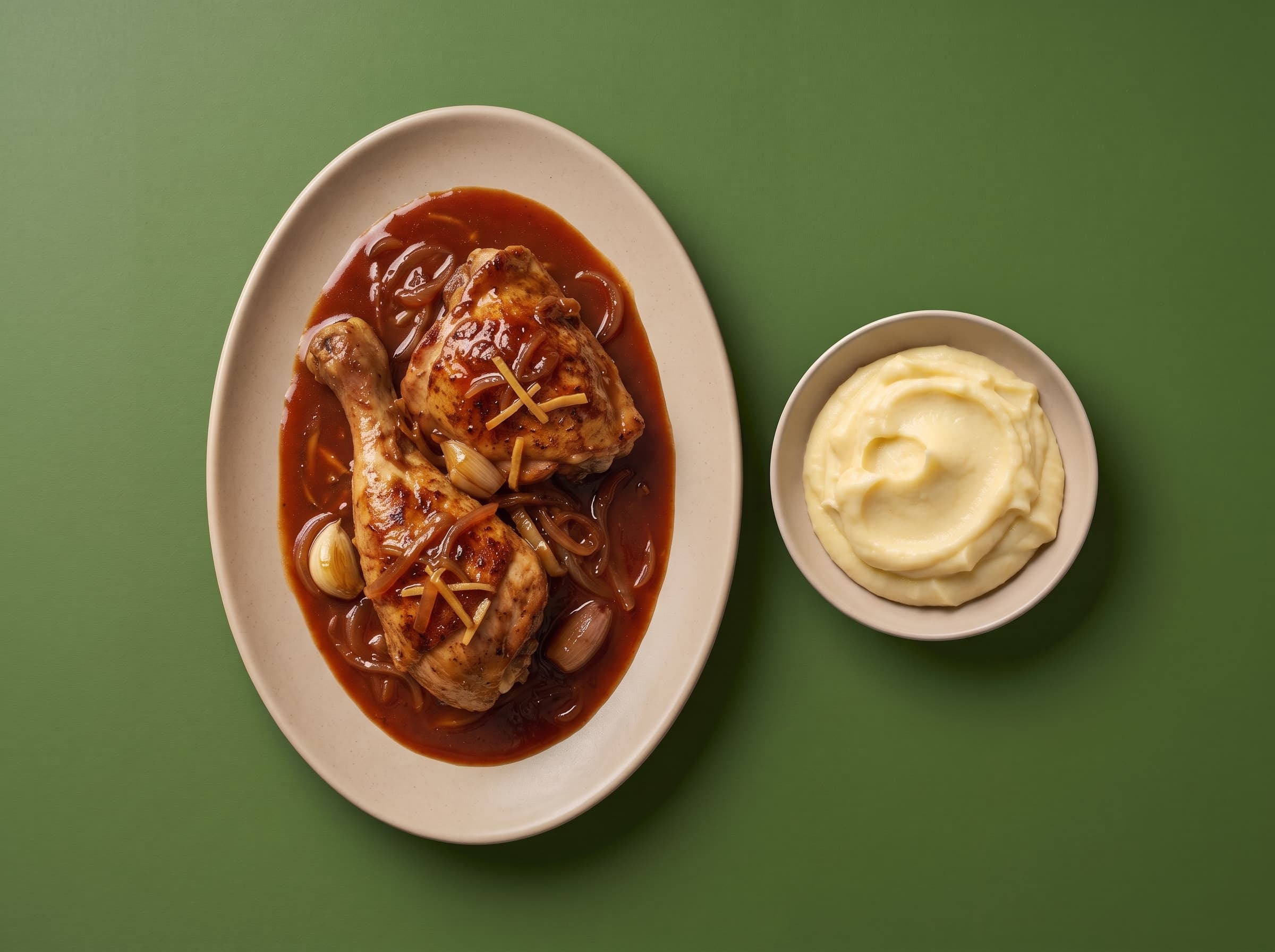 From our menuCoq au vin€22.95 · Made by us, delivered chilled.
This elegant fried rice combines French precision with Asian technique. Garlic and spring onions are cut into tiny 1mm cubes that melt into rich butter, coating every grain of day-old jasmine rice. The dish takes 25 minutes and serves 4 as a sophisticated side that feels restaurant-quality.
Recipe by Christophe Rammant
Cordon Bleu Paris alumni - Two star Michelin kitchen experience
How Does Tiny Knife Work Create Such Big Flavor?
Traditional French technique shows that a 1mm brunoise—those tiny, uniform cubes—releases more flavor than rough chopping. When garlic and onions are cut this small, they have more surface area to infuse into the butter without creating chunky bites.
Professional chefs know that day-old rice is the secret to perfect fried rice. Food science shows that refrigeration causes the starch to 'retrograde'—it firms up and dries out, so each grain stays separate instead of turning mushy when you add butter.
The finishing technique called 'monter au beurre' comes from French sauce-making. Stirring cold butter into hot rice off the heat creates a silky, emulsified coating that gives you that velvety restaurant mouthfeel you can't get any other way.
Estimated nutrition per serving
Estimated from ingredient weights, not lab-tested.
- Calories
- 250
- Protein
- 3g
- Fat
- 13g
- Carbohydrates
- 31g
The weekly recipe note
Enjoyed this recipe? Get the next one first.
One new recipe each week from Christophe: global flavor, French technique, and practical home-cook timing.
By signing up, you agree to receive emails from Mr. Saucy.
Ingredients
Recipe yields 4 servings
| Amount | Ingredient | Notes |
|---|---|---|
| 400 g (about 3 cups) | Day-old cooked Jasmine rice | chilled and grains separated |
| 60 g (4 tablespoons) | Unsalted high-quality butter | divided into 40 g for sautéing and 20 g for finishing |
| 20 g (4-5 large cloves) | Fresh garlic cloves | cut into 1mm brunoise |
| 45 g (about 3 stalks) | Spring onions | whites and greens separated, both cut into 1mm brunoise |
| 4 g (3/4 teaspoon) | Fine sea salt | adjust to taste |
| 1 g (1/4 teaspoon) | White pepper | freshly ground for a clean heat |
| 5 g (1 teaspoon) | Light soy sauce | optional, for a touch of umami depth |
Instructions
Prep the Aromatics
- 1
Cut the Perfect Brunoise
Finely dice the garlic and the white parts of the spring onions into uniform 1mm cubes. This precision ensures the aromatics melt into the butter and distribute flavor evenly without burning. Use a very sharp chef's knife—slice into thin planks first, then matchsticks, then tiny cubes.
Cook the Rice
- 2
Infuse the Butter with Aromatics
Melt 40 g of butter in a wide skillet or wok over medium-low heat until it foams—the foaming indicates the water is evaporating and the butter is ready to accept the aromatic oils. Gently sweat the garlic and spring onion whites for 2-3 minutes without browning. This 'infusion' stage extracts the sweetness of the garlic while avoiding the bitterness of toasted garlic.
- 3
Add the Cold Rice
Increase the heat to medium-high and add the cold rice, breaking up any clumps with a spatula. Using cold rice is essential because the starch has retrograded during refrigeration, allowing the grains to stay separate and coat individually in the garlic butter instead of clumping together.
- 4
Toss for the 'Wok Hei' Effect
Toss the rice vigorously for 4-5 minutes until every grain is hot and glistening. This high-heat sautéing creates a slight 'toasted' flavor known in Chinese cuisine as 'wok hei' or breath of the wok—that smoky, restaurant-quality taste you're looking for.
- 5
Season the Rice
Season with sea salt, white pepper, and the optional drop of soy sauce. White pepper is preferred here over black pepper to maintain the clean, golden aesthetic of the dish and provide a subtle heat without visible specks.
Finish with Butter
- 6
Mount with Cold Butter (Monter au Beurre)
Remove the pan from the heat and stir in the remaining 20 g of cold butter and the green spring onion brunoise. This technique, called 'monter au beurre' in French cooking, creates a rich, emulsified glaze that gives the rice a professional, velvety mouthfeel. The cold butter off the heat prevents it from separating and keeps everything silky.
The weekly recipe note
Enjoyed this recipe? Get the next one first.
One new recipe each week from Christophe: global flavor, French technique, and practical home-cook timing.
By signing up, you agree to receive emails from Mr. Saucy.
Tips & Tricks
your rice turns mushy instead of fluffy:
Always use rice that has been refrigerated for at least 12 hours. Freshly cooked rice contains too much moisture and will turn into a porridge when combined with butter. The cold dries it out perfectly.
the garlic starts browning too fast:
Immediately add a tablespoon of the cold rice to the pan. The rice acts as a heat sink and drops the temperature of the fat instantly, stopping the garlic from burning and turning bitter.
you want perfectly uniform brunoise cuts:
Use a very sharp chef's knife and slice the garlic into thin 'planks' first, then matchsticks (julienne), and finally into tiny cubes. Taking it step-by-step gives you those restaurant-quality uniform pieces.
your rice sticks together in clumps:
Rinse your raw rice thoroughly before cooking it the day before. Removing excess surface starch is the secret to achieving the 'grain-to-grain' separation seen in professional kitchens.
the rice is sticking to the pan:
This happens if the pan wasn't hot enough before adding the rice or if the rice was too wet. Ensure the butter is bubbling and the pan is medium-high before the rice hits the surface, and keep the grains moving constantly.
your rice turns mushy instead of fluffy:
Always use rice that has been refrigerated for at least 12 hours. Freshly cooked rice contains too much moisture and will turn into a porridge when combined with butter. The cold dries it out perfectly.
the garlic starts browning too fast:
Immediately add a tablespoon of the cold rice to the pan. The rice acts as a heat sink and drops the temperature of the fat instantly, stopping the garlic from burning and turning bitter.
you want perfectly uniform brunoise cuts:
Use a very sharp chef's knife and slice the garlic into thin 'planks' first, then matchsticks (julienne), and finally into tiny cubes. Taking it step-by-step gives you those restaurant-quality uniform pieces.
your rice sticks together in clumps:
Rinse your raw rice thoroughly before cooking it the day before. Removing excess surface starch is the secret to achieving the 'grain-to-grain' separation seen in professional kitchens.
the rice is sticking to the pan:
This happens if the pan wasn't hot enough before adding the rice or if the rice was too wet. Ensure the butter is bubbling and the pan is medium-high before the rice hits the surface, and keep the grains moving constantly.
Frequently Asked Questions
Why use unsalted butter instead of salted?
Using unsalted butter lets you control the seasoning precisely with sea salt. Salted butter brands vary significantly in sodium content, which can make the rice unpredictably salty, especially when you're using a large amount to 'mount' the dish at the end.
Can I add ginger to this recipe?
Yes, but it changes the profile from a classical garlic-butter focus to a more pungent aromatic base. If you do add it, ensure it's also cut into a matching 1mm brunoise so it doesn't overpower the delicate texture of the spring onions.
Why do I add the green parts of the spring onion at the very end?
The green tops are delicate and contain volatile oils that dissipate with heat. Adding them off the heat preserves their vibrant chlorophyll color and provides a fresh, sharp contrast to the rich, heavy butter and cooked garlic.
Can I make this ahead of time?
Partial. You must make the rice the day before and refrigerate it—that's essential for the texture. You can also prep your brunoise cuts ahead and store them covered in the fridge. But the actual cooking should be done right before serving for the best texture and that fresh 'wok hei' flavor.
What if I don't have jasmine rice?
You can use other long-grain white rice like basmati, but jasmine gives you that slightly sticky, fragrant quality that works beautifully with butter. Avoid short-grain rice like sushi rice—it's too sticky and won't give you separated grains.
Do I really need to cut everything into 1mm cubes?
For the best results, yes. The tiny brunoise melts into the butter and distributes evenly, so you get flavor in every bite without chunky pieces. It's a bit of extra knife work, but it's what makes this dish feel restaurant-quality instead of just regular fried rice.
Why use unsalted butter instead of salted?
Using unsalted butter lets you control the seasoning precisely with sea salt. Salted butter brands vary significantly in sodium content, which can make the rice unpredictably salty, especially when you're using a large amount to 'mount' the dish at the end.
Can I add ginger to this recipe?
Yes, but it changes the profile from a classical garlic-butter focus to a more pungent aromatic base. If you do add it, ensure it's also cut into a matching 1mm brunoise so it doesn't overpower the delicate texture of the spring onions.
Why do I add the green parts of the spring onion at the very end?
The green tops are delicate and contain volatile oils that dissipate with heat. Adding them off the heat preserves their vibrant chlorophyll color and provides a fresh, sharp contrast to the rich, heavy butter and cooked garlic.
Can I make this ahead of time?
Partial. You must make the rice the day before and refrigerate it—that's essential for the texture. You can also prep your brunoise cuts ahead and store them covered in the fridge. But the actual cooking should be done right before serving for the best texture and that fresh 'wok hei' flavor.
What if I don't have jasmine rice?
You can use other long-grain white rice like basmati, but jasmine gives you that slightly sticky, fragrant quality that works beautifully with butter. Avoid short-grain rice like sushi rice—it's too sticky and won't give you separated grains.
Do I really need to cut everything into 1mm cubes?
For the best results, yes. The tiny brunoise melts into the butter and distributes evenly, so you get flavor in every bite without chunky pieces. It's a bit of extra knife work, but it's what makes this dish feel restaurant-quality instead of just regular fried rice.
Recipe Reviews
No reviews yet — Be the first to review this recipe!
The collection
All recipesOlive Oil Chocolate Mousse Recipe with Candied Orange
This olive oil chocolate mousse recipe makes a rich but airy dessert with dark chocolate, fruity olive oil, bright candied orange, and crisp almond tuiles. A warm sugar syrup gives the yolks body, while softly whipped cream keeps the mousse light. Plan about 5 hours, including chilling, for 4 generous servings.
300 min · Intermediate · Fusion
Celeriac Ravioli with Brown Butter and Pear
This celeriac ravioli recipe makes 24 delicate pasta pillows filled with roasted celeriac, aged Comté, mascarpone and truffle. Roast the celeriac for deep flavor, then finish the ravioli in a glossy brown-butter sauce with pear, hazelnuts and sage. Plan on 145 minutes for 4 servings, including resting and chilling.
145 min · Intermediate · Fusion
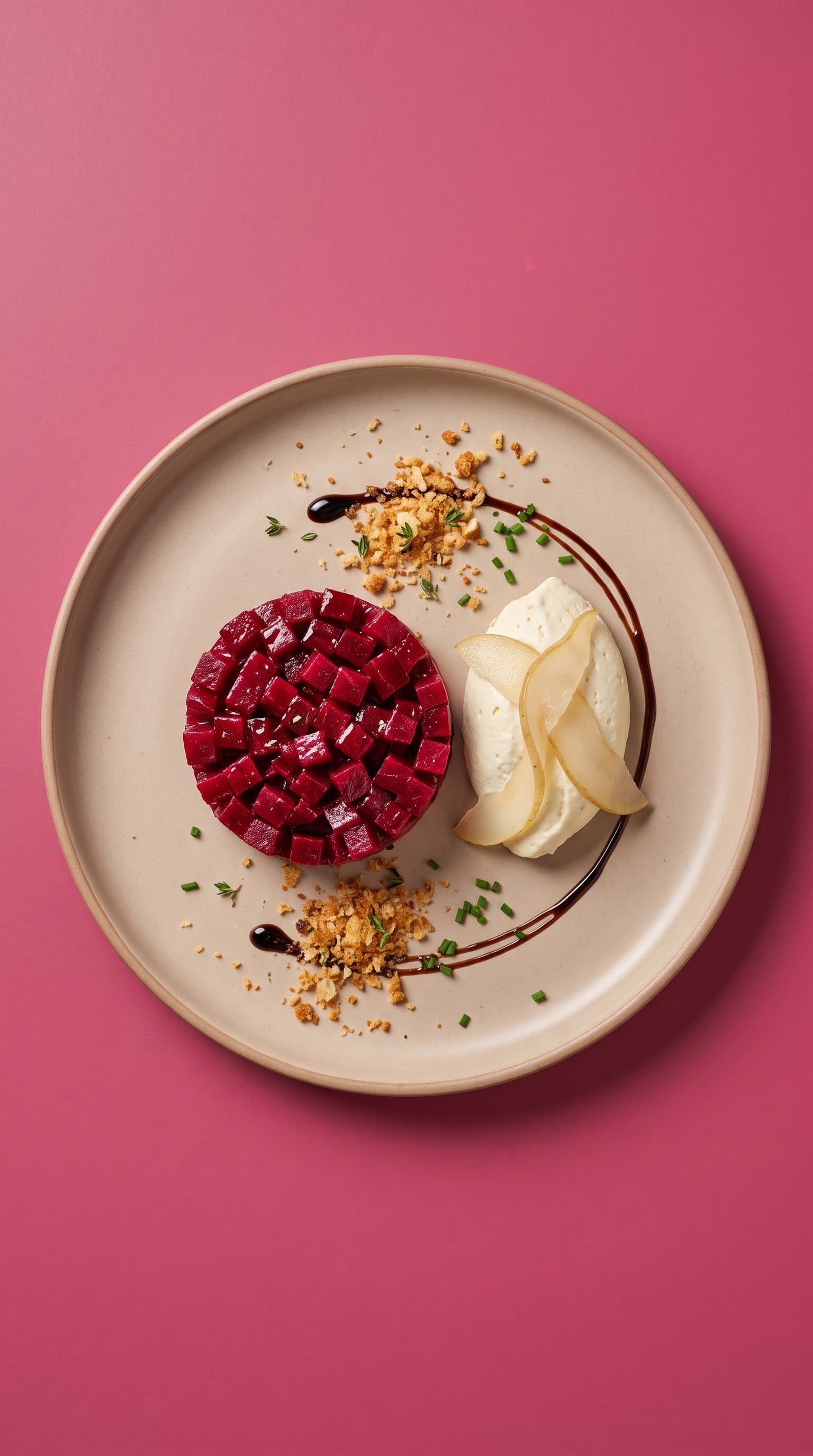
Beetroot Tartare Recipe with Whipped Goat Cheese
This beetroot tartare recipe turns sweet roasted beetroot into a bright, elegant appetizer for four. Cut the chilled beetroot into tiny cubes, dress it just before serving, and pair it with whipped goat cheese, pickled pear, and a buttery hazelnut crumb. Allow about 2 hours from roasting to plating.
120 min · Intermediate · Fusion