Classic Celery Root Purée Mousseline
40 min · Medium · Serves 4
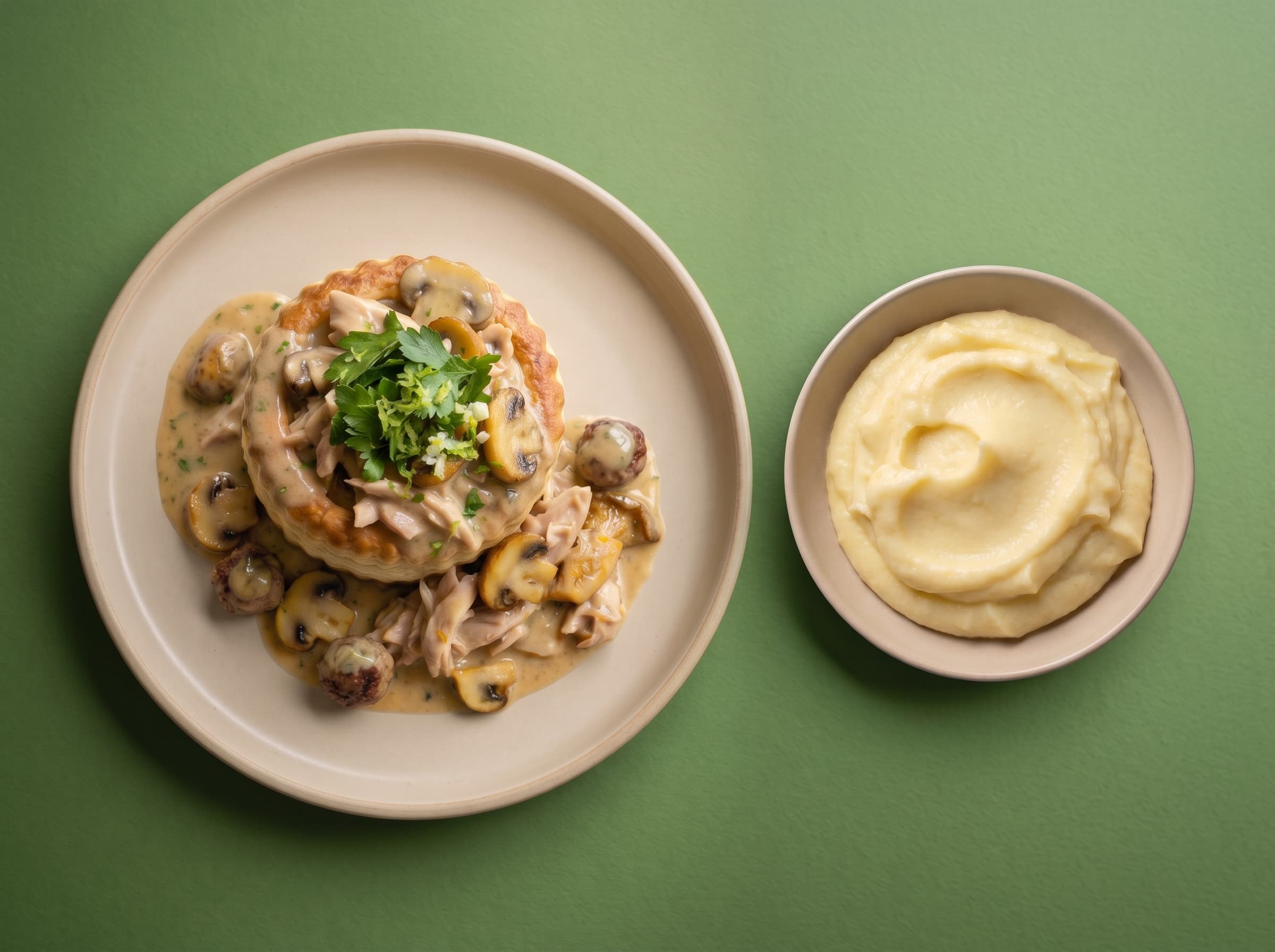 From our menuVol-au-Vent East meets West€19.95 · Made by us, delivered chilled.
This silky French celery root purée is made by gently cooking celeriac in milk, then whipping it with cold butter to create a cloud-like texture. The whole process takes about 40 minutes and serves 4. It's lighter than mashed potatoes but just as comforting, with a sweet, nutty flavor that pairs beautifully with roasted meats.
Recipe by Christophe Rammant
Cordon Bleu Paris alumni - Two star Michelin kitchen experience
What Makes This Purée So Incredibly Smooth?
Traditional French technique shows that cooking vegetables in milk instead of water does two important things—it keeps the celery root from turning brown and adds richness from the very start. The milk proteins also help create a smoother final texture.
Professional chefs know the secret is in the emulsion. When you whisk cold butter into hot vegetables, the temperature difference creates tiny fat droplets that get suspended throughout the purée, just like making a classic French sauce. This is what gives it that restaurant-quality silkiness.
Food science shows that passing the cooked vegetable through a food mill instead of using a food processor makes all the difference. The gentle pressing action aerates the purée and removes any fibrous bits, while a processor can overwork it and make it gummy.
Estimated nutrition per serving
Estimated from ingredient weights, not lab-tested.
- Calories
- 350
- Protein
- 9g
- Fat
- 23g
- Carbohydrates
- 30g
The weekly recipe note
Enjoyed this recipe? Get the next one first.
One new recipe each week from Christophe: global flavor, French technique, and practical home-cook timing.
By signing up, you agree to receive emails from Mr. Saucy.
Ingredients
Recipe yields 4 servings
| Amount | Ingredient | Notes |
|---|---|---|
| 950 g (about 2 medium roots) | celery root (celeriac) | peeled and cut into 1-inch cubes |
| 700 ml (3 cups) | whole milk | enough to fully submerge the vegetables |
| 80 g (6 tablespoons) | unsalted butter | cold and cubed |
| 5 ml (1 teaspoon) | lemon juice | freshly squeezed |
| 8 g (1½ teaspoons) | fleur de sel | adjust to taste |
Instructions
Prep and Cook the Celery Root
- 1
Peel the Celery Root Deeply
Cut away the tough, hairy skin deeply enough to reveal the creamy white flesh underneath. This ensures no woody fibers end up in your final dish, which would create an unpleasant grainy texture no matter how much you blend.
- 2
Simmer in Milk
Place the celery root cubes in a heavy-bottomed saucepan and cover with milk and a pinch of fleur de sel. Simmer gently over medium-low heat (around 185°F / 85°C) for 20–25 minutes until completely tender with no resistance when pierced with a knife. Cooking in milk rather than water prevents the vegetable from oxidizing and turning brown, while infusing it with richness from the start.
- 3
Drain and Dry
Drain the vegetables through a colander, reserving the warm cooking milk in a bowl. Return the drained celery root to the hot pot over low heat for 60 seconds. This drying step evaporates excess surface moisture, which allows the vegetable to absorb more butter later and prevents a watery purée.
Create the Mousseline Texture
- 4
Mill for Airiness
Pass the hot celery root through a food mill or fine-mesh sieve into a clean bowl. This manual aeration creates a much lighter, fluffier texture than a food processor, which can make the vegetable mash heavy and gluey by overworking the starches.
- 5
Emulsify with Cold Butter
Vigorously whisk in the cold, cubed butter one piece at a time. The temperature difference between the hot vegetable (around 180°F / 82°C) and cold fat (around 40°F / 4°C) creates a stable emulsion similar to a classical French sauce. You'll see the purée become glossy and smooth as the butter incorporates.
- 6
Adjust Consistency and Season
Gradually whisk in small amounts of the reserved warm cooking milk until you reach a silky, dropping consistency—it should fall from a spoon in soft ribbons. Season with fleur de sel and a few drops of lemon juice. The acidity cuts through the richness and highlights the natural nuttiness of the celeriac.
- 7
Keep Warm Until Serving
Keep the purée warm in a bain-marie—a bowl set over barely simmering water. This prevents the bottom from scorching while maintaining the perfect serving temperature of around 140°F / 60°C without breaking the butter emulsion.
The weekly recipe note
Enjoyed this recipe? Get the next one first.
One new recipe each week from Christophe: global flavor, French technique, and practical home-cook timing.
By signing up, you agree to receive emails from Mr. Saucy.
Tips & Tricks
your purée feels too thick:
Whisk in a tablespoon of the reserved warm cooking milk at a time until you reach a soft, dropping consistency. The milk rehydrates the purée without breaking the butter emulsion.
you want the absolute smoothest result:
Use a high-speed blender after the food mill, but work quickly in 30-second bursts to maintain the heat necessary for the butter emulsion. Let it rest between pulses so it doesn't cool down.
your celery root is browning while you prep:
Keep the peeled and cut pieces in a bowl of acidulated water—just regular water with a squeeze of lemon juice. This prevents oxidation until you're ready to cook.
you don't have fleur de sel:
Use half the amount of regular fine sea salt, but add it gradually. Fleur de sel has a milder, more complex flavor, so regular salt can make the dish taste too salty if you use the same amount.
your purée turned out watery:
This usually means the vegetables weren't drained well or the drying step was skipped. Return the purée to a saucepan over low heat and stir constantly for 2-3 minutes to evaporate the excess moisture, then re-emulsify with a bit more cold butter.
your purée feels too thick:
Whisk in a tablespoon of the reserved warm cooking milk at a time until you reach a soft, dropping consistency. The milk rehydrates the purée without breaking the butter emulsion.
you want the absolute smoothest result:
Use a high-speed blender after the food mill, but work quickly in 30-second bursts to maintain the heat necessary for the butter emulsion. Let it rest between pulses so it doesn't cool down.
your celery root is browning while you prep:
Keep the peeled and cut pieces in a bowl of acidulated water—just regular water with a squeeze of lemon juice. This prevents oxidation until you're ready to cook.
you don't have fleur de sel:
Use half the amount of regular fine sea salt, but add it gradually. Fleur de sel has a milder, more complex flavor, so regular salt can make the dish taste too salty if you use the same amount.
your purée turned out watery:
This usually means the vegetables weren't drained well or the drying step was skipped. Return the purée to a saucepan over low heat and stir constantly for 2-3 minutes to evaporate the excess moisture, then re-emulsify with a bit more cold butter.
Frequently Asked Questions
Can I make this purée without potato?
Yes, this version is 100% celery root with no potato at all. While it's slightly less starchy than a potato blend, it offers a much cleaner and more intense celeriac flavor with a sophisticated nuttiness that potatoes can't provide.
Why did my purée turn out watery?
This usually happens if the vegetables weren't drained well or if the drying step in the pot was skipped. Excess water prevents the butter from emulsifying properly. Make sure you steam off that extra moisture over low heat before adding your fats.
Can I make this ahead of time?
Absolutely. You can make it up to 2 days in advance and store it covered in the fridge. Reheat it gently in a saucepan over low heat, adding a tiny splash of milk and whisking constantly to restore the emulsion and bring back that fluffy texture.
What does celery root actually taste like?
It has a sophisticated flavor that sits right between a traditional celery stalk and a parsley root, with distinct notes of hazelnut. It's much earthier and sweeter than regular celery, with none of that sharp, stringy bite.
Do I need a food mill or can I use a blender?
A food mill gives the best texture because it aerates while it strains out fibers. But if you only have a blender, use it on medium speed in short bursts and work while everything is still hot. Just don't overblend or it can get gummy.
What should I serve this with?
This pairs beautifully with roasted meats like lamb, beef, or pork, as well as seared scallops or wild mushrooms. The nutty, earthy flavor complements rich proteins without competing with them the way heavy mashed potatoes might.
Can I use low-fat milk instead of whole milk?
You can, but whole milk gives better flavor and helps with the final texture. If you use low-fat milk, you might need to add an extra tablespoon of butter at the end to get that same silky richness.
How do I know when the celery root is cooked enough?
Pierce a cube with a knife—it should slide in with absolutely no resistance, like cutting through warm butter. Undercooking even slightly will result in a grainy texture that no amount of blending can fix.
Can I make this purée without potato?
Yes, this version is 100% celery root with no potato at all. While it's slightly less starchy than a potato blend, it offers a much cleaner and more intense celeriac flavor with a sophisticated nuttiness that potatoes can't provide.
Why did my purée turn out watery?
This usually happens if the vegetables weren't drained well or if the drying step in the pot was skipped. Excess water prevents the butter from emulsifying properly. Make sure you steam off that extra moisture over low heat before adding your fats.
Can I make this ahead of time?
Absolutely. You can make it up to 2 days in advance and store it covered in the fridge. Reheat it gently in a saucepan over low heat, adding a tiny splash of milk and whisking constantly to restore the emulsion and bring back that fluffy texture.
What does celery root actually taste like?
It has a sophisticated flavor that sits right between a traditional celery stalk and a parsley root, with distinct notes of hazelnut. It's much earthier and sweeter than regular celery, with none of that sharp, stringy bite.
Do I need a food mill or can I use a blender?
A food mill gives the best texture because it aerates while it strains out fibers. But if you only have a blender, use it on medium speed in short bursts and work while everything is still hot. Just don't overblend or it can get gummy.
What should I serve this with?
This pairs beautifully with roasted meats like lamb, beef, or pork, as well as seared scallops or wild mushrooms. The nutty, earthy flavor complements rich proteins without competing with them the way heavy mashed potatoes might.
Can I use low-fat milk instead of whole milk?
You can, but whole milk gives better flavor and helps with the final texture. If you use low-fat milk, you might need to add an extra tablespoon of butter at the end to get that same silky richness.
How do I know when the celery root is cooked enough?
Pierce a cube with a knife—it should slide in with absolutely no resistance, like cutting through warm butter. Undercooking even slightly will result in a grainy texture that no amount of blending can fix.
Recipe Reviews
No reviews yet — Be the first to review this recipe!
The collection
All recipesPheasant with Grapes, Verjus Jus and Celery Root
This pheasant with grapes recipe pairs juicy roast pheasant with glossy Muscat grapes, sweet caramelised shallots, and bright verjus jus. Gentle pan-roasting keeps the skin crisp, while celery root purée adds silky depth. Plan on about 2 hours for 4 servings, with several parts ready ahead for an easy dinner party.
120 min · Intermediate · France
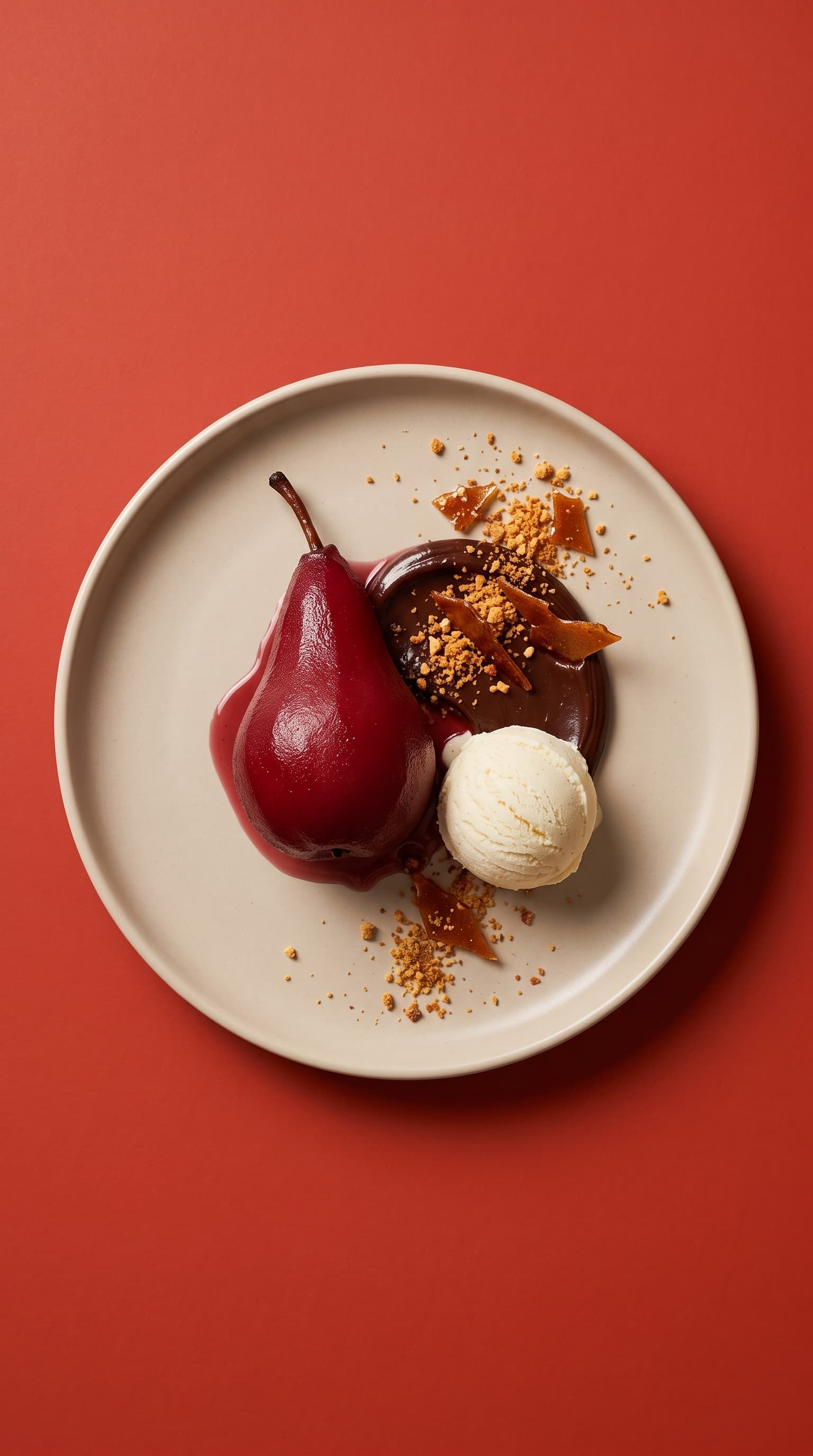
Poires Belle Hélène Recipe with Wine Poached Pears
This poires belle hélène recipe pairs tender red wine poached Conference pears with warm dark chocolate sauce, cold vanilla ice cream, and crisp hazelnut praline. Gentle poaching keeps the pears whole and silky. Plan about 2 hours for cooking and cooling, and serve 4 people right away for the best warm and cold contrast.
150 min · Intermediate · France
Roast Partridge Recipe with Celeriac Mousseline
This roast partridge recipe pairs rosy roasted breast with a crisp confited leg, silky celeriac mousseline, glazed baby carrots, and a glossy juniper-port jus. Dry-brining helps the lean meat stay seasoned and juicy. Allow about 3 hours for cooking and resting, plus overnight dry-brining if you have time. Serves 4.
210 min · Intermediate · France