Squid Adobo with White Wine Reduction
35 min · Medium · Serves 4-6
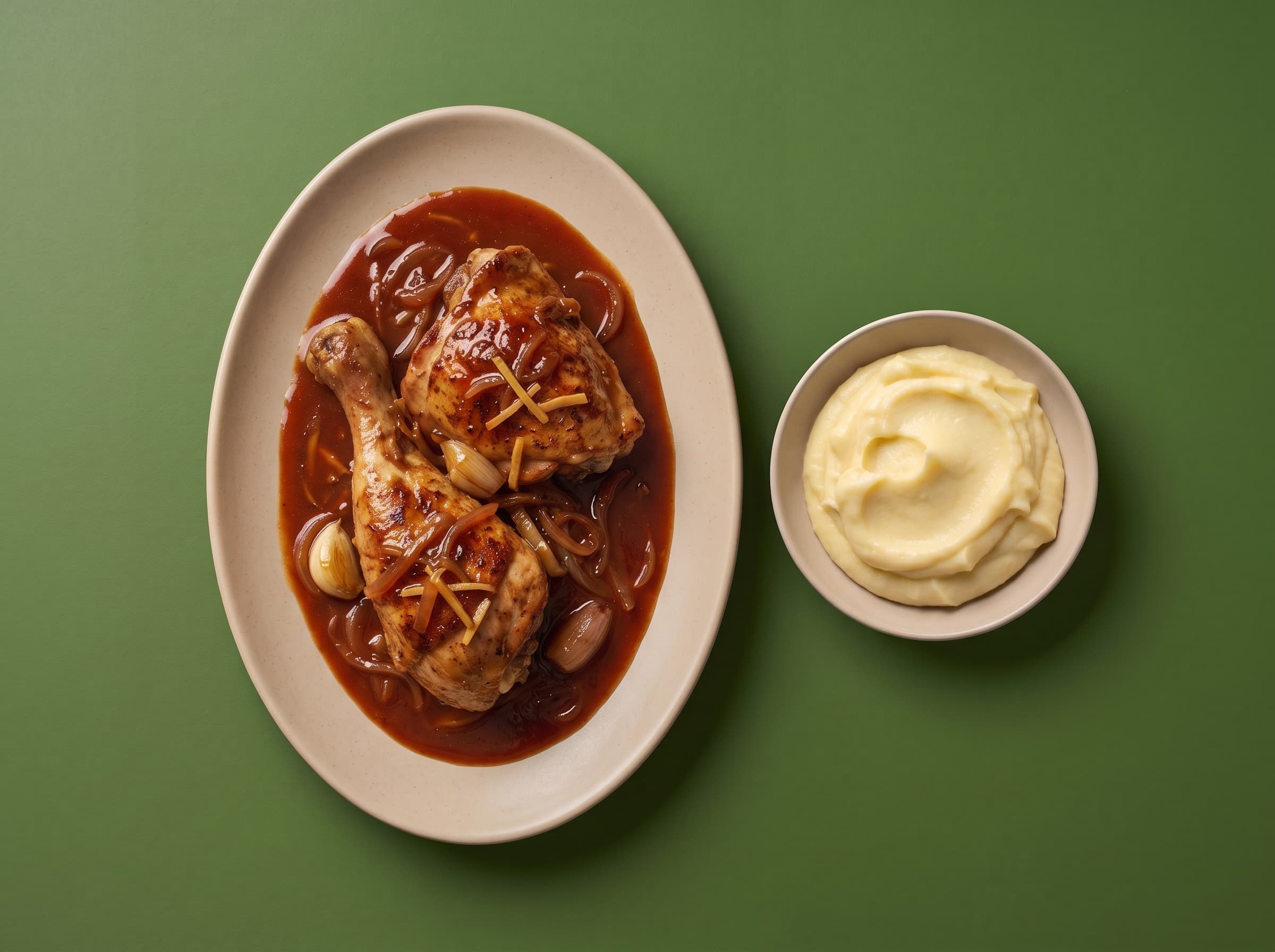 From our menuCoq au vin€22.95 · Made by us, delivered chilled.
This Filipino-French fusion dish combines tender squid with a glossy wine-enriched adobo sauce finished with butter. The secret is cooking the squid fast—just 2 minutes over high heat—then building a rich sauce that's both tangy and silky. Ready in 35 minutes, serves 4-6 people.
Recipe by Christophe Rammant
Cordon Bleu Paris alumni - Two star Michelin kitchen experience
How Does This Create Restaurant-Quality Sauce at Home?
Traditional French technique shows that reducing wine first concentrates its fruity notes and removes the harsh alcohol taste. This gives you all the complexity without watering down your sauce.
Professional chefs know that squid needs extreme cooking times—either very fast or very slow. The 2-minute high-heat sear keeps the proteins from contracting too much, which is what makes squid rubbery.
Food science shows that whisking cold butter into warm sauce creates an emulsion called beurre monté. The butter coats your tongue and makes every flavor taste richer and more luxurious than traditional adobo.
Estimated nutrition per serving
Estimated from ingredient weights, not lab-tested.
- Calories
- 230
- Protein
- 39g
- Fat
- 3g
- Carbohydrates
- 8g
The weekly recipe note
Enjoyed this recipe? Get the next one first.
One new recipe each week from Christophe: global flavor, French technique, and practical home-cook timing.
By signing up, you agree to receive emails from Mr. Saucy.
Ingredients
Recipe yields 4-6 servings
For the Squid
| Amount | Ingredient | Notes |
|---|---|---|
| 1000 g (2.2 lbs) | fresh squid | cleaned, bodies and tentacles separated |
| 15 g (1 tablespoon) | vegetable oil | for sautéing |
For the Sauce
| Amount | Ingredient | Notes |
|---|---|---|
| 250 g (1 cup) | dry white wine | Muscat or Arbois recommended |
| 60 g (1/4 cup) | soy sauce | Filipino-style if available |
| 40 g (3 tablespoons) | cane vinegar | or white wine vinegar |
| 150 g (1 large) | onion | chopped |
| 30 g (6-8 cloves) | garlic | smashed |
| 20 g (thumb-sized piece) | ginger | julienned |
| 2 | bay leaves | dried |
| 5 g (1 teaspoon) | black peppercorns | whole |
| 30 g (2 tablespoons) | cold butter | unsalted, for finishing |
Instructions
Prep the Ingredients
- 1
Dry the Squid Completely
Pat the squid bodies and tentacles completely dry with paper towels. Moisture is the enemy here—wet squid steams instead of sears, which makes it rubbery and tough instead of tender.
- 2
Reduce the Wine
Pour the white wine into a small saucepan and bring to a boil over medium-high heat. Let it bubble away until it's thick and syrupy—about 10 minutes. This concentrates all the fruity flavors and removes the raw alcohol taste that would make your sauce harsh.
Cook the Squid
- 3
Sear the Squid Fast and Hot
Heat the oil in a wide pan or wok over high heat until it shimmers—around 400°F / 204°C. Add the squid in a single layer and cook for exactly 2 minutes without moving it. High heat and quick cooking keep the proteins from squeezing tight, which is what makes squid tender.
- 4
Remove and Set Aside
Transfer the seared squid to a plate immediately. Don't worry if it looks slightly underdone—it'll finish cooking when you add it back to the sauce later.
Build the Sauce
- 5
Sauté the Aromatics
In the same pan, add the onion, garlic, and ginger. Cook over medium heat for 3-4 minutes until the onion softens and smells sweet. The leftover squid bits in the pan add extra flavor to your base.
- 6
Add Vinegar and Let It Cook Off
Pour in the vinegar and let it bubble for 1 minute without stirring. This cooks off the harsh acetic acid while keeping the bright, tangy flavor that makes adobo special.
- 7
Combine Soy Sauce and Wine Reduction
Add the soy sauce, your reduced wine, bay leaves, and peppercorns. Stir everything together and simmer for 2-3 minutes. The wine reduction adds complexity that regular adobo doesn't have—fruity notes that balance the salty-sour base.
Finish and Serve
- 8
Return Squid to Sauce
Add the seared squid back to the pan and toss gently for 1 minute just to heat through. Any longer and it toughens up, so watch the clock carefully.
- 9
Whisk in Cold Butter Off Heat
Remove the pan from the burner and whisk in the cold butter piece by piece until it melts into the sauce. This creates a glossy, velvety coating that clings to the squid—the same technique French chefs use to finish sauces in fine dining restaurants.
- 10
Serve Immediately
Plate the squid adobo right away while the sauce is silky and the squid is tender. Serve over steamed rice to soak up all that rich, tangy sauce.
The weekly recipe note
Enjoyed this recipe? Get the next one first.
One new recipe each week from Christophe: global flavor, French technique, and practical home-cook timing.
By signing up, you agree to receive emails from Mr. Saucy.
Tips & Tricks
your sauce feels too thin after adding the wine:
Make a beurre manié by kneading together equal parts soft butter and flour (1 tablespoon each). Whisk it into the simmering sauce and it'll thicken instantly without lumps.
you want a darker, more traditional adobo color:
Include the squid ink sacs when you sear the squid. They'll burst and dissolve into the sauce, creating that characteristic black color and adding a briny depth.
your squid turned out rubbery:
You cooked it too long. Next time, set a timer for exactly 2 minutes during the initial sear and only 1 minute when you add it back to the sauce. Squid proteins contract fast, so every extra second matters.
you don't have a wide enough pan:
Cook the squid in two batches instead of crowding the pan. Crowding drops the temperature and causes steaming, which makes squid tough. Better to take an extra 2 minutes than ruin the texture.
your sauce feels too thin after adding the wine:
Make a beurre manié by kneading together equal parts soft butter and flour (1 tablespoon each). Whisk it into the simmering sauce and it'll thicken instantly without lumps.
you want a darker, more traditional adobo color:
Include the squid ink sacs when you sear the squid. They'll burst and dissolve into the sauce, creating that characteristic black color and adding a briny depth.
your squid turned out rubbery:
You cooked it too long. Next time, set a timer for exactly 2 minutes during the initial sear and only 1 minute when you add it back to the sauce. Squid proteins contract fast, so every extra second matters.
you don't have a wide enough pan:
Cook the squid in two batches instead of crowding the pan. Crowding drops the temperature and causes steaming, which makes squid tough. Better to take an extra 2 minutes than ruin the texture.
Frequently Asked Questions
Can I make this ahead of time?
Partial prep works best. Make the wine reduction and chop all your aromatics up to 2 days ahead. Store them covered in the fridge. But cook the squid fresh right before serving—reheated squid turns rubbery no matter how carefully you do it.
What if I don't have cane vinegar?
White wine vinegar is perfect since it matches the wine in the recipe. Rice vinegar or apple cider vinegar work too, though they're slightly sweeter. Avoid distilled white vinegar—it's too harsh and one-dimensional for this dish.
Why did my squid turn out tough?
Overcooking is the culprit. Squid needs either very fast cooking (2-3 minutes) or very slow cooking (45+ minutes). Anything in between makes the proteins squeeze tight and turn rubbery. Stick to the 2-minute sear and 1-minute finish.
Can I use frozen squid?
Yes, but thaw it completely in the fridge overnight and pat it extra dry with paper towels. Frozen squid releases more water when cooking, so you might need to sear it for 30 seconds longer and drain any excess liquid before adding the sauce.
What wine should I use?
Muscat or Arbois are ideal because they're fruity and slightly floral, which balances the salty-sour adobo base. Any dry white wine you'd drink works—Sauvignon Blanc, Pinot Grigio, or unoaked Chardonnay are all good choices.
Can I skip the butter at the end?
You can, but you'll lose that restaurant-quality glossy finish. The butter creates an emulsion that makes the sauce cling to the squid and taste richer. If you're dairy-free, try whisking in 1 tablespoon of coconut cream instead.
How do I know when the wine is reduced enough?
It should coat the back of a spoon and look syrupy—about 1/4 of the original volume. When you drag your finger through it on the spoon, the line should hold for a second before running back together.
What should I serve this with?
Steamed white rice is traditional and soaks up the sauce beautifully. You could also serve it over garlic fried rice for extra flavor, or with crusty bread to mop up every drop of that glossy sauce.
Can I make this ahead of time?
Partial prep works best. Make the wine reduction and chop all your aromatics up to 2 days ahead. Store them covered in the fridge. But cook the squid fresh right before serving—reheated squid turns rubbery no matter how carefully you do it.
What if I don't have cane vinegar?
White wine vinegar is perfect since it matches the wine in the recipe. Rice vinegar or apple cider vinegar work too, though they're slightly sweeter. Avoid distilled white vinegar—it's too harsh and one-dimensional for this dish.
Why did my squid turn out tough?
Overcooking is the culprit. Squid needs either very fast cooking (2-3 minutes) or very slow cooking (45+ minutes). Anything in between makes the proteins squeeze tight and turn rubbery. Stick to the 2-minute sear and 1-minute finish.
Can I use frozen squid?
Yes, but thaw it completely in the fridge overnight and pat it extra dry with paper towels. Frozen squid releases more water when cooking, so you might need to sear it for 30 seconds longer and drain any excess liquid before adding the sauce.
What wine should I use?
Muscat or Arbois are ideal because they're fruity and slightly floral, which balances the salty-sour adobo base. Any dry white wine you'd drink works—Sauvignon Blanc, Pinot Grigio, or unoaked Chardonnay are all good choices.
Can I skip the butter at the end?
You can, but you'll lose that restaurant-quality glossy finish. The butter creates an emulsion that makes the sauce cling to the squid and taste richer. If you're dairy-free, try whisking in 1 tablespoon of coconut cream instead.
How do I know when the wine is reduced enough?
It should coat the back of a spoon and look syrupy—about 1/4 of the original volume. When you drag your finger through it on the spoon, the line should hold for a second before running back together.
What should I serve this with?
Steamed white rice is traditional and soaks up the sauce beautifully. You could also serve it over garlic fried rice for extra flavor, or with crusty bread to mop up every drop of that glossy sauce.
Recipe Reviews
No reviews yet — Be the first to review this recipe!
The collection
All recipes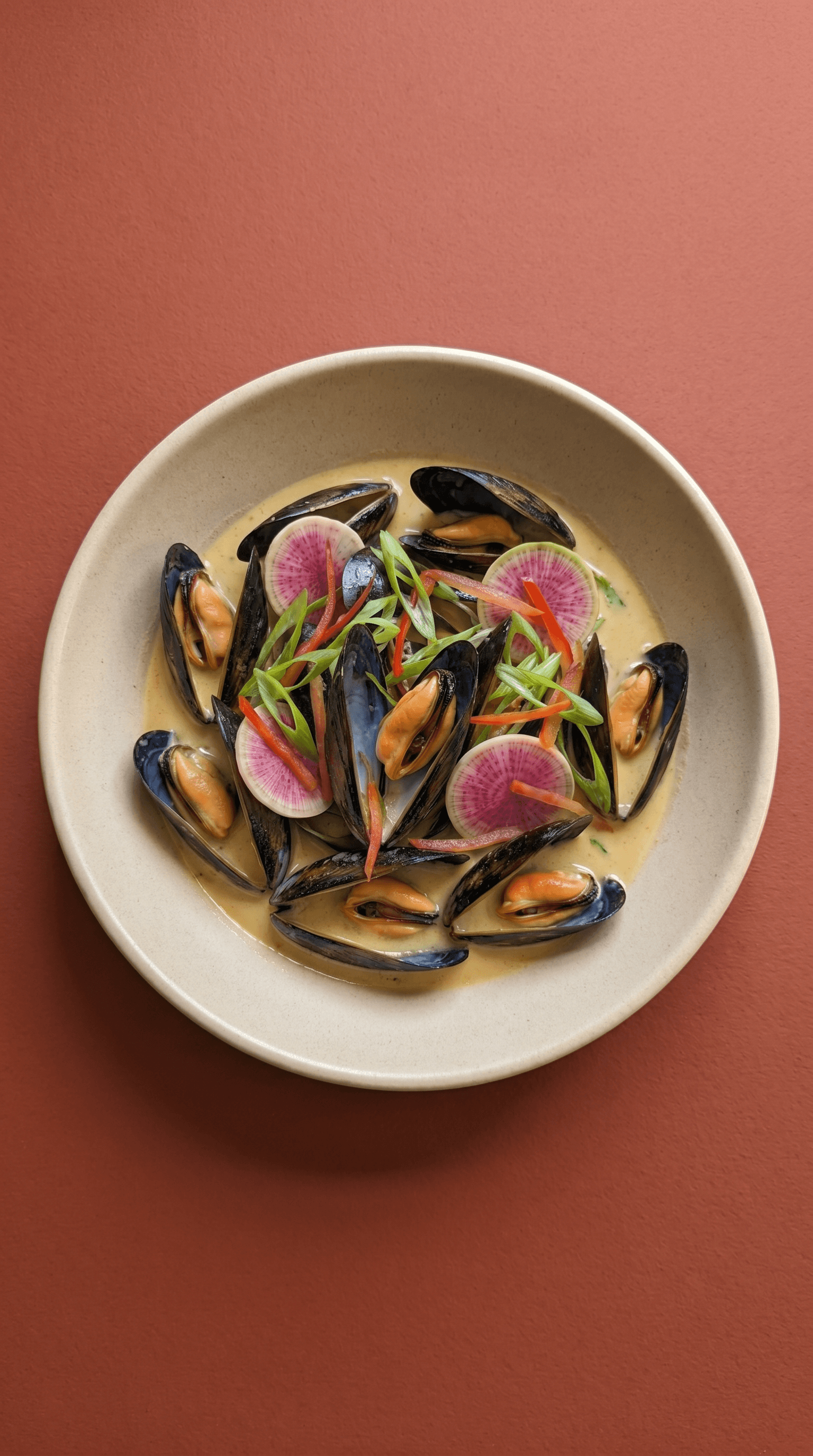
Ginger-Lemongrass Mussels with Sinigang Aromatics and Sour Cream
This dish combines French steaming techniques with Filipino flavors to create restaurant-quality mussels in about 30 minutes. Fresh mussels cook in white wine with ginger, lemongrass, and tangy sour cream, then get finished with butter and decorative watermelon radish rounds for a silky, stunning presentation.
30 min · Intermediate · Philippines
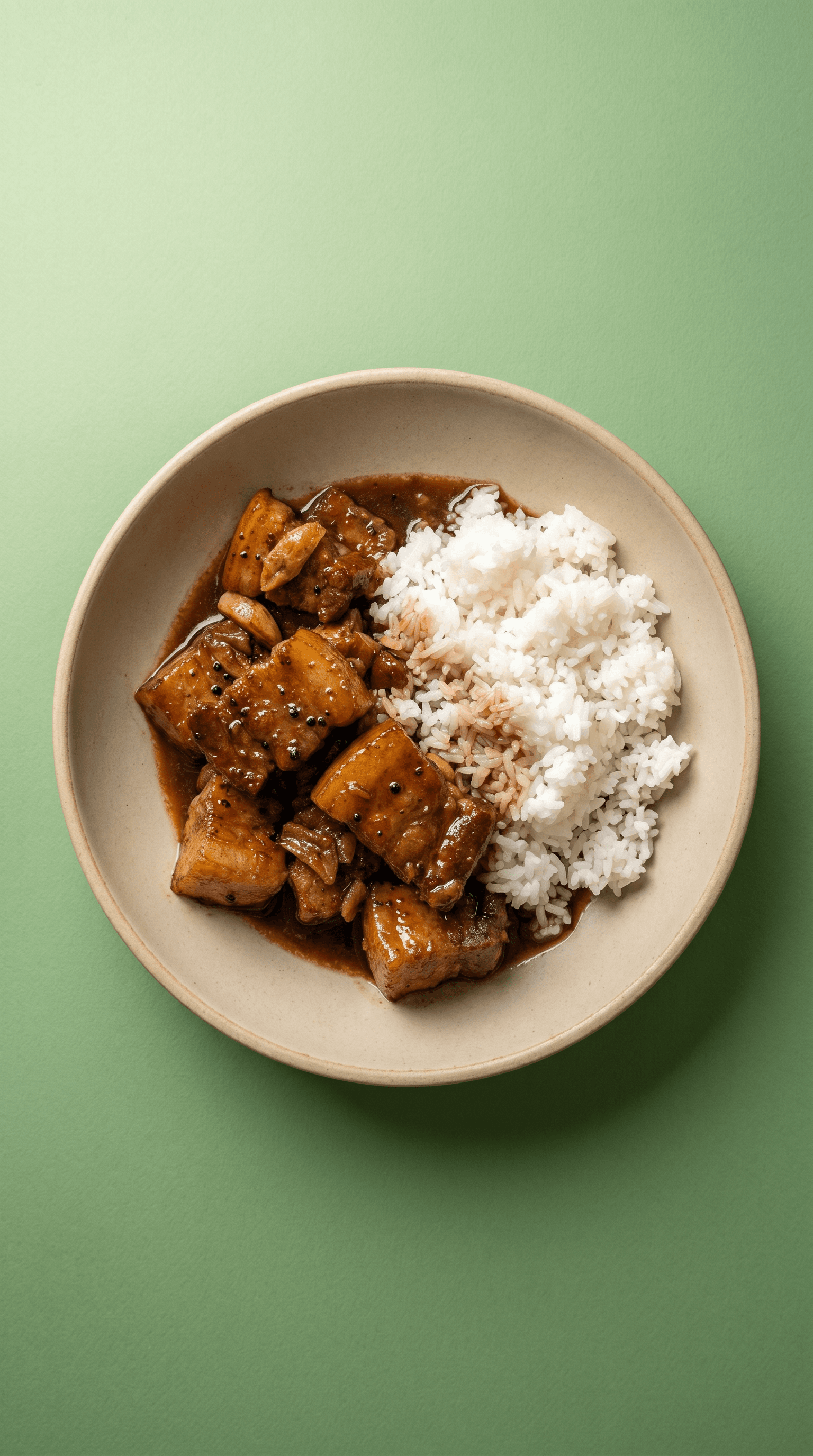
Red Wine Infused Pork Adobo with Beurre Monté
This elegant pork adobo combines Filipino braising with French butter technique to create restaurant-quality results at home. The secret is a red wine reduction that deepens the flavor, finished with silky butter that balances the vinegar's tang. Plan for 2.5 hours total, with most of that being gentle simmering while you relax. Serves 4-6 people.
150 min · Intermediate · Philippines
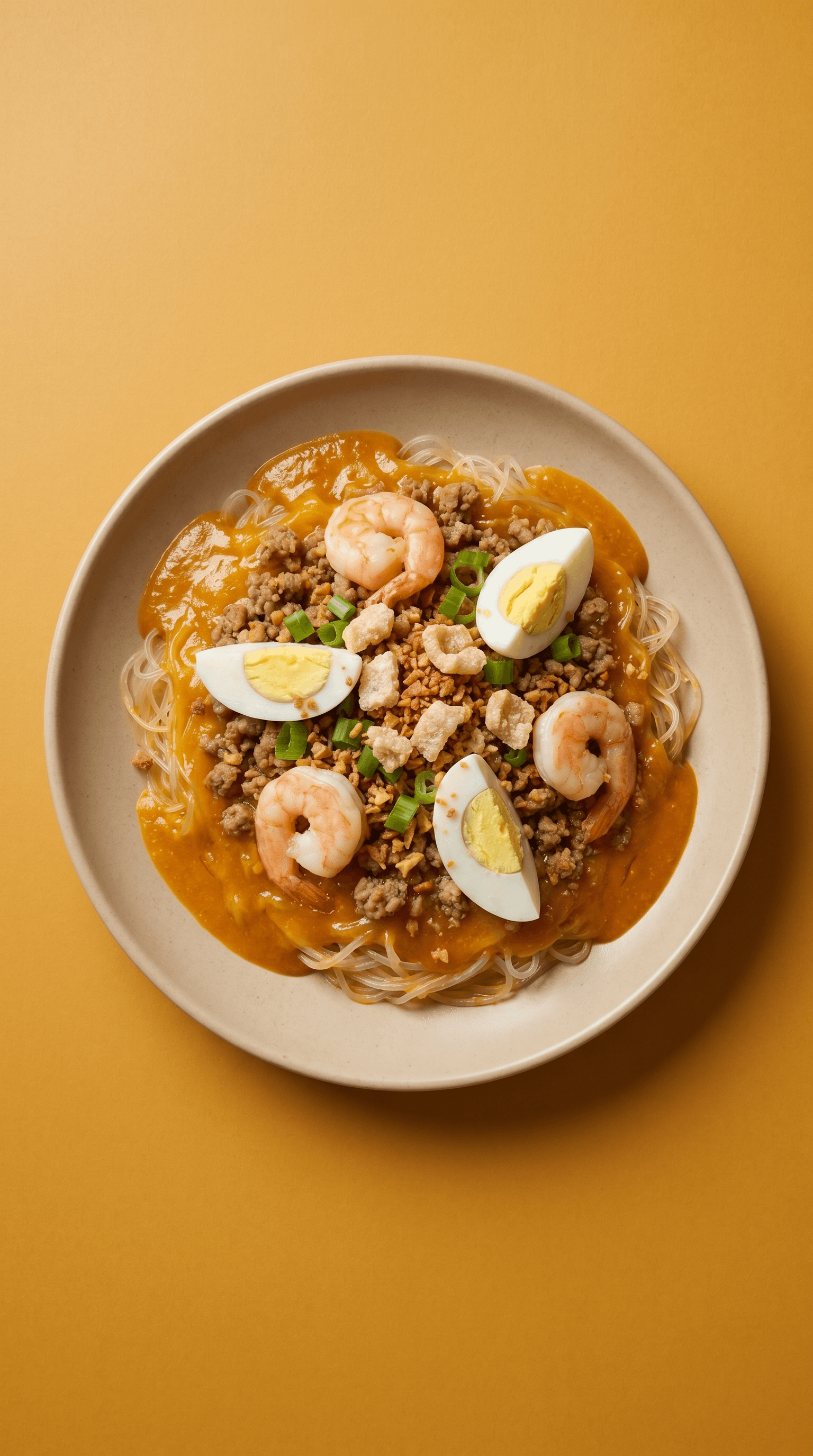
Pansit Palabok
Pansit Palabok is a stunning Filipino noodle dish crowned with a rich, golden shrimp sauce and savory toppings like crispy pork rinds and dried fish. The magic happens when you build a deep seafood stock from shrimp shells, thicken it with rice flour, and layer it over delicate glass noodles. Takes about an hour start to finish and serves 4-6 people, perfect for family celebrations.
60 min · Intermediate · Philippines