

Spicy Minced Pork Salad (Larb Moo)
Prefer not to cook?
Order Spicy Minced Pork Salad (Larb Moo) as a ready-made meal and get it delivered to your door.
Order this meal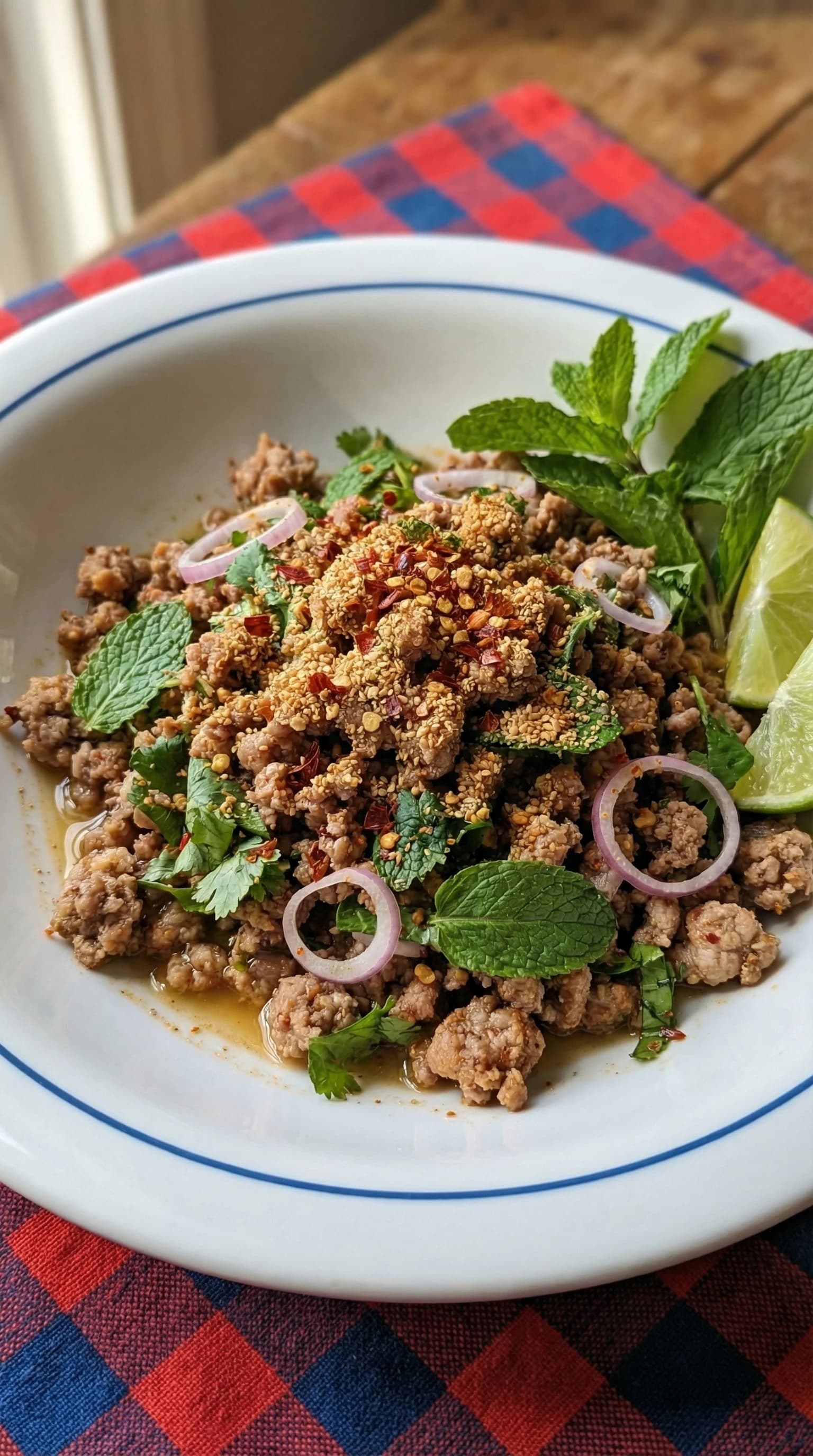
Larb Moo is a vibrant Thai meat salad from the Isan region that balances spicy chilies, tangy lime, and salty fish sauce with fresh herbs and crunchy toasted rice powder. You'll cook seasoned ground pork quickly in a hot wok, then toss it warm with aromatics and herbs for a dish that's ready in 45 minutes and serves 4 as a refreshing main course or party appetizer.

Recipe by Mr Saucy aka Christophe
Christophe is a culinary professional with expertise in French and global cuisine. He has developed recipes and cooking techniques that bridge traditional methods with modern home cooking approaches. Christophe focuses on making classic culinary techniques accessible to home cooks through clear instruction and practical applications. He studied at Le Cordon Bleu Paris and has work experience at a two star Michelin restaurant.
Homecook turned pro with a Cordon Bleu Paris graduate
Quick Info
What Makes This Different from Regular Salads?
Traditional Isan cuisine treats meat salads as warm dishes, not cold ones. Serving the pork at 95-104°F / 35-40°C lets the fresh mint and cilantro release their essential oils without wilting, creating that signature bright, herbaceous aroma you find at Thai street stalls.
Food science shows that adding warm broth to just-cooked meat helps the protein fibers stay moist and absorb seasonings more effectively than cold liquid would. The pork acts like a sponge, soaking up the fish sauce and lime juice while staying tender and juicy instead of dry and crumbly.
Professional Thai cooks know that toasted rice powder—khao khua—is the secret ingredient that makes larb unique. Toasting sticky rice until golden brown at medium heat creates nutty, smoky notes through the Maillard reaction, and grinding it coarse gives you that addictive crunch that thickens the dressing without making it gummy.
Ingredients
Recipe yields 4 servings
For the Toasted Rice Powder
| Amount | Ingredient | Notes |
|---|---|---|
| 30 g (2 tablespoons) | sticky rice (uncooked) | toast and grind to make khao khua |
For the Pork
| Amount | Ingredient | Notes |
|---|---|---|
| 500 g (1 lb) | lean ground pork | 15-20% fat content for juiciness |
| 120 ml (1/2 cup) | chicken or pork broth | warm to 140°F / 60°C, low-sodium preferred |
For the Dressing
| Amount | Ingredient | Notes |
|---|---|---|
| 45 ml (3 tablespoons) | fish sauce | high-quality Thai brand like Red Boat |
| 60 ml (1/4 cup) | fresh lime juice | freshly squeezed from 3-4 limes |
| 6 chilies | Thai bird's eye chilies | pounded with 1/4 teaspoon salt into a paste |
For the Aromatics and Herbs
| Amount | Ingredient | Notes |
|---|---|---|
| 3 shallots | medium shallots | thinly sliced into rings, Thai red shallots preferred |
| 50 g | red onion | thinly sliced into half-moons |
| 3 stalks | green onions | sliced into 2 cm (3/4 inch) pieces |
| 1 cup (packed) | mint leaves | whole leaves, Thai mint preferred, thoroughly dried |
| 1 cup (packed) | cilantro | roughly chopped, include tender stems, thoroughly dried |
For Serving
| Amount | Ingredient | Notes |
|---|---|---|
| 1 head | lettuce | iceberg or romaine, separated into cups |
| 1 large | cucumber | sliced into rounds, optional |
Instructions
Make the Toasted Rice Powder
- 1
Toast the Rice (The Nutty Foundation)
Heat a small dry pan over medium heat. Add the raw sticky rice and toast for 8-10 minutes, shaking the pan frequently, until the grains turn golden brown and smell nutty. This slow toasting at medium heat—around 350°F / 175°C—creates those deep, smoky flavors through gentle browning without burning.
- 2
Grind to Coarse Powder
Let the rice cool for 2 minutes, then grind it in a mortar and pestle or spice grinder to a coarse powder that looks like rough sand. You want distinct grains of crunch, not fine flour—this texture is what gives larb its signature bite and helps thicken the dressing without making it pasty.
Prep the Ingredients
- 3
Wash and Dry the Herbs (Prevent Watery Salad)
Wash the mint and cilantro thoroughly, then dry them completely using a salad spinner or paper towels. Any water clinging to the leaves will dilute your dressing and make the salad soggy instead of bright and concentrated.
- 4
Pound the Chilies
In a mortar and pestle, pound the bird's eye chilies with 1/4 teaspoon salt until you have a rough paste. The salt acts as an abrasive to break down the chili fibers and helps distribute the heat evenly throughout the dish.
- 5
Warm the Broth
Heat your broth to 140°F / 60°C—warm to the touch but not steaming. Using warm liquid instead of cold helps the pork absorb the seasonings more effectively, keeping the meat moist and flavorful rather than dry and tight.
Cook the Pork
- 6
Sauté the Pork Quickly (Keep It Tender)
Heat a wok over high heat until it just starts to smoke. Add the ground pork and sauté for 3-4 minutes, breaking it into small pieces with your spatula, until the pink just disappears and the internal temperature reaches 145°F / 63°C. Don't brown it heavily—you want tender, juicy meat, not crispy bits.
- 7
Drain But Save Some Liquid
Drain the pork in a colander, but reserve 2 tablespoons of the cooking liquid in a small bowl. This flavorful fat carries the pork's natural taste and will help keep the salad moist without being greasy.
Assemble the Salad
- 8
Add the Warm Broth (Bloom the Flavors)
Transfer the drained pork to a large mixing bowl and immediately stir in the warm broth and the reserved 2 tablespoons of cooking liquid. The residual heat from the pork—still around 140°F / 60°C—helps the meat fibers open up and soak in the liquid like a sponge, creating that signature moist texture.
- 9
Season While Warm (Maximum Absorption)
While the pork is still warm, mix in the fish sauce, lime juice, and chili paste. Stir well so every piece of meat gets coated. The warmth helps the salty, sour, and spicy elements penetrate deep into the protein instead of just sitting on the surface.
- 10
Add Aromatics and Rest (Soften the Bite)
Fold in the sliced shallots and red onions, then let the mixture sit for 2 minutes. The residual heat gently softens the raw onions just enough to remove their sharp bite while keeping them crisp and crunchy.
- 11
Finish with Rice Powder and Herbs (Preserve Freshness)
Add the toasted rice powder, mint, cilantro, and green onions. Toss gently to combine. Adding these last preserves the powder's crunch and the herbs' bright green color and fresh aroma—heat would wilt them instantly.
- 12
Rest to Lukewarm (Traditional Serving Temperature)
Let the salad rest for 3-4 minutes until it reaches 95-104°F / 35-40°C—lukewarm to the touch. This is the traditional Isan way to serve larb, as this temperature lets you fully appreciate the complex herb notes and citrus brightness without the heat overwhelming your palate.
Serve
- 13
Plate with Fresh Vegetables
Arrange the lettuce cups and cucumber slices (if using) on a serving platter. Spoon the warm larb into the center. Guests can scoop the salad into lettuce cups for a refreshing, crunchy contrast to the rich, spicy pork.
Tips & Tricks
If your salad turns out watery: Make sure your herbs are bone-dry after washing—use a salad spinner or pat them thoroughly with paper towels. Also drain the pork completely before adding the broth and lime juice. Any extra moisture dilutes the dressing and makes it soupy instead of concentrated.
If it's too sour for your taste: Add 1 teaspoon of palm sugar or brown sugar and stir well. Traditional Isan larb is very tart, but a little sweetness balances the lime juice for many palates without losing the authentic flavor profile.
If the rice powder feels gritty or dusty: Grind the toasted rice to a 'coarse sand' texture rather than a fine flour. It should provide a distinct crunch when you bite into it, not feel like powder coating your mouth. If it's too fine, toast a new batch and pulse the grinder less.
If the pork comes out dry and crumbly: You likely overcooked it or used meat that was too lean. Next time, use pork shoulder with 15-20% fat content and remove it from heat the moment the pink disappears. The internal temperature should be 145°F / 63°C, not higher.
If you don't have a mortar and pestle for the chilies: Mince the chilies very finely with a sharp knife, then mash them on your cutting board with the flat side of the knife and the salt. It won't be quite as smooth as pounding, but it will still distribute the heat evenly.
If the herbs turn grey or brown after mixing: You added them too early while the pork was still too hot, or you let the finished salad sit too long. Always add herbs at the very end when the pork has cooled to lukewarm, and serve within 15-20 minutes for the brightest color and freshest flavor.
Frequently Asked Questions
Can I make Larb Moo ahead of time?
Partial prep works best. Cook the pork and prep the vegetables up to 4 hours ahead, storing them separately in the fridge. But don't add the lime juice, herbs, or rice powder until just before serving. The acid in the lime will turn the herbs grey and the rice powder will lose its crunch if left too long. Reheat the pork gently to lukewarm before assembling.
What if I don't have sticky rice for the toasted powder?
You can substitute jasmine rice in a pinch. The flavor will be similar—nutty and smoky—though the texture is slightly less crunchy. Toast it the same way until golden brown. Never skip this ingredient entirely, as the toasted rice powder provides the essential nutty aroma and signature texture that defines larb.
Why is my Larb served lukewarm instead of hot?
In Thai culinary tradition, serving meat salads at 95-104°F / 35-40°C allows the delicate flavors of fresh mint, cilantro, and lime juice to shine. High heat would wilt the herbs instantly and mute the bright, citrusy profile of the dressing. Lukewarm is the sweet spot where the pork is still tender and the herbs stay vibrant.
Is there a substitute for fish sauce?
For the most authentic flavor, fish sauce is irreplaceable due to its deep umami and funky saltiness. However, if you have an allergy, use high-quality light soy sauce or liquid aminos in the same amount. Keep in mind the flavor profile will shift from 'funky and salty' to 'earthy and salty,' and you'll lose some of that characteristic Thai depth.
How spicy is this dish and can I adjust the heat?
With 6 bird's eye chilies, this is authentically spicy—medium-high heat. Start with 3 chilies if you're heat-sensitive, or remove the seeds to cut the intensity by about half. You can always serve extra chili paste on the side so guests can adjust to their preference.
Can I use ground chicken or turkey instead of pork?
Yes, ground chicken or turkey works well and creates a lighter version called Larb Gai. Use the same technique, but be extra careful not to overcook poultry—it dries out faster than pork. Cook just until it reaches 165°F / 74°C internally and the pink disappears.
What should I serve with Larb Moo?
Traditionally, larb is served with sticky rice, fresh vegetables like cabbage wedges and long beans, and sometimes a fried egg on top. The sticky rice helps balance the spicy, sour flavors and makes it a complete meal. You can also serve it as an appetizer with crispy rice crackers.