Red Wine Infused Pork Adobo with Beurre Monté
2 hrs 30 min · Medium · Serves 4-6
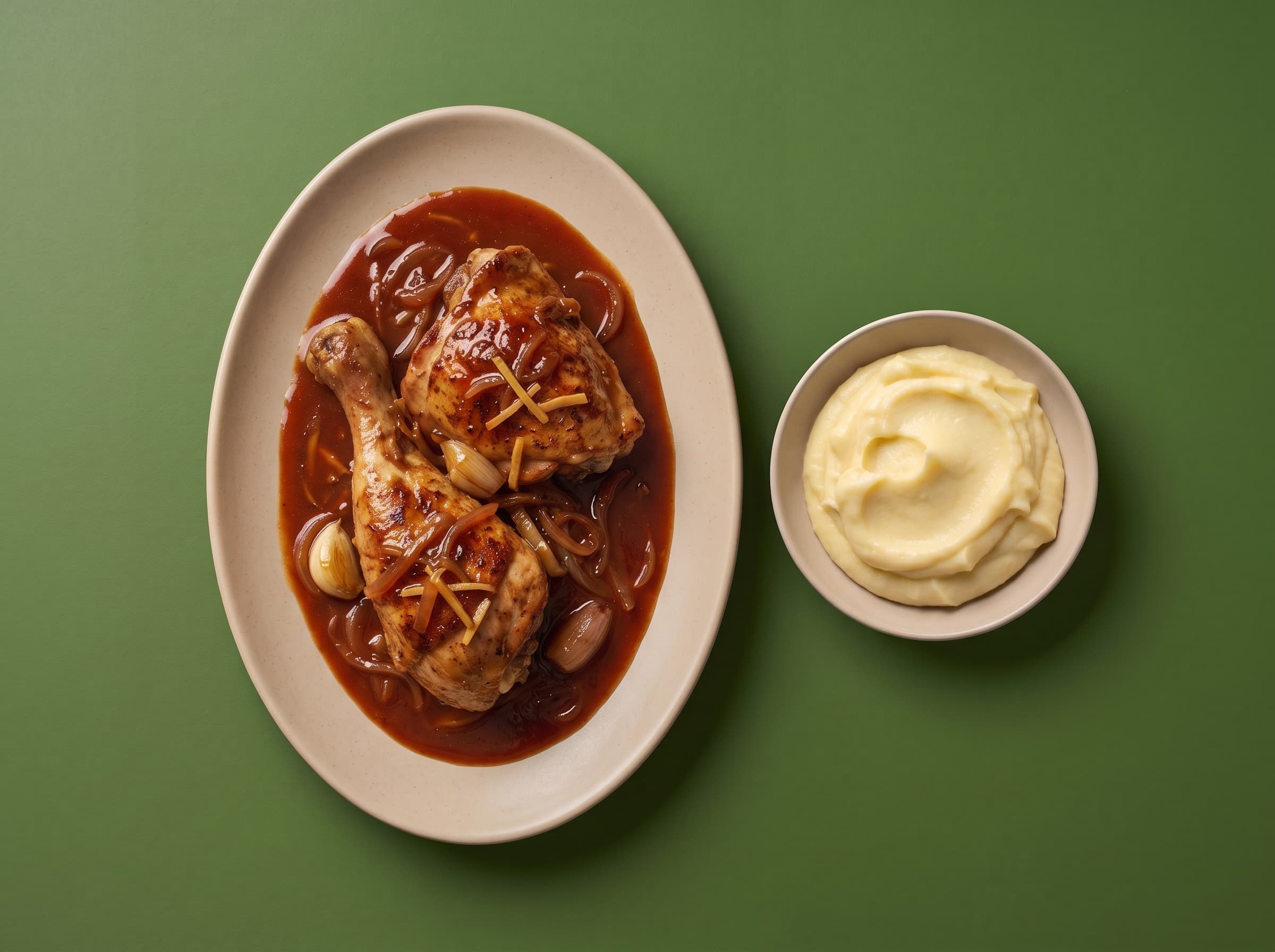 From our menuCoq au vin€22.95 · Made by us, delivered chilled.
This elegant pork adobo combines Filipino braising with French butter technique to create restaurant-quality results at home. The secret is a red wine reduction that deepens the flavor, finished with silky butter that balances the vinegar's tang. Plan for 2.5 hours total, with most of that being gentle simmering while you relax. Serves 4-6 people.
Recipe by Christophe Rammant
Cordon Bleu Paris alumni - Two star Michelin kitchen experience
How Does This Bridge Two Cooking Traditions?
Traditional Filipino adobo relies on vinegar and soy sauce to tenderize tough cuts of meat through long, slow cooking. Professional chefs know that adding red wine creates a deeper, more complex flavor base—the tannins work with the acid to break down collagen even faster, giving you fall-apart tender pork.
French technique shows that beurre monté (butter whisked into liquid) creates a stable, glossy sauce that coats every piece of meat. The cold butter emulsifies into the reduced braising liquid, tempering the sharp vinegar and adding rich, velvety body that transforms a rustic dish into something elegant.
Food science proves that the Maillard reaction from searing the pork first builds hundreds of flavor compounds that simple boiling can't create. Those deep brown bits stuck to the pan dissolve into the wine, creating layers of savory depth that make each bite more interesting than the last.
Estimated nutrition per serving
Estimated from ingredient weights, not lab-tested.
- Calories
- 1165
- Protein
- 58g
- Fat
- 57g
- Carbohydrates
- 90g
The weekly recipe note
Enjoyed this recipe? Get the next one first.
One new recipe each week from Christophe: global flavor, French technique, and practical home-cook timing.
By signing up, you agree to receive emails from Mr. Saucy.
Ingredients
Recipe yields 4-6 servings
For the Braised Pork
| Amount | Ingredient | Notes |
|---|---|---|
| 1000 g (2.2 lbs) | pork belly or shoulder | cut into 2-inch cubes |
| 120 g (1/2 cup) | soy sauce | Filipino-style preferred |
| 60 g (1/4 cup) | Filipino datu puti spiced vinegar | or sherry vinegar |
| 240 g (1 cup) | dry red wine | Cabernet or Merlot |
| 40 g (1 whole head) | garlic | crushed |
| 2 | bay leaves | dried |
| 5 g (1 tsp) | whole black peppercorns | crushed |
| 2 | parsley stalks | — |
| 300 g (1 1/4 cups) | veal or beef broth | alternatively demi-glace |
| 10 g (2 tsp) | brown sugar | optional, to balance acidity |
For the Beurre Monté Finish
| Amount | Ingredient | Notes |
|---|---|---|
| 50 g (3 1/2 tbsp) | cold unsalted butter | cubed |
For Serving
| Amount | Ingredient | Notes |
|---|---|---|
| 400 g (2 cups uncooked) | jasmine rice | for serving |
Instructions
Sear and Build the Base
- 1
Dry the Pork (The Browning Secret)
Pat the pork cubes completely dry with paper towels. Any moisture on the surface will steam the meat instead of creating that deep brown crust—you want the Maillard reaction to develop hundreds of flavor compounds that make the dish taste rich and complex.
- 2
Sear in Batches (Don't Crowd the Pan)
Heat a heavy-bottomed pot over medium-high heat (around 375°F / 190°C surface temperature). Sear the pork in batches until deeply browned on all sides—this takes about 8-10 minutes per batch. Crowding the pan drops the temperature and makes the meat steam instead of sear.
- 3
Bloom the Garlic
Remove the pork and add the crushed garlic to the same pan. Sauté for 1-2 minutes until fragrant but not burned—the residual heat releases the garlic's aromatic oils without turning them bitter.
- 4
Deglaze with Wine (Capture Every Bit of Flavor)
Pour in the red wine and scrape up all the brown bits stuck to the pan bottom with a wooden spoon. Those caramelized bits are pure concentrated flavor that will make your sauce taste restaurant-quality.
- 5
Reduce the Wine by Half
Let the wine simmer for 8-10 minutes until it reduces by half—you'll see it thicken slightly and the alcohol smell will fade. This concentrates the wine's fruity depth and removes the harsh alcohol bite so it won't overpower the vinegar.
Braise the Pork
- 6
Add the Braising Liquids
Return the pork to the pot along with the soy sauce, broth, vinegar, bay leaves, parsley stalks, and peppercorns. The acid from the vinegar will tenderize the meat while the soy adds savory depth that balances everything.
- 7
Simmer Low and Slow (Patience Creates Tenderness)
Bring to a gentle simmer at 185-200°F / 85-93°C—you'll see small bubbles breaking the surface but no rolling boil. Cover and cook for 1.5-2 hours until the pork is fork-tender. Low heat prevents the meat from toughening and gives the collagen time to break down into silky gelatin.
Finish with Beurre Monté
- 8
Reduce the Sauce to Syrup
Remove the pork, parsley stalks, and bay leaves. Turn the heat to medium and reduce the braising liquid for 10-15 minutes until it's thick enough to coat the back of a spoon—this concentrates all those layered flavors into a glossy base for the butter.
- 9
Whisk in Cold Butter (The Emulsion Magic)
Lower the heat to the absolute minimum—around 160°F / 71°C. Whisk in the cold butter cubes one at a time, waiting until each piece melts before adding the next. This creates a stable emulsion that turns the sauce silky and balances the vinegar's sharpness with rich, velvety body.
- 10
Glaze the Pork
Return the pork to the pan and gently turn each piece to coat in the glossy sauce. The meat will absorb that beautiful sheen and every bite will deliver maximum flavor impact.
The weekly recipe note
Enjoyed this recipe? Get the next one first.
One new recipe each week from Christophe: global flavor, French technique, and practical home-cook timing.
By signing up, you agree to receive emails from Mr. Saucy.
Tips & Tricks
your sauce tastes harsh or alcoholic:
You didn't reduce the wine enough in step 5. Simmer it longer until it smells fruity and sweet instead of sharp—this evaporates the alcohol and concentrates the good flavors.
the butter sauce breaks and looks greasy:
The heat was too high. Remove from heat immediately and whisk in a teaspoon of cold water or an ice cube—the temperature shock brings the emulsion back together.
you want even deeper flavor:
Marinate the pork in the soy sauce and garlic for 2 hours before cooking. This seasons the meat all the way through instead of just on the surface.
you don't have Filipino vinegar:
Use sherry vinegar—it has the same fruity acidity and depth. Rice vinegar works in a pinch but tastes milder. Never use distilled white vinegar because it's too harsh and one-dimensional.
your sauce tastes harsh or alcoholic:
You didn't reduce the wine enough in step 5. Simmer it longer until it smells fruity and sweet instead of sharp—this evaporates the alcohol and concentrates the good flavors.
the butter sauce breaks and looks greasy:
The heat was too high. Remove from heat immediately and whisk in a teaspoon of cold water or an ice cube—the temperature shock brings the emulsion back together.
you want even deeper flavor:
Marinate the pork in the soy sauce and garlic for 2 hours before cooking. This seasons the meat all the way through instead of just on the surface.
you don't have Filipino vinegar:
Use sherry vinegar—it has the same fruity acidity and depth. Rice vinegar works in a pinch but tastes milder. Never use distilled white vinegar because it's too harsh and one-dimensional.
Frequently Asked Questions
Can I make this ahead of time?
Yes! Cook through step 8 and refrigerate for up to 3 days—the flavors actually deepen overnight. When you're ready to serve, reheat gently and whisk in the cold butter just before serving so the emulsion stays smooth and glossy.
What if I don't have Filipino cane vinegar?
Sherry vinegar is your best substitute because it has similar fruity acidity and complexity. Rice vinegar works but tastes milder and less interesting. Avoid distilled white vinegar—it's too harsh and will make the sauce taste sharp instead of balanced.
Why did my sauce separate when I added the butter?
The sauce was too hot. Butter emulsifies best around 160°F / 71°C—any hotter and the fat separates from the liquid. Remove from heat completely, let it cool for a minute, then whisk in cold butter gradually while the pan is off the burner.
Can I use chicken instead of pork?
Absolutely! Use bone-in chicken thighs and reduce the cooking time to 45-60 minutes in step 7. Dark meat stays tender and juicy while absorbing all those complex sauce flavors. White meat will dry out, so stick with thighs.
How do I know when the pork is done?
It should be fork-tender—when you poke it with a fork, the meat should fall apart easily with no resistance. If it's still firm or chewy, keep simmering for another 15-30 minutes and check again.
What kind of red wine should I use?
Choose a dry red like Cabernet Sauvignon or Merlot—something you'd enjoy drinking. Avoid sweet wines because they'll make the sauce taste cloying. You don't need an expensive bottle, but use something that tastes good on its own.
Can I skip the butter finish?
You can, but you'll lose that silky, restaurant-quality texture that makes this special. The butter emulsion balances the vinegar's sharpness and creates a glossy coating that clings to the meat. Without it, the sauce tastes sharper and thinner.
Why is my sauce too thin?
You need to reduce it more in step 8. Keep simmering with the lid off until it's thick enough to coat the back of a spoon—this concentrates the flavors and creates the right consistency for the butter to emulsify properly.
Can I make this ahead of time?
Yes! Cook through step 8 and refrigerate for up to 3 days—the flavors actually deepen overnight. When you're ready to serve, reheat gently and whisk in the cold butter just before serving so the emulsion stays smooth and glossy.
What if I don't have Filipino cane vinegar?
Sherry vinegar is your best substitute because it has similar fruity acidity and complexity. Rice vinegar works but tastes milder and less interesting. Avoid distilled white vinegar—it's too harsh and will make the sauce taste sharp instead of balanced.
Why did my sauce separate when I added the butter?
The sauce was too hot. Butter emulsifies best around 160°F / 71°C—any hotter and the fat separates from the liquid. Remove from heat completely, let it cool for a minute, then whisk in cold butter gradually while the pan is off the burner.
Can I use chicken instead of pork?
Absolutely! Use bone-in chicken thighs and reduce the cooking time to 45-60 minutes in step 7. Dark meat stays tender and juicy while absorbing all those complex sauce flavors. White meat will dry out, so stick with thighs.
How do I know when the pork is done?
It should be fork-tender—when you poke it with a fork, the meat should fall apart easily with no resistance. If it's still firm or chewy, keep simmering for another 15-30 minutes and check again.
What kind of red wine should I use?
Choose a dry red like Cabernet Sauvignon or Merlot—something you'd enjoy drinking. Avoid sweet wines because they'll make the sauce taste cloying. You don't need an expensive bottle, but use something that tastes good on its own.
Can I skip the butter finish?
You can, but you'll lose that silky, restaurant-quality texture that makes this special. The butter emulsion balances the vinegar's sharpness and creates a glossy coating that clings to the meat. Without it, the sauce tastes sharper and thinner.
Why is my sauce too thin?
You need to reduce it more in step 8. Keep simmering with the lid off until it's thick enough to coat the back of a spoon—this concentrates the flavors and creates the right consistency for the butter to emulsify properly.
Recipe Reviews
No reviews yet — Be the first to review this recipe!
The collection
All recipes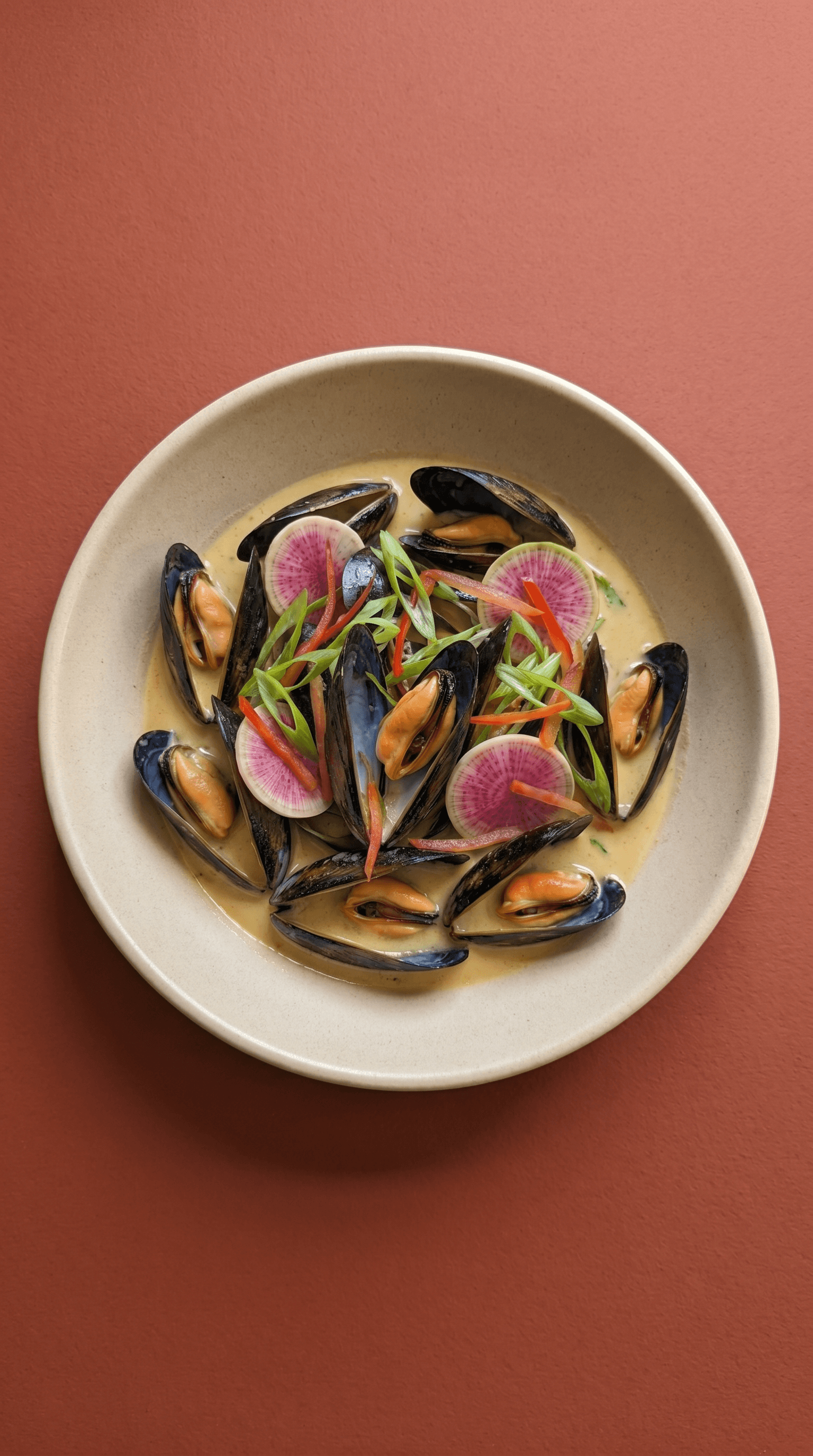
Ginger-Lemongrass Mussels with Sinigang Aromatics and Sour Cream
This dish combines French steaming techniques with Filipino flavors to create restaurant-quality mussels in about 30 minutes. Fresh mussels cook in white wine with ginger, lemongrass, and tangy sour cream, then get finished with butter and decorative watermelon radish rounds for a silky, stunning presentation.
30 min · Intermediate · Philippines
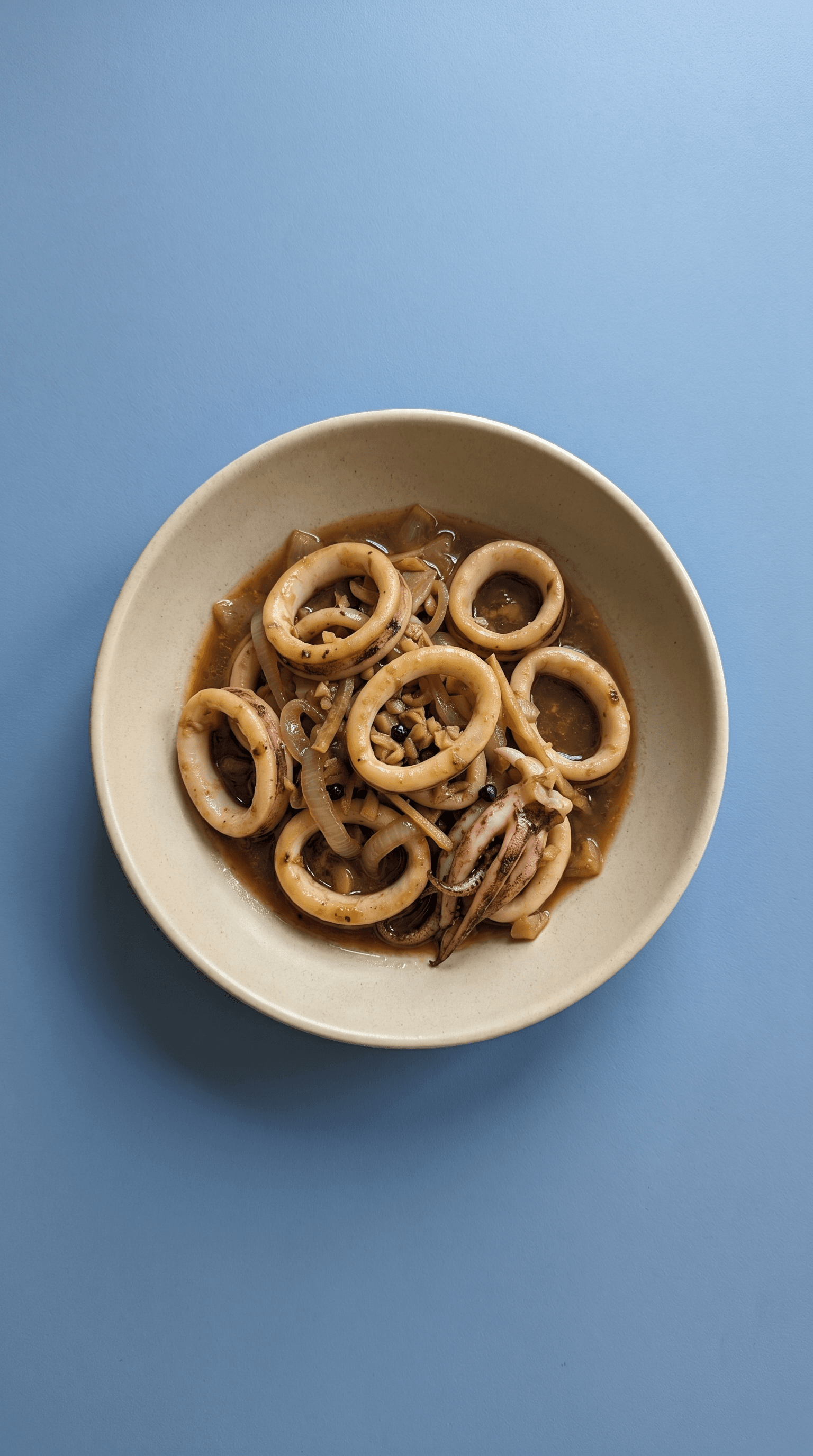
Squid Adobo with White Wine Reduction
This Filipino-French fusion dish combines tender squid with a glossy wine-enriched adobo sauce finished with butter. The secret is cooking the squid fast—just 2 minutes over high heat—then building a rich sauce that's both tangy and silky. Ready in 35 minutes, serves 4-6 people.
35 min · Easy · Philippines
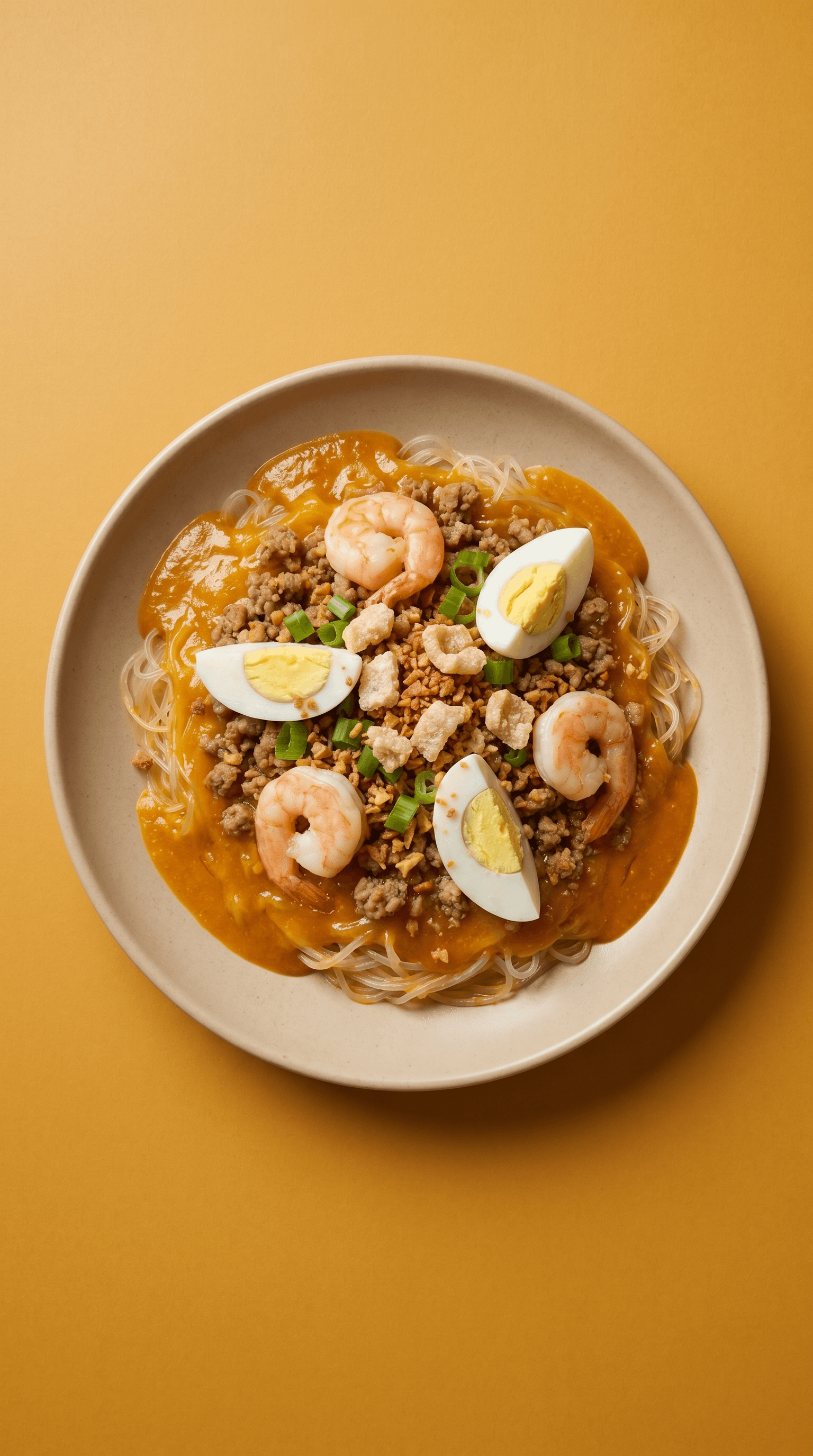
Pansit Palabok
Pansit Palabok is a stunning Filipino noodle dish crowned with a rich, golden shrimp sauce and savory toppings like crispy pork rinds and dried fish. The magic happens when you build a deep seafood stock from shrimp shells, thicken it with rice flour, and layer it over delicate glass noodles. Takes about an hour start to finish and serves 4-6 people, perfect for family celebrations.
60 min · Intermediate · Philippines