

Quick Seared Oyster Mushrooms with Korean Sauce Vierge
Prefer not to cook?
Order Quick Seared Oyster Mushrooms with Korean Sauce Vierge as a ready-made meal and get it delivered to your door.
Order this meal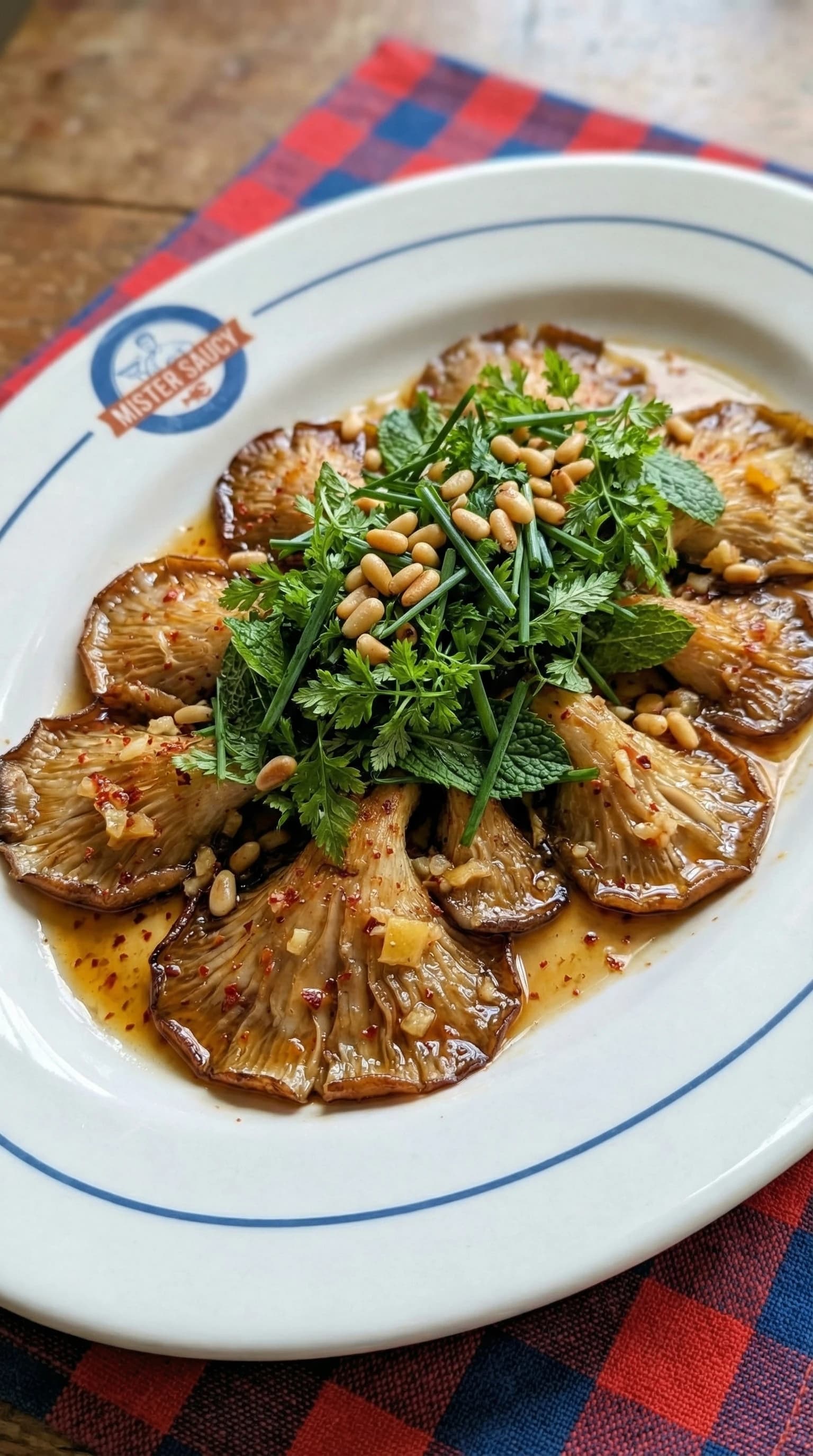
This elegant starter combines crispy seared oyster mushrooms with a bright Korean-French sauce. The key technique is hot-pan searing for golden edges, then marinating in a tangy mix of rice vinegar, garlic, ginger, sesame oil, preserved lemon, and a very light touch of gochugaru. It’s finished with separately listed fresh chives, chervil, and mint for a generous herb topping.

Recipe by Mr Saucy aka Christophe
Christophe is a culinary professional with expertise in French and global cuisine. He has developed recipes and cooking techniques that bridge traditional methods with modern home cooking approaches. Christophe focuses on making classic culinary techniques accessible to home cooks through clear instruction and practical applications. He studied at Le Cordon Bleu Paris and has work experience at a two star Michelin restaurant.
Homecook turned pro with a Cordon Bleu Paris graduate
Quick Info
How Does This Fusion Create Such Bright, Clean Flavors?
Traditional French 'sauce vierge' uses raw aromatics and acid to dress warm ingredients—the heat gently releases flavors without cooking them away. Korean 'muchim' follows the same principle, tossing vegetables in bold seasonings that penetrate while still fresh and vibrant.
Food science shows that rice vinegar's clean acidity (around 4-5% acetic acid) highlights delicate flavors better than heavier vinegars. The preserved lemon brunoise adds fermented saltiness that bridges the soy sauce and fresh herbs naturally.
Professional chefs know that oyster mushrooms need high heat for a quick sear—their delicate structure means gentle cooking turns them mushy. A screaming-hot pan creates golden edges while keeping the inside tender and meaty.
Ingredients
Recipe yields 4 servings
For the Mushrooms
| Amount | Ingredient | Notes |
|---|---|---|
| 320 g (about 11 oz) | Large Oyster Mushroom Caps | heads only, sliced into longitudinal strips |
| 20 g (about 1½ tablespoons) | Neutral Oil | for searing |
For the Korean Sauce Vierge
| Amount | Ingredient | Notes |
|---|---|---|
| 30 g (2 tablespoons) | Yangjo Ganjang (Naturally Brewed Soy Sauce) | for savory depth |
| 30 g (2 tablespoons) | Rice Vinegar | provides a clean, sharp acidity |
| 17 g (about 1¼ tablespoons) | Toasted Sesame Oil | high quality, for nutty aroma |
| 9 g (about 2 teaspoons) | Preserved Lemon | peel only, rinsed and cut into fine brunoise |
| 10 g (about 3 cloves) | Fresh Garlic | finely minced or grated |
| 5 g (about 1 teaspoon) | Fresh Ginger | finely grated |
| 0.4 g (about 1/4 teaspoon) | Gochugaru (Korean Red Chili Flakes) | for smoky, gentle heat |
For the Herb Topping
| Amount | Ingredient | Notes |
|---|---|---|
| 20 g | Fresh Chives | for topping; 5 g per person |
| 20 g | Fresh Chervil | for topping; 5 g per person |
| 20 g | Fresh Mint | for topping; 5 g per person |
| 15 g (about 1 tablespoon) | Toasted Pine Nuts | for buttery texture |
Instructions
Prep the Mushrooms
- 1
Slice the Mushroom Caps
Cut the oyster mushroom caps into elegant longitudinal strips, keeping the delicate gills intact. Slicing this way shows off the mushroom's natural shape and creates more surface area for the sear and sauce to cling to.
Sear and Marinate
- 2
Sear Until Golden (The High-Heat Trick)
Heat a skillet over high heat until it's very hot—around 400°F / 204°C surface temperature. Add the neutral oil and immediately add the mushroom strips. Sear without moving them for 2-3 minutes until golden brown and tender. The high heat creates a crispy edge without turning the delicate mushrooms mushy. Set aside to cool slightly.
- 3
Make the Sauce Vierge Base
In a mixing bowl, whisk together the soy sauce, rice vinegar, minced garlic, grated ginger, and sesame oil. This creates the foundation—the acid and aromatics stay raw so they taste bright and punchy when they hit the warm mushrooms.
- 4
Add the Preserved Lemon and Gochugaru
Fold in the finely diced preserved lemon brunoise and the gochugaru flakes. The salt and citrus from the lemon bridge the soy sauce and chili beautifully, creating a balanced, complex flavor that's neither too Korean nor too French—it's both.
- 5
Marinate the Mushrooms (Let Flavors Soak In)
Toss the warm mushrooms in the sauce and let them sit for 10 minutes at room temperature. The gentle warmth opens up the mushroom tissue so the garlic, ginger, and vinegar penetrate deeply. This resting time is what makes the dish taste marinated, not just dressed.
Finish and Plate
- 6
Prepare the Herb Topping
Gently toss the fresh chives, chervil, and mint together in a small bowl. Using them as separately listed herbs keeps the topping clear and intentional, with 20 g of each for 4 servings.
- 7
Plate and Serve
Arrange the mushrooms flat on serving plates and drizzle with any remaining sauce vierge. Pile the herb topping and toasted pine nuts generously on top just before serving. The herbs stay crisp and fragrant when added at the last second.
Tips & Tricks
If your garlic tastes too sharp or raw: Blanch the minced garlic in the rice vinegar for 30 seconds before mixing the rest of the marinade. The quick heat tames the bite while keeping the vinegar bright.
If your gochugaru looks brown or smells dusty: Replace it with fresh flakes—good gochugaru should be bright red and smell slightly sweet and smoky. Because the recipe uses only 0.4 grams total, freshness matters even more.
If your mushrooms turn out soggy instead of crispy: Make sure your pan is screaming hot before adding the mushrooms, and don't overcrowd the pan. Oyster mushrooms are delicate—they need high heat and space to sear properly without steaming.
If you want to make this ahead: You can sear the mushrooms and make the sauce vierge up to 4 hours ahead. Store them separately in the fridge, then toss and let them come to room temperature 20 minutes before serving. Add the herbs and pine nuts at the last minute so they stay fresh.
If you can't find preserved lemon: Use fresh lemon zest (about 1 teaspoon) plus a pinch of salt. It won't have the fermented depth, but it'll still give you the bright citrus note the dish needs.
If you want more French herb flavor: Add soft herbs like chervil or tarragon to the mix—their anise notes pair beautifully with ginger and create a more pronounced French character in the fusion.
Frequently Asked Questions
Why use rice vinegar instead of something sweeter like plum syrup?
Rice vinegar provides a much cleaner, sharper acidity (around 4-5% acetic acid) that highlights the fresh herbs and garlic. It makes the dish feel lighter and more like a French vinaigrette-based appetizer rather than a heavy glaze. The brightness lets all the delicate flavors shine through.
Is the gochugaru very spicy?
No, gochugaru is prized for its fruitiness and mild-to-medium heat. In this quantity (0.4 grams total, or 0.1 gram per person), it provides a very gentle warm glow rather than an intense burn.
Can I use dried herbs instead of fresh?
Not for this dish. Fresh herbs are essential for the 'sauce vierge' style—they provide aromatic lift and textural contrast that dried herbs can't match. The whole point is that bright, garden-fresh flavor piled on top at the last second.
Can I make this ahead of time?
Partially. You can sear the mushrooms and make the sauce vierge up to 4 hours ahead, storing them separately in the fridge. Toss them together and let them come to room temperature 20 minutes before serving. Add the herb topping and pine nuts right before plating so they stay crisp and fragrant.
What if I can't find oyster mushrooms?
Use king oyster mushrooms sliced into rounds, or even shiitake caps. The texture will be meatier and less delicate, but the sauce works beautifully with any mushroom that can take a good sear.
Do I need a special pan for searing?
A regular skillet works fine as long as it gets very hot. Cast iron or stainless steel are ideal because they hold heat well. Avoid nonstick pans—they can't get hot enough (usually max out around 350°F / 177°C) to create that golden, crispy edge.
Can I skip the preserved lemon?
You can substitute fresh lemon zest (about 1 teaspoon) plus a pinch of salt. It won't have the same fermented, salty brightness, but it'll still give you the citrus note that bridges the Korean and French elements.
What makes this a fusion dish?
It combines Korean 'muchim' (cold marinated vegetables) with French 'sauce vierge' (raw aromatics and acid dressing warm ingredients). The gochugaru and soy sauce are Korean, the herb topping and technique are French, and the preserved lemon brunoise ties them together beautifully.