Miso-Cream Marinated Herring with Crisp Apple and Toasted Pine Nuts
20 min · Easy · Serves 4
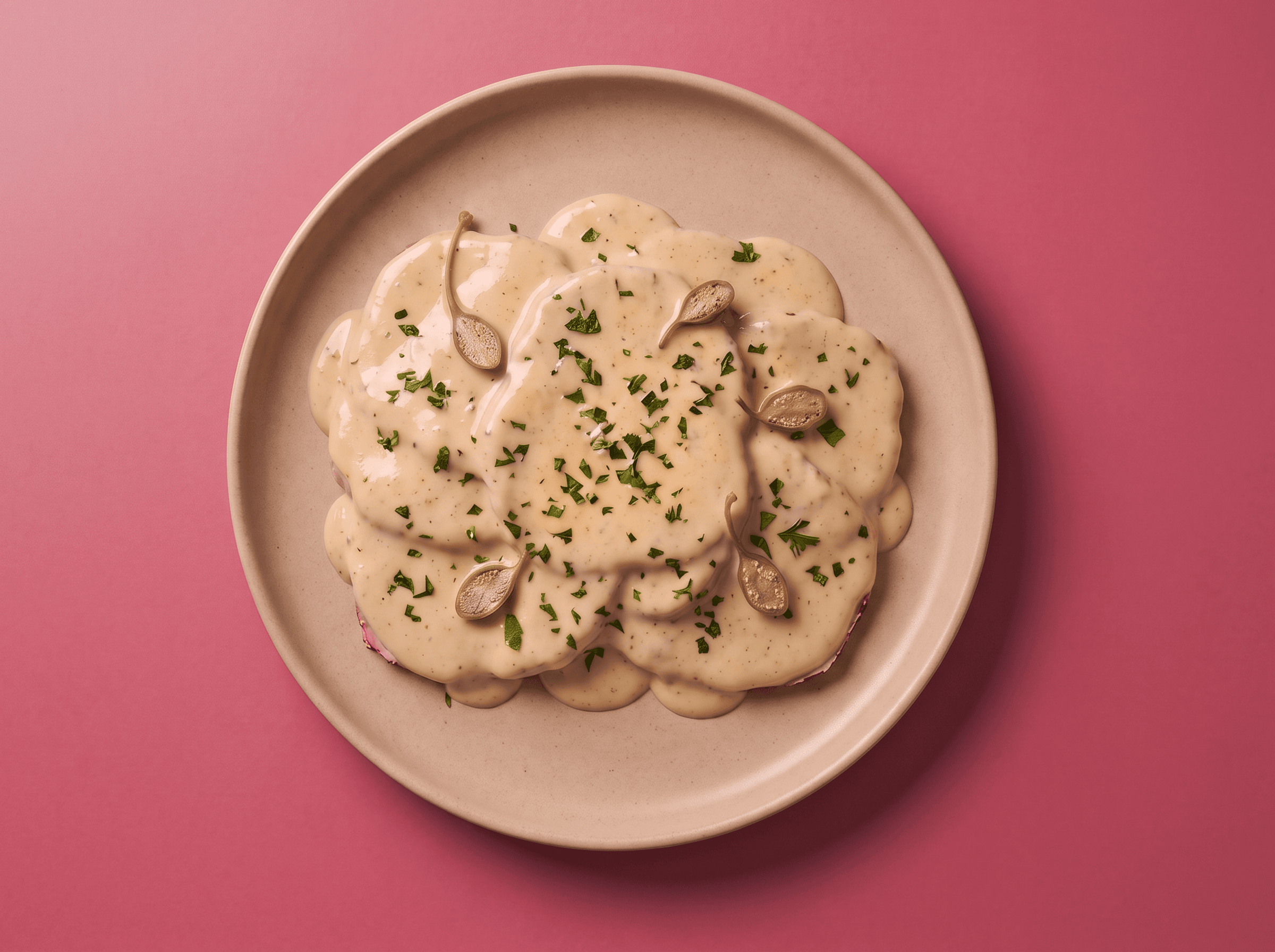 From our menuVitello Tonnato€17.50 · Made by us, delivered chilled.
This elegant starter combines marinated herring with a broken miso-sour cream dressing, crisp apple matchsticks, and toasted pine nuts. The French-Korean fusion takes just 20 minutes to assemble and serves 4 as a sophisticated appetizer. The key is keeping the dressing intentionally un-emulsified so you get distinct flecks of cream throughout.
Recipe by Christophe Rammant
Cordon Bleu Paris alumni - Two star Michelin kitchen experience
What Makes This Broken Dressing Better Than a Smooth One?
Traditional French technique teaches us that not all dressings need to be smooth. When you keep the sour cream in visible flecks instead of whisking it completely smooth, each bite gives you different flavors—first the tangy cream, then the sweet umami of miso.
Food science shows that cold fat stays separate from water-based ingredients. By using very cold sour cream and stirring gently instead of whisking hard, you create a rustic texture that looks homemade and tastes more interesting than a uniform sauce.
Professional chefs know that contrasting textures make dishes memorable. The soft herring, creamy flecks, crunchy apple, and buttery pine nuts all play different roles on your tongue, keeping every forkful exciting instead of monotonous.
Estimated nutrition per serving
Estimated from ingredient weights, not lab-tested.
- Calories
- 416
- Protein
- 17g
- Fat
- 30g
- Carbohydrates
- 19g
The weekly recipe note
Enjoyed this recipe? Get the next one first.
One new recipe each week from Christophe: global flavor, French technique, and practical home-cook timing.
By signing up, you agree to receive emails from Mr. Saucy.
Ingredients
Recipe yields 4 servings
For the Herring Base
| Amount | Ingredient | Notes |
|---|---|---|
| 400 g (about 14 oz) | marinated herring fillets (in vinegar) | drained and patted dry |
For the Miso-Cream Dressing
| Amount | Ingredient | Notes |
|---|---|---|
| 150 g (2/3 cup) | full-fat sour cream | cold, to maintain distinct flecks in the dressing |
| 30 g (2 tablespoons) | white miso (Shiro Miso) | provides a light, sweet umami base |
| 15 g (1 tablespoon) | mirin (Japanese rice wine) | adds a subtle floral sweetness |
| 5 g (1 tablespoon) | fresh chives | finely snipped and mixed directly into the dressing |
For Assembly and Garnish
| Amount | Ingredient | Notes |
|---|---|---|
| 100 g (1 small apple) | Granny Smith apple | peeled and julienned into matchsticks as a crisp substitute for Korean pear |
| 20 g (2 tablespoons) | toasted pine nuts | lightly crushed to release oils |
| 15 g (about 2 scallions) | scallion whites | finely minced for a delicate onion note |
| 5 g (1 teaspoon) | toasted sesame oil | high quality, for finishing aroma |
Instructions
Prep the Herring and Apple
- 1
Dry the Herring (Remove Excess Acid)
Remove the herring from the vinegar marinade and pat it thoroughly dry with paper towels. This step is crucial because leftover vinegar will thin out your creamy dressing and make it watery instead of luscious.
- 2
Cut the Herring into Uniform Pieces
Slice the herring fillets into uniform 2 cm (about 3/4 inch) squares or batons. Consistent sizing ensures that every bite has the perfect ratio of fish to dressing, so no one gets a mouthful of just cream or just fish.
- 3
Julienne the Apple (Keep It Crisp)
Peel and julienne the Granny Smith apple into thin matchsticks. Toss them with a few drops of the original vinegar marinade—this prevents the apple from turning brown and keeps it crisp and bright for serving.
Make the Broken Miso-Cream Dressing
- 4
Create the Miso Base
In a small bowl, whisk the white miso and mirin together until a smooth paste forms. This ensures the umami is evenly distributed without lumps, giving you a consistent sweet-savory foundation.
- 5
Fold in the Cold Sour Cream (Don't Over-Mix)
Gently stir the cold sour cream and snipped chives into the miso-mirin paste using a spoon rather than a whisk. Stop as soon as it is combined—you want visible flecks of white sour cream to remain for that rustic, non-emulsified texture that makes this dish special.
Assemble and Serve
- 6
Combine the Herring with Dressing
Gently fold the herring pieces and minced scallion whites into the broken miso-cream mixture. Use a light hand to preserve the distinct textures of the fish and the cream flecks—aggressive stirring will break down the herring and muddy the presentation.
- 7
Plate and Garnish
Arrange the herring mixture in the center of each plate and top with the julienned apple, toasted pine nuts, and a tiny drizzle of sesame oil. The pine nuts provide a buttery crunch that echoes the richness of the cream, while the apple adds a refreshing tart contrast.
The weekly recipe note
Enjoyed this recipe? Get the next one first.
One new recipe each week from Christophe: global flavor, French technique, and practical home-cook timing.
By signing up, you agree to receive emails from Mr. Saucy.
Tips & Tricks
your dressing looks too smooth and uniform:
Make sure the sour cream is very cold straight from the fridge, and use a spoon to fold it in gently. Stop mixing the moment you see it combined—over-stirring turns it into a smooth sauce instead of the rustic flecked texture you want.
your apple turns brown before serving:
Toss the julienned apple with a few drops of the herring's vinegar marinade right after cutting. The acid stops oxidation and keeps the fruit bright white and crisp for at least 30 minutes.
you don't have a mandoline for thin apple slices:
Use a sharp vegetable peeler to shave the apple into ribbons, then stack and cut them into matchsticks with a knife. It takes a bit longer but gives you the same elegant thin texture.
the dish tastes too fishy:
Make sure you patted the herring completely dry and removed all the vinegar marinade. The sour cream should balance the fish flavor—if it's still too strong, add another tablespoon of cold sour cream to mellow it out.
you can't find white miso:
Yellow miso works in a pinch, but use only 20 g (about 1.5 tablespoons) instead of 30 g because it's saltier and stronger. Red miso is too intense for this delicate dish and will overpower the cream.
your dressing looks too smooth and uniform:
Make sure the sour cream is very cold straight from the fridge, and use a spoon to fold it in gently. Stop mixing the moment you see it combined—over-stirring turns it into a smooth sauce instead of the rustic flecked texture you want.
your apple turns brown before serving:
Toss the julienned apple with a few drops of the herring's vinegar marinade right after cutting. The acid stops oxidation and keeps the fruit bright white and crisp for at least 30 minutes.
you don't have a mandoline for thin apple slices:
Use a sharp vegetable peeler to shave the apple into ribbons, then stack and cut them into matchsticks with a knife. It takes a bit longer but gives you the same elegant thin texture.
the dish tastes too fishy:
Make sure you patted the herring completely dry and removed all the vinegar marinade. The sour cream should balance the fish flavor—if it's still too strong, add another tablespoon of cold sour cream to mellow it out.
you can't find white miso:
Yellow miso works in a pinch, but use only 20 g (about 1.5 tablespoons) instead of 30 g because it's saltier and stronger. Red miso is too intense for this delicate dish and will overpower the cream.
Frequently Asked Questions
Why shouldn't the dressing be fully emulsified?
A broken or non-emulsified dressing provides a more dynamic eating experience. You get distinct hits of tangy sour cream followed by the savory depth of the miso, rather than one uniform flavor. It's like the difference between a chunky salsa and a smooth sauce—the texture variety keeps it interesting.
Can I make this ahead of time?
Partial make-ahead works best. You can prepare the miso-mirin paste up to 3 days in advance and keep it covered in the fridge. But for the best visual effect and texture, fold in the cold sour cream and chives just before assembly to keep those distinct flecks visible.
Why use white miso instead of red or yellow?
White miso (Shiro Miso) is fermented for a shorter time with more rice, making it significantly sweeter and milder than red or yellow varieties. In this fusion dish, it provides the necessary umami without overpowering the delicate sour cream. Red miso would make the dressing too salty and dark.
What if I don't have Granny Smith apples?
A firm Bosc pear or a Honeycrisp apple also works well to provide that essential crunch and tartness. Avoid soft apples like Red Delicious—they turn mushy and don't give you the crisp contrast you need against the creamy herring.
Is the sesame oil necessary if I want a neutral flavor?
You can skip it if you prefer. The sesame oil is used as an aromatic rather than a primary flavor—just a few drops provide a toasted scent that bridges the Korean ingredients with the French cream. Without it, the dish is still delicious but loses that subtle nutty finish.
Can I use Greek yogurt instead of sour cream?
Not recommended. Greek yogurt is thinner and tangier, and it won't create those distinct creamy flecks that make this dressing special. Full-fat sour cream has the right thick texture and mild tang to balance the miso without competing with the herring's acidity.
How do I know if my herring is good quality?
Look for herring that's firm, not mushy, with a clean ocean smell—not fishy or sour. The vinegar marinade should be clear, not cloudy. If you're buying jarred herring, check the ingredient list for simple ingredients: herring, vinegar, salt, maybe sugar. Avoid brands with lots of preservatives.
Why add scallion whites instead of the green parts?
The white parts are milder and sweeter with a delicate onion note that doesn't overpower the dish. The green tops are sharper and more pungent, which would compete with the miso and chives. Save those greens for garnishing other dishes where you want a stronger onion punch.
Why shouldn't the dressing be fully emulsified?
A broken or non-emulsified dressing provides a more dynamic eating experience. You get distinct hits of tangy sour cream followed by the savory depth of the miso, rather than one uniform flavor. It's like the difference between a chunky salsa and a smooth sauce—the texture variety keeps it interesting.
Can I make this ahead of time?
Partial make-ahead works best. You can prepare the miso-mirin paste up to 3 days in advance and keep it covered in the fridge. But for the best visual effect and texture, fold in the cold sour cream and chives just before assembly to keep those distinct flecks visible.
Why use white miso instead of red or yellow?
White miso (Shiro Miso) is fermented for a shorter time with more rice, making it significantly sweeter and milder than red or yellow varieties. In this fusion dish, it provides the necessary umami without overpowering the delicate sour cream. Red miso would make the dressing too salty and dark.
What if I don't have Granny Smith apples?
A firm Bosc pear or a Honeycrisp apple also works well to provide that essential crunch and tartness. Avoid soft apples like Red Delicious—they turn mushy and don't give you the crisp contrast you need against the creamy herring.
Is the sesame oil necessary if I want a neutral flavor?
You can skip it if you prefer. The sesame oil is used as an aromatic rather than a primary flavor—just a few drops provide a toasted scent that bridges the Korean ingredients with the French cream. Without it, the dish is still delicious but loses that subtle nutty finish.
Can I use Greek yogurt instead of sour cream?
Not recommended. Greek yogurt is thinner and tangier, and it won't create those distinct creamy flecks that make this dressing special. Full-fat sour cream has the right thick texture and mild tang to balance the miso without competing with the herring's acidity.
How do I know if my herring is good quality?
Look for herring that's firm, not mushy, with a clean ocean smell—not fishy or sour. The vinegar marinade should be clear, not cloudy. If you're buying jarred herring, check the ingredient list for simple ingredients: herring, vinegar, salt, maybe sugar. Avoid brands with lots of preservatives.
Why add scallion whites instead of the green parts?
The white parts are milder and sweeter with a delicate onion note that doesn't overpower the dish. The green tops are sharper and more pungent, which would compete with the miso and chives. Save those greens for garnishing other dishes where you want a stronger onion punch.
Recipe Reviews
No reviews yet — Be the first to review this recipe!
The collection
All recipesOlive Oil Chocolate Mousse Recipe with Candied Orange
This olive oil chocolate mousse recipe makes a rich but airy dessert with dark chocolate, fruity olive oil, bright candied orange, and crisp almond tuiles. A warm sugar syrup gives the yolks body, while softly whipped cream keeps the mousse light. Plan about 5 hours, including chilling, for 4 generous servings.
300 min · Intermediate · Fusion
Celeriac Ravioli with Brown Butter and Pear
This celeriac ravioli recipe makes 24 delicate pasta pillows filled with roasted celeriac, aged Comté, mascarpone and truffle. Roast the celeriac for deep flavor, then finish the ravioli in a glossy brown-butter sauce with pear, hazelnuts and sage. Plan on 145 minutes for 4 servings, including resting and chilling.
145 min · Intermediate · Fusion
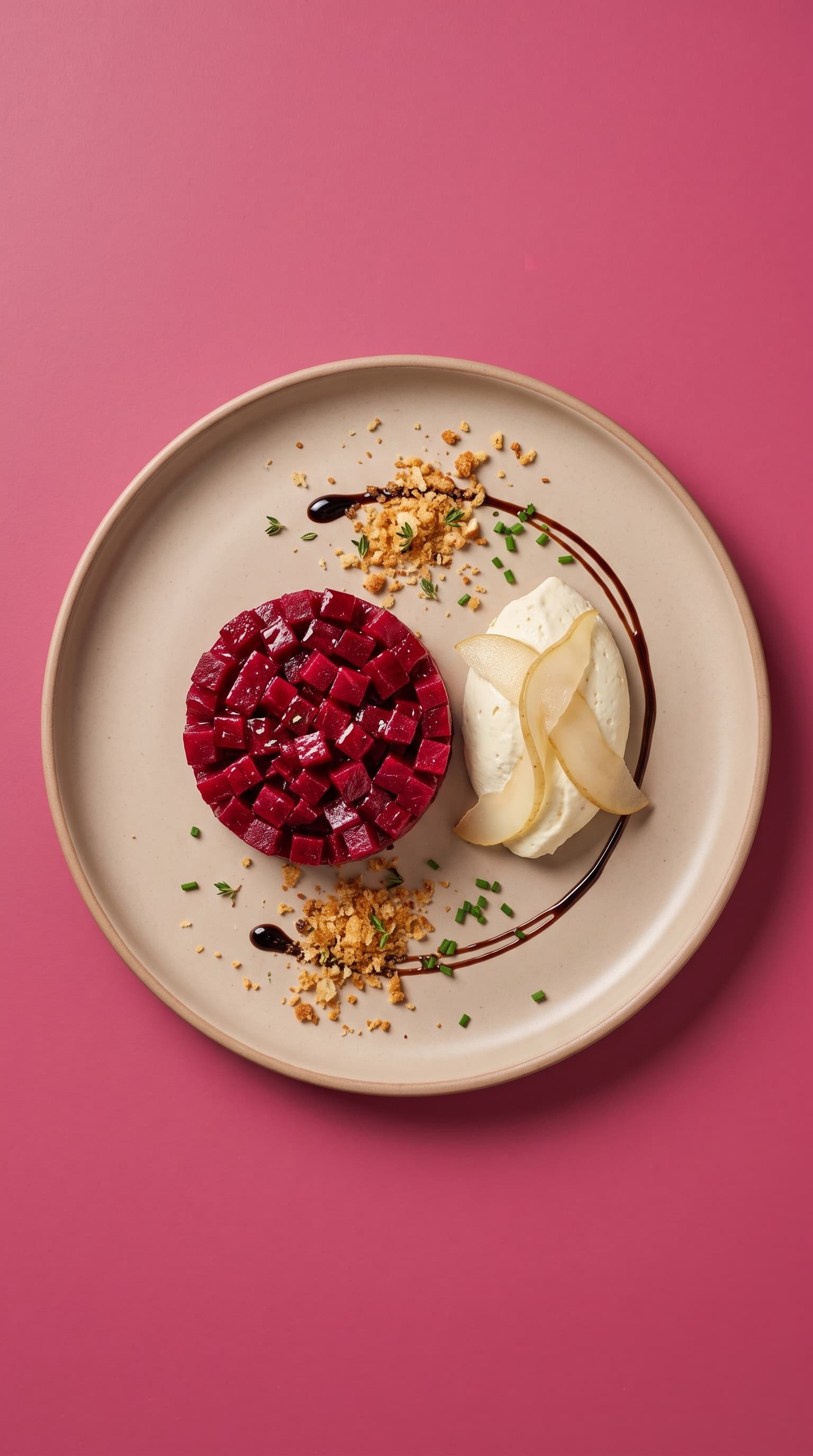
Beetroot Tartare Recipe with Whipped Goat Cheese
This beetroot tartare recipe turns sweet roasted beetroot into a bright, elegant appetizer for four. Cut the chilled beetroot into tiny cubes, dress it just before serving, and pair it with whipped goat cheese, pickled pear, and a buttery hazelnut crumb. Allow about 2 hours from roasting to plating.
120 min · Intermediate · Fusion