

Gochujang-Glazed Slow-Cooked Duck Thighs
Prefer not to cook?
Order Gochujang-Glazed Slow-Cooked Duck Thighs as a ready-made meal and get it delivered to your door.
Order this meal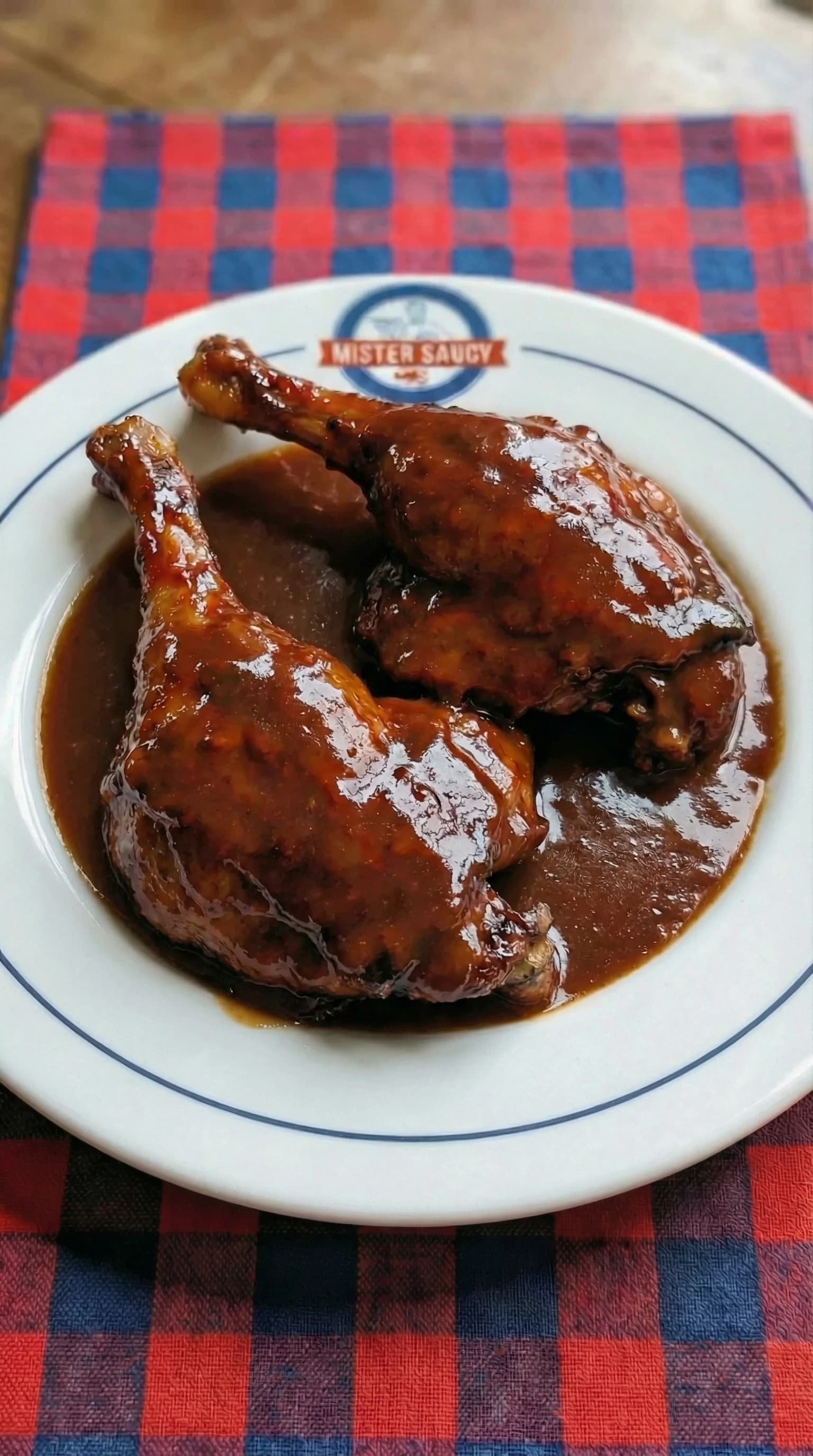
This dish combines Korean chili paste with French braising to create tender, fall-apart duck thighs with a sweet-spicy glaze. The duck marinates overnight, then slow-cooks in the oven for 3 hours at 300°F / 150°C. The result is restaurant-quality duck with a shiny lacquered finish that serves 4 people.

Recipe by Mr Saucy aka Christophe
Christophe is a culinary professional with expertise in French and global cuisine. He has developed recipes and cooking techniques that bridge traditional methods with modern home cooking approaches. Christophe focuses on making classic culinary techniques accessible to home cooks through clear instruction and practical applications. He studied at Le Cordon Bleu Paris and has work experience at a two star Michelin restaurant.
Homecook turned pro with a Cordon Bleu Paris graduate
Quick Info
How Does Slow Cooking Transform Tough Duck Thighs into Tender Meat?
Traditional French braising technique shows that low, gentle heat breaks down the tough connective tissue in duck thighs into silky gelatin. When you cook at 300°F / 150°C for several hours, the collagen melts without drying out the meat—this is why thighs stay juicy while breasts would turn tough.
Food science shows that the rice vinegar in the marinade does double duty. The acid starts breaking down muscle fibers during the overnight rest, then creates a sweet-tart balance during cooking that cuts through the rich duck fat.
Professional chefs know that starting the duck in a cold pan renders the fat slowly without burning the sugars in the gochujang. This patience gives you crispy skin and a deep caramelized base for the sauce—rushing this step means bitter, burnt flavors instead of that beautiful lacquered finish.
Ingredients
Recipe yields 4 servings
For the Marinade
| Amount | Ingredient | Notes |
|---|---|---|
| 800 g (approximately 4 thighs) | duck thighs | skin-on and bone-in |
| 60 g (1/4 cup) | gochujang (Korean chili paste) | provides the spicy-sweet fermented base |
| 30 g (2 tablespoons) | rice vinegar | for marinade only, reserve 15g for finishing |
| 30 g (2 tablespoons) | soy sauce | for umami and salt |
| 25 g (1 tablespoon) | honey | to balance the heat and aid caramelization |
| 15 g (1 tablespoon) | fresh ginger | grated, contains enzymes that help tenderize |
| 10 g (2-3 cloves) | garlic | minced |
| 30 g (2 tablespoons) | Cognac or Armagnac | adds classical French aromatic depth |
For the Braising and Sauce
| Amount | Ingredient | Notes |
|---|---|---|
| 150 g (2/3 cup) | chicken stock | for the braising liquid |
| 200 g (3/4 cup) | classical veal demi-glace | the foundation for the luscious, velvety texture |
| 15 g (1 tablespoon) | rice vinegar | reserved for finishing the sauce |
| 20 g (1 1/2 tablespoons) | unsalted butter | cold, to mount the sauce at the end |
Instructions
Marinate the Duck (The Night Before)
- 1
Make the Marinade
Whisk together the gochujang, 30 g (2 tablespoons) of rice vinegar, soy sauce, honey, grated ginger, minced garlic, and Cognac in a bowl. The vinegar acts as a tenderizer while the alcohol carries aromatic compounds deep into the meat—this is how you build flavor from the inside out.
- 2
Coat and Rest the Duck
Coat the duck thighs thoroughly in the marinade, making sure every surface is covered. Refrigerate for at least 6 hours or overnight. This curing phase allows the salt and acids to penetrate the dense muscle fibers, which means more tender, flavorful meat after cooking.
Sear and Braise
- 3
Render the Fat Slowly
Preheat your oven to 300°F / 150°C. Place the marinated duck thighs skin-side down in a cold heavy-bottomed pot over medium heat. Starting with a cold pan allows the fat to render out slowly without burning the sugars in the gochujang—you'll see the skin turn golden and crispy as the fat melts away, about 8-10 minutes.
- 4
Deglaze and Build the Base
Remove the duck and pour off most of the rendered fat, leaving just a thin coating. Add the chicken stock and scrape up all the caramelized bits stuck to the bottom—these concentrated flavor bits are essential for a rich sauce. Let it bubble for 1 minute.
- 5
Braise Low and Slow
Return the duck to the pot skin-side up, making sure the liquid comes only halfway up the sides of the thighs. Cover tightly with a lid or double layer of foil and braise in the oven for 2.5 to 3 hours. The low temperature at 300°F / 150°C ensures the collagen breaks down into gelatin without drying out the protein—this is what makes the meat fall-apart tender.
Finish the Sauce and Glaze
- 6
Rest and Reduce
Transfer the cooked duck to a warm plate to rest while you finish the sauce. Resting allows the juices to redistribute so the duck stays succulent. Whisk the demi-glace into the remaining braising liquid in the pot.
- 7
Create the Glossy Finish
Reduce the sauce over medium-high heat until it coats the back of a spoon, about 5-7 minutes. Remove from heat and whisk in the remaining 15 g (1 tablespoon) rice vinegar and the cold butter. This French technique called 'monter au beurre' creates a professional sheen and rounds out the acidity—the butter should melt into the sauce, not separate.
- 8
Lacquer Under the Broiler
Brush a generous layer of the finished sauce over the duck skin and place under a broiler for 2 minutes. Watch closely—the high sugar content can go from beautifully caramelized to burnt very quickly. You want a shiny, lacquered appearance with some darker spots for extra flavor.
Tips & Tricks
If the glaze burns under the broiler: Move the rack farther from the heat source and watch it like a hawk. The sugars in gochujang and honey caramelize fast—30 seconds can be the difference between lacquered and charred. If it starts to darken too quickly, pull it out immediately.
If the sauce tastes too salty after reducing: Don't add more salt to fix it. Instead, add a tiny splash more rice vinegar or a teaspoon of honey to balance the palate. The sweetness and acid will make the salt taste less harsh without diluting the sauce.
If the duck comes out dry instead of tender: Make sure the braising liquid only comes halfway up the sides of the thighs—you want to braise the meat, not boil it. Also check your oven temperature with a thermometer. If it's running hot, the duck will dry out before the collagen breaks down.
If you don't have homemade demi-glace: Use a high-quality store-bought demi-glace, but read the label carefully. Look for one that's a true reduction, not a gravy thickened with starch. The real stuff will have gelatin that gives the sauce body and shine.
If the sauce is too thin after reducing: Keep simmering it uncovered. The demi-glace is packed with natural gelatin which will thicken the liquid as water evaporates. Avoid adding flour or cornstarch—that will dull the vibrant flavors and ruin the glossy finish.
Frequently Asked Questions
Why add rice vinegar to the marinade instead of just at the end?
Adding vinegar to the marinade serves double duty. It starts breaking down tough connective tissues during the overnight rest, and it creates a sweet-tart balance that gets cooked into the meat fibers rather than just sitting on the surface. This means deeper flavor throughout, not just in the sauce.
Can I use duck breast instead of thighs?
No, duck breasts aren't suitable for this slow-cooking method. They lack the connective tissue of thighs and would become dry and tough after 3 hours. If you want to use breasts, pan-sear them to medium-rare (135°F / 57°C internally) and make a quick pan sauce with the marinade ingredients instead.
What if I don't have a heavy cast-iron pot or Dutch oven?
Any oven-safe deep dish will work as long as you cover it very tightly with a double layer of aluminum foil. The key is trapping steam so the duck stays moist during the three-hour cook. A roasting pan with foil crimped around the edges works fine.
Can I make this ahead of time?
Partially, yes. You can marinate the duck and braise it up to 2 days ahead, then store it covered in the fridge with the sauce. When ready to serve, reheat gently in a 300°F / 150°C oven for 20 minutes, then finish with the butter and broiler step for that fresh lacquered look.
How do I know when the duck is done braising?
The meat should be fall-apart tender when you poke it with a fork—it will almost shred on its own. If it still feels firm or rubbery, give it another 30 minutes. The internal temperature should reach about 190°F / 88°C, which is much higher than other poultry because you're breaking down collagen, not just cooking the meat.
What can I serve with this dish?
The rich, spicy-sweet sauce pairs beautifully with simple sides that soak up the glaze. Try steamed jasmine rice, creamy polenta, or roasted root vegetables. You want something mild that won't compete with the bold Korean-French flavors.
Is gochujang very spicy?
Gochujang has a moderate, building heat—not the sharp burn of fresh chilies. The fermentation gives it a deep, complex flavor with sweetness and umami alongside the spice. If you're sensitive to heat, start with 45 g (3 tablespoons) instead of 60 g and taste the marinade before adding more.
Why start the duck in a cold pan instead of a hot one?
Starting cold lets the fat render slowly and evenly without burning the sugary marinade. As the pan heats up gradually, the fat melts out and the skin crisps beautifully. If you start with a screaming hot pan, the outside burns before the fat has time to escape, leaving you with flabby, scorched skin.