

Belgian Cheese and Ham Puff Tart
Prefer not to cook?
Order Belgian Cheese and Ham Puff Tart as a ready-made meal and get it delivered to your door.
Order this meal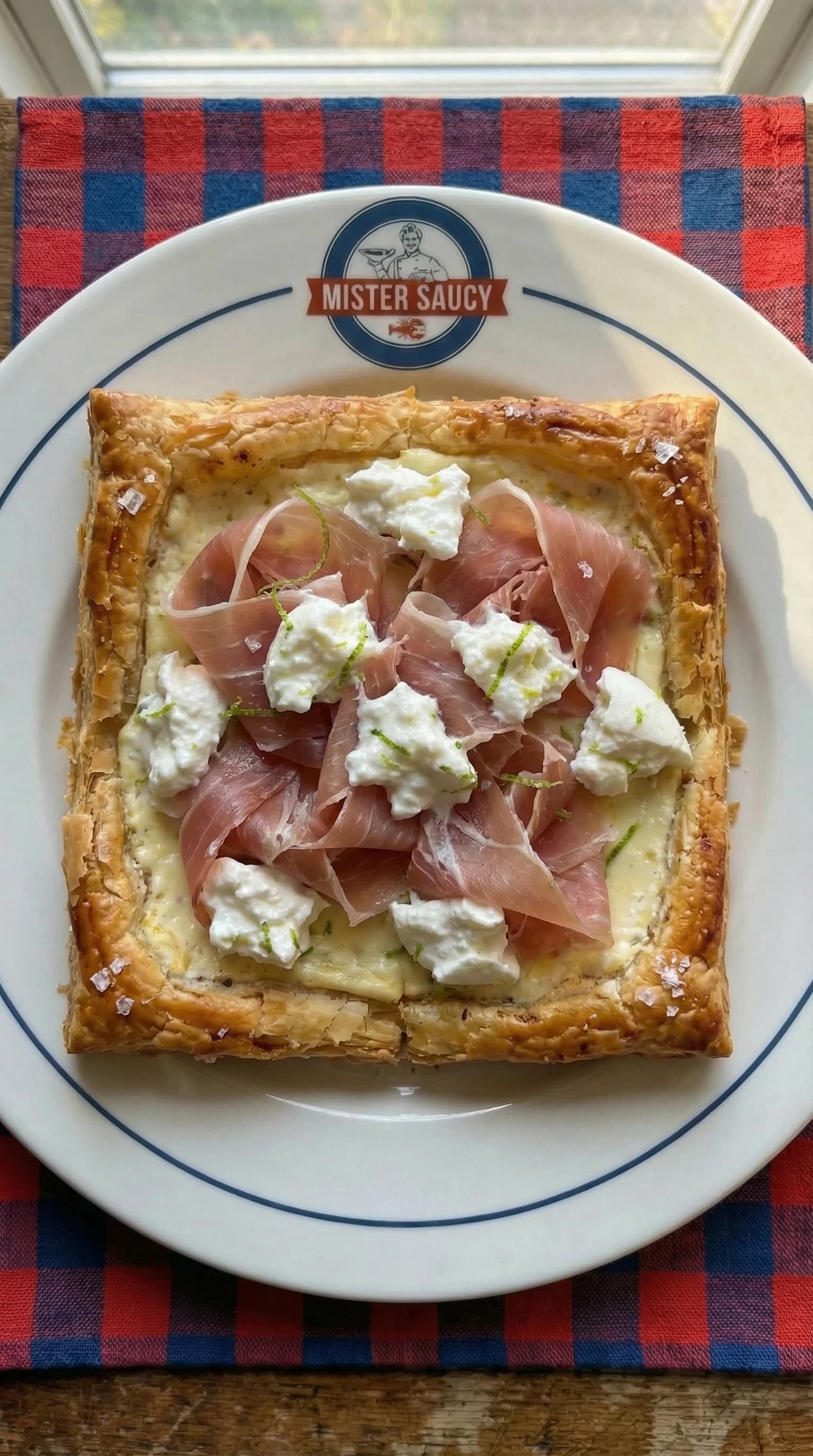
This elegant Belgian appetizer combines flaky all-butter puff pastry with a creamy lime-spiked cheese topping, finished with silky burrata and premium cured ham. The secret is a two-stage baking method that keeps the crust shatteringly crisp while the topping stays luxuriously creamy. Ready in 40 minutes, it serves 6 as a showstopping starter for dinner parties.

Recipe by Mr Saucy aka Christophe
Christophe is a culinary professional with expertise in French and global cuisine. He has developed recipes and cooking techniques that bridge traditional methods with modern home cooking approaches. Christophe focuses on making classic culinary techniques accessible to home cooks through clear instruction and practical applications. He studied at Le Cordon Bleu Paris and has work experience at a two star Michelin restaurant.
Homecook turned pro with a Cordon Bleu Paris graduate
Quick Info
How Does Two-Stage Baking Create the Perfect Crisp Crust?
Traditional French pastry technique shows that par-baking the empty shell first sets the structure before adding wet toppings. When you bake the pastry alone for 5-7 minutes at 400°F / 200°C, the butter melts and creates steam pockets that lift the layers into those signature flakes.
Food science shows that scoring a border and docking the center controls exactly where the pastry puffs. The scored frame rises high like a golden wall, while the pricked center stays flat—creating a natural well for the creamy filling without any special tart pans.
Professional chefs know that adding cold burrata to warm pastry right before serving creates an irresistible temperature contrast. The heat gently softens the burrata's creamy center while the pastry stays crisp, giving you multiple textures in every bite.
Ingredients
Recipe yields 6 servings
For the Pastry Base
| Amount | Ingredient | Notes |
|---|---|---|
| 250 g (1 sheet) | all-butter puff pastry | chilled, standard sheet size |
| 50 g (1 whole egg) | egg | beaten, for egg wash |
For the Cheese Topping
| Amount | Ingredient | Notes |
|---|---|---|
| 200 g (7 oz) | St Moret cheese | room temperature; can substitute with Philadelphia cream cheese |
| 100 g (scant ½ cup) | sour cream | full-fat preferred for richness |
| 100 g (2 whole limes) | limes | zested, organic preferred |
| 1 pinch | Espelette pepper | can substitute with mild paprika |
| 5 g (1 tsp) | sea salt | fine grain |
For Serving
| Amount | Ingredient | Notes |
|---|---|---|
| 150 g (5 oz) | cured ham | thinly sliced; Jamón Serrano, Parma ham, or Prosciutto di San Daniele |
| 200 g (7 oz) | burrata | fresh, kept chilled until serving, torn into chunks |
Instructions
Prep the Pastry
- 1
Preheat and Prepare Your Baking Sheet
Preheat your oven to 200°C / 400°F and line a baking tray with parchment paper. The parchment prevents sticking and helps the pastry brown evenly across the bottom without any burnt spots.
- 2
Score the Border (Create the Frame)
Using a sharp knife, score a 1 cm (½ inch) border around the edge of the cold pastry sheet without cutting all the way through. This creates a frame that will puff higher than the center, giving you that professional tart look with a natural well for the filling.
- 3
Dock the Center (Prevent Puffing)
Prick the center area inside the border all over with a fork, making holes about 1 cm apart. This docking creates steam vents that prevent the middle from ballooning up like a pillow during baking.
- 4
Apply the Egg Wash
Brush the scored border with the beaten egg, being careful not to let it drip over the cut edges. The egg wash creates a deep golden, shiny finish through browning reactions during baking and helps seal the border.
Make the Cheese Mixture and Par-Bake
- 5
Whisk the Cheese Topping
In a bowl, whisk together the St Moret cheese, sour cream, lime zest, Espelette pepper, and sea salt until completely smooth with no lumps. This bright, tangy mixture cuts through the richness of the buttery pastry and adds a citrus punch.
- 6
Par-Bake the Empty Shell
Bake the empty pastry shell for 5-7 minutes at 200°C / 400°F until it just starts to turn golden and the layers begin to separate. This first bake sets the structure so the pastry stays crisp once you add the wet cheese mixture—no soggy bottoms here.
Assemble and Final Bake
- 7
Add the Cheese and Finish Baking
Spread the cheese mixture evenly within the scored border, staying inside the frame. Return to the oven for another 8-10 minutes at 200°C / 400°F until the topping is set but still creamy when you touch it gently and the border is deep golden brown.
- 8
Rest on a Wire Rack (Keep It Crisp)
Transfer the tart to a wire cooling rack and let it rest for 5 minutes. Air circulating underneath prevents trapped steam from softening the bottom crust, keeping everything shatteringly crisp.
- 9
Top with Ham and Burrata
Just before serving, arrange the thinly sliced cured ham over the warm tart and scatter hand-torn chunks of cold burrata on top. The temperature contrast between warm pastry and cool, creamy burrata is what makes this dish restaurant-quality special.
Tips & Tricks
If your pastry base turns out soggy: Place your baking sheet in the oven while it preheats. Putting the cold pastry onto a hot surface immediately starts the butter melting and steam rising for maximum flake and crispness from the bottom up.
If the center puffs up too much during par-baking: Use a fork to gently pierce and deflate any large bubbles immediately after the first bake while the pastry is still hot. The structure is set enough that it won't puff back up.
If you want to preserve the burrata's creamy texture: Never cut burrata with a knife—always tear it by hand. This preserves the delicate stracciatella (shredded curd and cream) interior and looks more artisanal on the plate.
If your puff pastry doesn't rise properly: Keep the pastry as cold as possible until the moment it goes into the oven. If the butter melts before baking, you lose those distinct flaky layers. Work quickly and keep it chilled.
If you can't find St Moret cheese: Use Philadelphia cream cheese or any high-quality full-fat cream cheese instead. The flavor stays very similar once you add the lime zest and Espelette pepper for brightness.
If you need to reheat leftovers: Remove the burrata and ham first, reheat just the pastry base in a 180°C / 350°F oven for 3-4 minutes to restore crispness, then add the cold toppings back. Never microwave puff pastry—it turns rubbery.
Frequently Asked Questions
Can I make this tart ahead of time?
Partially, yes. Bake the pastry base up to 6 hours ahead and store it at room temperature uncovered so it stays crisp. Keep the cheese mixture refrigerated. Do the final assembly and second bake just before your guests arrive—this keeps the pastry perfectly crisp and the burrata fresh.
What if I can't find St Moret cheese?
No problem! St Moret is a French fresh cream cheese, so you can easily substitute it with Philadelphia cream cheese or any high-quality full-fat cream cheese. The flavor profile stays very similar, especially once you add the lime zest and Espelette pepper.
Why is my puff pastry not rising?
This usually happens if the oven isn't hot enough or if the pastry got too warm before baking. The puff comes from water in the butter layers turning to steam at high heat. If your oven is under 200°C / 400°F, the steam won't have enough force to lift those layers.
Can I use a different type of ham?
Absolutely! Any high-quality cured ham works beautifully. Jamón Serrano, Parma ham, Prosciutto di San Daniele, or even a good Italian prosciutto all bring that salty, savory element that balances the creamy cheese and bright lime.
What does docking the pastry actually do?
Docking means pricking holes with a fork to create steam vents. Without these holes, trapped steam makes the center puff up like a balloon. The vents let steam escape so the middle stays flat and creates a perfect well for your filling.
Can I freeze the baked tart?
Not recommended with the burrata topping, as fresh cheese doesn't freeze well. However, you can freeze the par-baked pastry shell (before adding cheese) for up to 1 month. Thaw it, add the cheese mixture, and do the final bake fresh.
How do I know when the cheese topping is done?
The topping should look set around the edges but still have a slight jiggle in the center when you gently shake the pan. It will firm up as it cools. Overbaking makes it dry instead of luxuriously creamy.
What can I substitute for Espelette pepper?
Mild paprika works perfectly and gives you a similar gentle warmth and color. You could also use a tiny pinch of cayenne if you want more heat, but start with just a small amount since cayenne is much spicier than Espelette.