Authentic Pomme Purée Mousseline (Joël Robuchon Method)
1 hr 15 min · Advanced · Serves 4
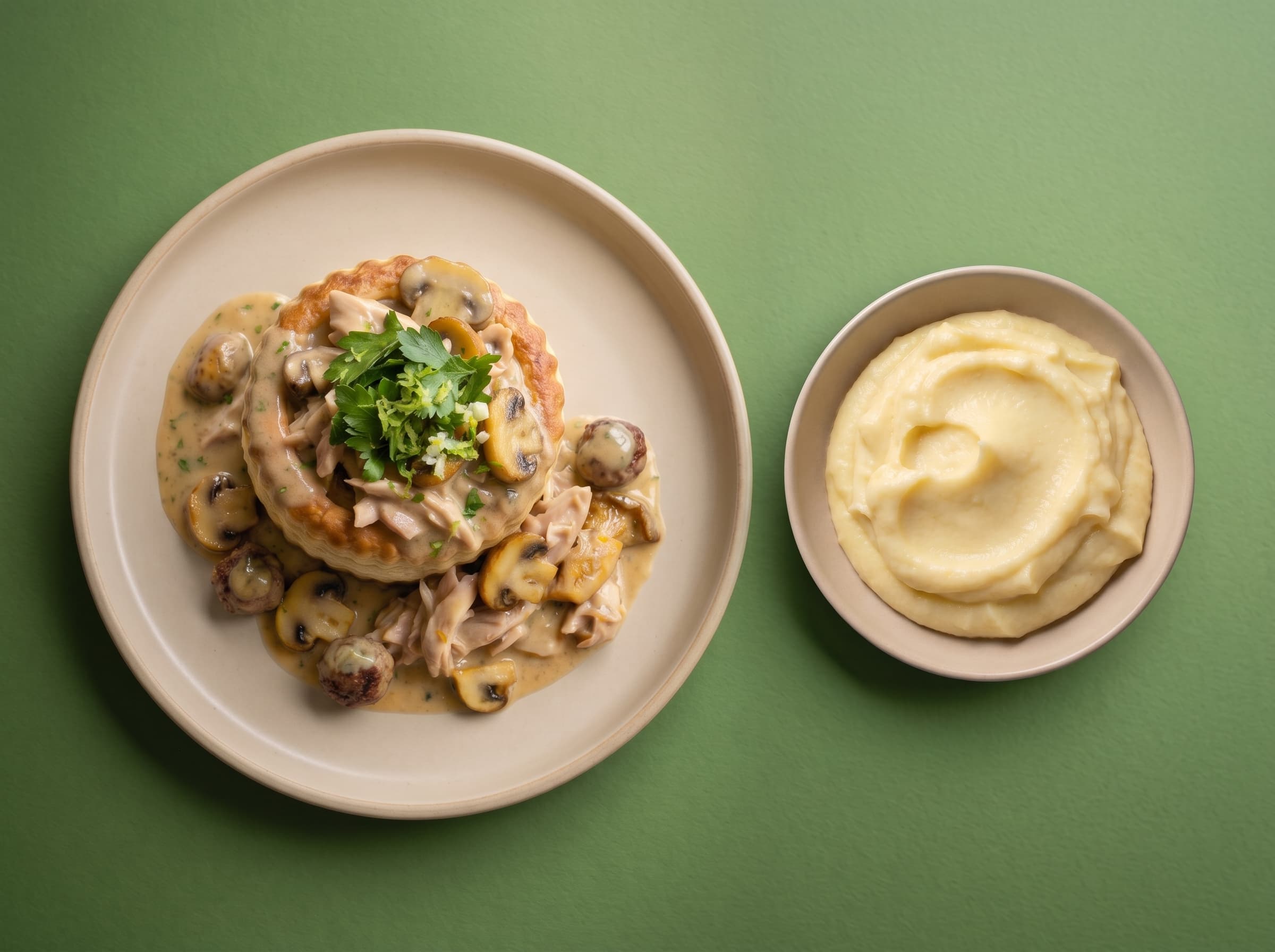 From our menuVol-au-Vent East meets West€19.95 · Made by us, delivered chilled.
This is the world's most famous mashed potatoes—a silky-smooth butter-and-potato emulsion that melts on your tongue. The secret is roasting whole potatoes to dry them out, then folding in cold butter piece by piece to create a cloud-like texture. Takes about 75 minutes and serves 4 as a luxurious side dish.
Recipe by Christophe Rammant
Cordon Bleu Paris alumni - Two star Michelin kitchen experience
What Makes This Different from Regular Mashed Potatoes?
Traditional French technique shows that dry potatoes absorb more butter. When you roast potatoes in their skins at 350°F / 180°C, moisture evaporates completely. This creates tiny empty spaces in the starch cells that soak up butter like a sponge.
Food science shows that cold butter added slowly creates a stable emulsion—the fat coats each starch molecule without breaking down the cell walls. Professional chefs know that whisking or blending too hard releases sticky amylose, turning silky potatoes into wallpaper paste.
The drum sieve (tamis) is the restaurant secret. Pushing hot potatoes through the fine mesh breaks them into microscopic particles without shearing the starch. This creates a texture so smooth it's almost pourable—what French chefs call 'mousseline,' meaning light as mousse.
Estimated nutrition per serving
Estimated from ingredient weights, not lab-tested.
- Calories
- 679
- Protein
- 8g
- Fat
- 53g
- Carbohydrates
- 47g
The weekly recipe note
Enjoyed this recipe? Get the next one first.
One new recipe each week from Christophe: global flavor, French technique, and practical home-cook timing.
By signing up, you agree to receive emails from Mr. Saucy.
Ingredients
Recipe yields 4 servings
| Amount | Ingredient | Notes |
|---|---|---|
| 1000 g (2.2 lbs) | Ratte or Yukon Gold potatoes | uniform size for even cooking; waxy varieties are essential |
| 200 g (1 cup plus 2 tablespoons) | high-quality unsalted butter | cold, cubed; use Le Gall or Isigny Sainte-Mère if possible; can use up to 500 g for restaurant ratio |
| 250 ml (1 cup) | whole milk | full fat, brought to a boil before adding |
| 5 g (1 teapoon - to taste) | fine sea salt | for final seasoning up to your own taste |
Instructions
Roast and Prep the Potatoes
- 1
Roast the Potatoes Whole
Place the potatoes whole and unpeeled in a dry oven at 350°F / 180°C for 45 minutes to an hour. Roasting them in their skins dries them out completely and prevents water absorption—this maximizes their capacity to soak up butter later. You'll know they're ready when a knife slides through easily.
- 2
Peel While Piping Hot
Remove the potatoes from the oven and peel them while they are as hot as possible using a clean tea towel to hold them. Maintaining high heat is critical—if the potatoes cool down, the starches start to retrograde and become gummy, which ruins the silky texture.
Create the Base
- 3
Pass Through a Fine Sieve
Push the hot potatoes through a fine-mesh drum sieve (tamis) into a heavy-bottomed saucepan using a plastic scraper. This is the standard professional method for achieving a perfectly smooth base—the fine mesh breaks the potatoes into microscopic particles. A food mill works as an easier alternative, though it won't be quite as refined.
- 4
Dry the Mash
Place the pan over medium-low heat (around 250°F / 120°C) and stir vigorously with a wooden spatula for 3-5 minutes. This further dries the mash by evaporating any remaining moisture. You'll see steam rising—this concentrates the flavor and prepares the starch cells to receive the fat.
Build the Emulsion
- 5
Fold in Cold Butter
Incorporate the cold, cubed butter piece by piece using a spatula rather than a whisk. Use the least amount of movement possible—gentle folding ensures the starch cells remain intact. Over-working releases sticky amylose and turns the mixture gluey. Add each piece only after the previous one disappears into the potatoes.
- 6
Stream in Hot Milk
Slowly stream in the boiling milk (around 212°F / 100°C) while continuing to incorporate gently with the spatula. The heat of the milk relaxes the starch molecules and adjusts the viscosity to a pourable, mousseline consistency. Stop when the purée flows like thick cream but still holds a soft shape.
- 7
Season and Serve
Taste and adjust seasoning with fine sea salt immediately before serving. The high fat content requires precise salting to brighten the earthy potato notes—start with half the salt and add more to taste. Serve right away while the emulsion is stable and warm.
The weekly recipe note
Enjoyed this recipe? Get the next one first.
One new recipe each week from Christophe: global flavor, French technique, and practical home-cook timing.
By signing up, you agree to receive emails from Mr. Saucy.
Tips & Tricks
you use a blender or food processor:
Don't! The high-speed blades shear the starch cells and release amylose, turning the purée into an unpalatable, gluey paste. Always use a sieve or food mill.
you don't have a drum sieve:
Use a food mill with the finest disk. It's faster and easier for home cooks, though it won't achieve quite the same level of refinement as the professional tamis.
your butter isn't high quality:
Upgrade to 82% fat butter like Kerrygold or Plugrá. At these ratios, the flavor is 50% potato and 50% butter, so cheap butter means a cheap-tasting dish.
the purée turns sticky or elastic:
You over-worked it. Minimize agitation during the butter stage—use a spatula with gentle folding motions, never a whisk. The starch cells are fragile once hot.
you need to keep it warm:
Place the finished purée in a bain-marie or double boiler over barely simmering water (around 160°F / 70°C). This maintains the perfect serving temperature without scorching the bottom.
you want to make it ahead:
You can roast and sieve the potatoes up to 2 hours ahead, then cover and keep warm. Add the butter and milk just before serving for the best emulsion.
you use a blender or food processor:
Don't! The high-speed blades shear the starch cells and release amylose, turning the purée into an unpalatable, gluey paste. Always use a sieve or food mill.
you don't have a drum sieve:
Use a food mill with the finest disk. It's faster and easier for home cooks, though it won't achieve quite the same level of refinement as the professional tamis.
your butter isn't high quality:
Upgrade to 82% fat butter like Kerrygold or Plugrá. At these ratios, the flavor is 50% potato and 50% butter, so cheap butter means a cheap-tasting dish.
the purée turns sticky or elastic:
You over-worked it. Minimize agitation during the butter stage—use a spatula with gentle folding motions, never a whisk. The starch cells are fragile once hot.
you need to keep it warm:
Place the finished purée in a bain-marie or double boiler over barely simmering water (around 160°F / 70°C). This maintains the perfect serving temperature without scorching the bottom.
you want to make it ahead:
You can roast and sieve the potatoes up to 2 hours ahead, then cover and keep warm. Add the butter and milk just before serving for the best emulsion.
Frequently Asked Questions
Why must the potatoes be roasted in the oven with the skins on?
Roasting creates a dry environment that removes moisture from the potato. A dry potato has more room to absorb the butter and milk, which is the key to the rich, velvety texture Robuchon is famous for. Boiling can introduce unwanted moisture if the skins crack, which dilutes the final dish.
Can I make this ahead of time and reheat it?
It's best served fresh, but you can keep it warm in a double boiler for up to an hour. To reheat from cold, do so gently over a simmer with a splash of hot milk, whisking constantly to restore the emulsion. Avoid the microwave—it causes the butter to separate and breaks the silky texture.
Is the 2:1 potato-to-butter ratio really necessary?
Robuchon's original recipe used 250 g of butter per 1 kg of potatoes for home cooks, but his restaurants often pushed this to 500 g. Start with 250 g and keep adding until the purée reaches a glossy, semi-liquid state that holds its shape only slightly. More butter means more luxury.
What is the best potato variety if I can't find Ratte?
Yukon Gold is the best widely available substitute. You need a potato with medium starch content—waxy enough to hold together but floury enough to pass through a sieve. Avoid Russets, as they are too mealy and will result in a grainy texture.
What if I don't have a drum sieve or food mill?
You can use a fine-mesh strainer and the back of a ladle to push the potatoes through, though it takes more elbow grease. Work in batches and be patient—the effort is worth it for that cloud-like texture.
Why does the recipe call for cold butter instead of melted?
Cold butter added piece by piece creates a stable emulsion. When you add it slowly, each cube emulsifies into the hot potato base before the next one goes in. Melted butter would just pool on top and separate, giving you greasy potatoes instead of a silky purée.
Can I use low-fat milk or cream instead?
Stick with whole milk. Cream makes it too heavy and masks the potato flavor, while low-fat milk doesn't have enough fat to support the emulsion. Whole milk at 3.5% fat is the perfect balance for a light, pourable consistency.
How do I know when the purée is the right consistency?
It should flow like thick cream when you tilt the pan, but still hold a soft shape when spooned onto a plate. French chefs describe it as 'ribbon stage'—when you lift the spatula, the purée should fall in a thick ribbon that slowly dissolves back into the mass.
Why must the potatoes be roasted in the oven with the skins on?
Roasting creates a dry environment that removes moisture from the potato. A dry potato has more room to absorb the butter and milk, which is the key to the rich, velvety texture Robuchon is famous for. Boiling can introduce unwanted moisture if the skins crack, which dilutes the final dish.
Can I make this ahead of time and reheat it?
It's best served fresh, but you can keep it warm in a double boiler for up to an hour. To reheat from cold, do so gently over a simmer with a splash of hot milk, whisking constantly to restore the emulsion. Avoid the microwave—it causes the butter to separate and breaks the silky texture.
Is the 2:1 potato-to-butter ratio really necessary?
Robuchon's original recipe used 250 g of butter per 1 kg of potatoes for home cooks, but his restaurants often pushed this to 500 g. Start with 250 g and keep adding until the purée reaches a glossy, semi-liquid state that holds its shape only slightly. More butter means more luxury.
What is the best potato variety if I can't find Ratte?
Yukon Gold is the best widely available substitute. You need a potato with medium starch content—waxy enough to hold together but floury enough to pass through a sieve. Avoid Russets, as they are too mealy and will result in a grainy texture.
What if I don't have a drum sieve or food mill?
You can use a fine-mesh strainer and the back of a ladle to push the potatoes through, though it takes more elbow grease. Work in batches and be patient—the effort is worth it for that cloud-like texture.
Why does the recipe call for cold butter instead of melted?
Cold butter added piece by piece creates a stable emulsion. When you add it slowly, each cube emulsifies into the hot potato base before the next one goes in. Melted butter would just pool on top and separate, giving you greasy potatoes instead of a silky purée.
Can I use low-fat milk or cream instead?
Stick with whole milk. Cream makes it too heavy and masks the potato flavor, while low-fat milk doesn't have enough fat to support the emulsion. Whole milk at 3.5% fat is the perfect balance for a light, pourable consistency.
How do I know when the purée is the right consistency?
It should flow like thick cream when you tilt the pan, but still hold a soft shape when spooned onto a plate. French chefs describe it as 'ribbon stage'—when you lift the spatula, the purée should fall in a thick ribbon that slowly dissolves back into the mass.
Recipe Reviews
No reviews yet — Be the first to review this recipe!
The collection
All recipesPheasant with Grapes, Verjus Jus and Celery Root
This pheasant with grapes recipe pairs juicy roast pheasant with glossy Muscat grapes, sweet caramelised shallots, and bright verjus jus. Gentle pan-roasting keeps the skin crisp, while celery root purée adds silky depth. Plan on about 2 hours for 4 servings, with several parts ready ahead for an easy dinner party.
120 min · Intermediate · France
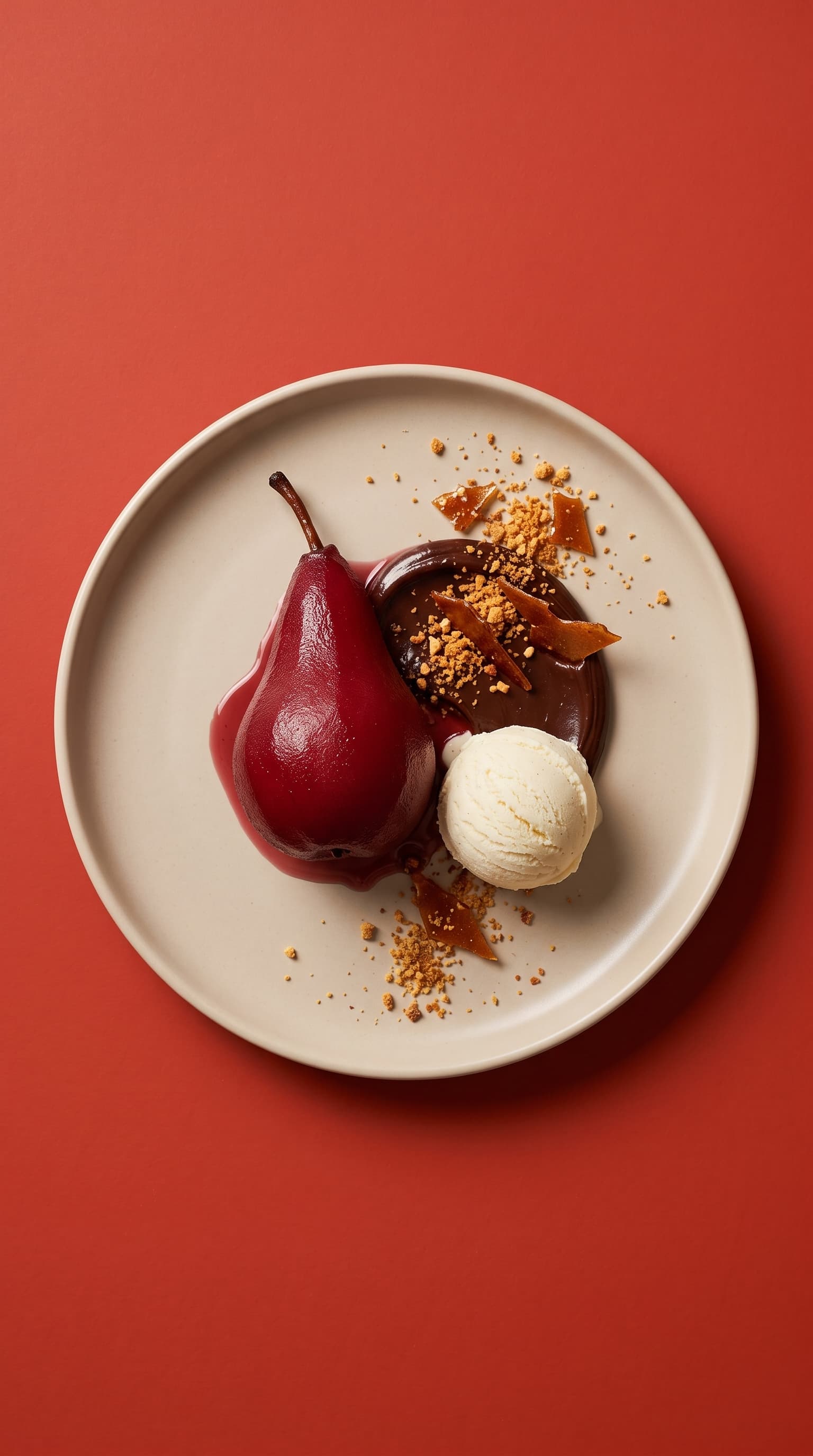
Poires Belle Hélène Recipe with Wine Poached Pears
This poires belle hélène recipe pairs tender red wine poached Conference pears with warm dark chocolate sauce, cold vanilla ice cream, and crisp hazelnut praline. Gentle poaching keeps the pears whole and silky. Plan about 2 hours for cooking and cooling, and serve 4 people right away for the best warm and cold contrast.
150 min · Intermediate · France
Roast Partridge Recipe with Celeriac Mousseline
This roast partridge recipe pairs rosy roasted breast with a crisp confited leg, silky celeriac mousseline, glazed baby carrots, and a glossy juniper-port jus. Dry-brining helps the lean meat stay seasoned and juicy. Allow about 3 hours for cooking and resting, plus overnight dry-brining if you have time. Serves 4.
210 min · Intermediate · France