

Asian-Inspired Pork and Veal Pâté de Campagne with Chili Crisp
Prefer not to cook?
Order Asian-Inspired Pork and Veal Pâté de Campagne with Chili Crisp as a ready-made meal and get it delivered to your door.
Order this meal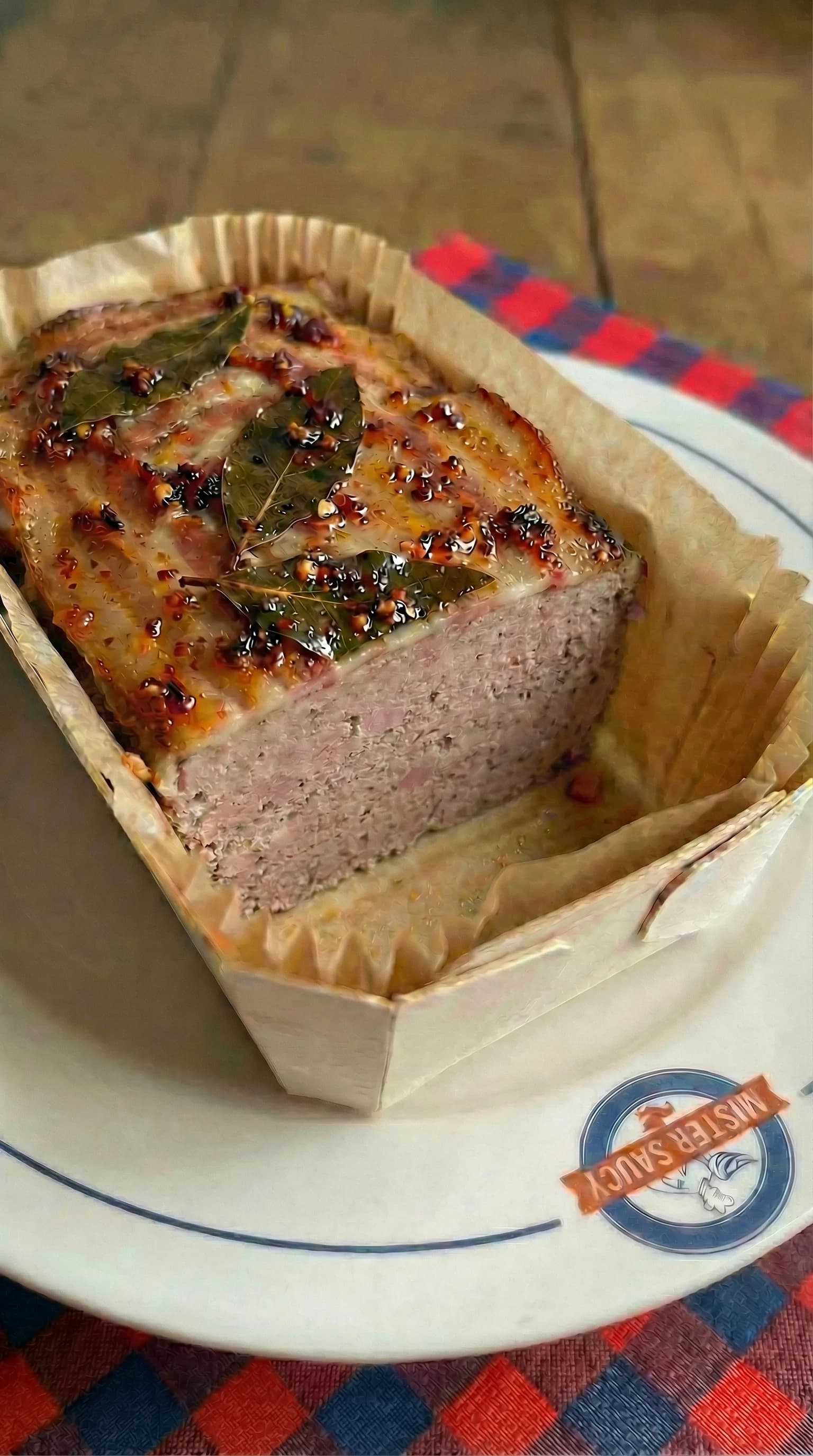
This is a French-style country terrine with an Asian twist—ground pork, veal, and liver bound with rice flour instead of eggs, enriched with folded whipped cream for a silkier emulsion, wrapped in bacon, and topped with chili crisp. It takes about 2 hours 40 minutes total (about 40 minutes hands-on, 90 minutes baking, plus overnight chilling). Makes 8-10 servings.

Recipe by Mr Saucy aka Christophe
Christophe is a culinary professional with expertise in French and global cuisine. He has developed recipes and cooking techniques that bridge traditional methods with modern home cooking approaches. Christophe focuses on making classic culinary techniques accessible to home cooks through clear instruction and practical applications. He studied at Le Cordon Bleu Paris and has work experience at a two star Michelin restaurant.
Homecook turned pro with a Cordon Bleu Paris graduate
Quick Info
What Makes This Different from Traditional French Pâté?
Traditional French technique often uses eggs and cream for binding, but this recipe borrows from Vietnamese Chả Lụa by using rice flour. Food science shows that rice starch gelatinizes during cooking, creating a springy, elastic texture that slices cleanly without crumbling.
A final fold of cold whipped heavy cream improves the emulsion and gives the pâté a finer, silkier bite. Because it's folded in gently rather than blended aggressively, it lightens the texture without turning the terrine into a mousse.
Professional chefs know that the bain-marie (water bath) method is the secret to silky pâté. Gentle heat at 300°F / 150°C prevents the proteins from seizing up and squeezing out moisture, which would make the terrine dry and grainy.
The compression step—weighing down the pâté while it cools—is what gives you that dense, commercial-quality slice. It pushes out air pockets and helps the fats redistribute evenly throughout the terrine as they solidify.
Ingredients
Recipe yields 8-10 servings
For the Meat Mixture
| Amount | Ingredient | Notes |
|---|---|---|
| 500 g (about 1 lb) | ground pork | 30% fat content—high fat is essential for a moist terrine |
| 300 g (about 10.5 oz) | ground veal | provides fine texture and natural gelatin for binding |
| 200 g (about 7 oz) | pork or beef liver | cleaned of membranes and finely minced or processed |
For the Rice Flour Binder
| Amount | Ingredient | Notes |
|---|---|---|
| 30 g (about 3 tablespoons) | rice flour | creates the slurry that binds everything |
| 60 g (about 1/4 cup) | cold water or Shaoxing wine | for mixing with the rice flour |
For the Seasonings
| Amount | Ingredient | Notes |
|---|---|---|
| 30 g (about 2 tablespoons) | soy sauce | adds salt and deep umami |
| 15 g (about 1 tablespoon) | toasted sesame oil | for aromatic nutty notes |
| 40 g (about 1/3 cup) | fried onions | store-bought or homemade crispy shallots |
| 20 g (about 2 tablespoons) | fried garlic | adds sweet, toasted pungency |
| 5 g (about 1 teaspoon) | white pepper | traditional in Asian charcuterie for floral heat |
| 3 g (about 1/2 teaspoon) | black pepper | cracked for texture and bold spice |
| 8 g (about 1 1/2 teaspoons) | fine sea salt | adjust slightly based on soy sauce saltiness |
| 120 g (about 1/2 cup) | heavy cream | whipped cold to soft peaks and folded in before packing the mold |
For Assembly
| Amount | Ingredient | Notes |
|---|---|---|
| 250 g (about 8-10 slices) | thin slices of bacon | enough to line the entire mold with overhang |
| 2 g (3-4 leaves) | dried bay leaves | for the top decoration |
| 25 g (about 2 tablespoons) | dried chili crisp | strained solids from chili oil, not the oil itself |
Instructions
Prep the Meat and Binder
- 1
Process the Liver Smooth
Remove any connective tissue from the liver and pulse it in a food processor until completely smooth. This ensures the liver incorporates evenly into the meat mixture without large chunks that can taste metallic or grainy.
- 2
Make the Rice Flour Slurry
Whisk the rice flour with the cold water or Shaoxing wine until completely smooth with no lumps. This slurry replaces traditional eggs and breadcrumbs—it acts as a starch-based stabilizer that creates a firmer, more elastic texture when it cooks.
- 3
Whip the Cream Cold
Whip the cold heavy cream to soft peaks, then refrigerate it until needed. Folding it in at the end helps improve the emulsion and gives the pâté a silkier, lighter texture.
- 4
Mix the Meat (Keep Everything Cold)
In a large chilled bowl, vigorously mix the ground pork, veal, and processed liver with the soy sauce, sesame oil, both peppers, salt, fried onions, and fried garlic. Work quickly and keep everything cold—if the fat melts before cooking, the mixture won't emulsify properly and the pâté will be greasy and crumbly.
- 5
Add the Slurry for the Bind
Slowly pour the rice flour slurry into the meat mixture while stirring constantly. Keep mixing until the meat becomes tacky and holds together when you squeeze it—this primary bind is what prevents the pâté from crumbling when you slice it later.
- 6
Fold In the Whipped Cream
Gently fold the whipped cream into the meat mixture just until evenly incorporated. Do not overmix—you want to preserve some of the aeration so the finished pâté stays refined and silky rather than dense and heavy.
Assemble and Bake
- 7
Line the Mold with Bacon
Line a 1.5-liter terrine mold or loaf pan with bacon slices, overlapping them slightly and leaving enough overhang to cover the top completely. The bacon protects the lean meat from drying out during the long bake and adds a smoky fat layer that keeps everything moist.
- 8
Pack the Meat Firmly
Pack the meat mixture into the lined mold, pressing down firmly with a spatula to remove any air pockets. Air pockets can cause the pâté to oxidize (turn gray) or fall apart when you slice it.
- 9
Seal and Decorate the Top
Fold the bacon overhang over the top of the meat to seal it completely. Arrange the bay leaves and dried chili crisp decoratively across the surface—the chili crisp will infuse the top layer of fat with heat and flavor during the bake.
- 10
Set Up the Water Bath
Cover the mold tightly with foil and place it in a large baking dish. Fill the baking dish with hot water until it reaches halfway up the sides of the mold. This bain-marie method ensures gentle, even heat distribution at 300°F / 150°C, which prevents the proteins from toughening and squeezing out moisture.
- 11
Bake Low and Slow
Bake at 300°F / 150°C for approximately 90 minutes, or until the internal temperature reaches 160°F / 71°C when you insert an instant-read thermometer into the center. Slow cooking is the secret to a silky, professional texture—rushing it will make the pâté dry and grainy.
Press and Chill
- 12
Weight It Down While Cooling
Remove from the oven and place a heavy weight (like a brick wrapped in foil or several cans of food) on top of the foil-covered pâté while it cools to room temperature. This compression step is vital for a dense, commercial-quality slice—it pushes out air and helps the fats redistribute evenly.
- 13
Refrigerate Overnight (The Flavor Develops)
Refrigerate for at least 24 hours before unmolding and slicing. The flavors need time to mature and meld, and the fats need to fully set for the best eating experience. The pâté actually tastes better on day two or three.
Tips & Tricks
If your meat mixture feels warm or the fat looks greasy: Stop immediately and chill everything in the freezer for 10 minutes. Warm fat will break during mixing, causing the pâté to leak grease and fall apart when you slice it.
If your whipped cream deflates or disappears into the mix: Fold it in gently at the very end, and make sure both the cream and meat mixture are very cold. Overmixing will knock out the air and reduce the texture benefit.
If you're not sure if the seasoning is right: Fry a small marble-sized piece of the mixture in a pan before you pack the mold. Taste it and adjust the salt or soy sauce—it's much easier to fix now than after it's baked.
If you want a smoother texture instead of coarse: Pulse the entire meat mixture in a food processor in batches after mixing, then fold in the whipped cream by hand at the end. This gives you a finer, more mousse-like texture.
If the top of your pâté looks too greasy: Use mostly the solids from the chili crisp (the crunchy bits) rather than the oil. Too much oil on top will pool and make the surface slick instead of crispy.
If you don't have a terrine mold: Use a regular loaf pan—just make sure it holds about 1.5 liters. The shape will be different but the technique and results are exactly the same.
If your pâté cracked on top during baking: This is normal and doesn't affect the taste. The bacon and chili crisp cover it anyway. If it bothers you, lower the oven temperature by 25°F / 15°C next time.
Frequently Asked Questions
Why use rice flour instead of eggs?
Rice flour creates a unique bouncy or elastic texture common in Asian sausages like Vietnamese Chả Lụa. Unlike eggs, which provide a custard-like bind, rice flour starches gelatinize during cooking, resulting in a denser, more resilient slice that holds up beautifully on a platter without crumbling.
Why add whipped cream to the mixture?
A small amount of cold whipped heavy cream folded in before baking helps improve the emulsion and creates a silkier, lighter pâté. It enriches the texture without making the terrine loose or custardy.
Can I use only pork instead of adding veal?
You can, but the veal adds specific finesse and natural gelatin that helps the binding. If using only pork, make sure it's a mix of lean shoulder and fatty belly to maintain the correct fat-to-protein ratio—aim for about 30% fat total for a moist result.
How long will this pâté keep in the fridge?
Because it's fully cooked and encased in a protective layer of fat from the bacon, it will stay fresh for 5-7 days if kept tightly wrapped. In fact, the flavor actually improves after the second or third day as the aromatics meld together.
What should I serve this with?
To complement the Asian profile, serve slices with pickled daikon, fresh cilantro, and crusty baguette. The acidity of the pickles cuts through the richness of the liver and pork perfectly. Mustard or hoisin sauce also work beautifully.
Can I make this without liver?
Yes, but you'll lose some of the traditional pâté flavor and the natural binding that liver provides. Replace it with an equal weight of ground pork and add an extra tablespoon of rice flour to compensate for the lost binding power.
Do I really need to weight it down while it cools?
Yes—this step is what separates homemade pâté from professional quality. The weight compresses the meat, pushes out air pockets, and creates that dense, sliceable texture. Without it, you'll get a looser, more crumbly result.
What if I don't have a food processor for the liver?
Chop it as finely as you possibly can with a sharp knife, almost to a paste. It won't be quite as smooth, but it will still work. You can also ask your butcher to grind it for you when you buy it.
Can I freeze this pâté?
Yes, it freezes well for up to 2 months. Wrap it tightly in plastic wrap and then foil. Thaw it slowly in the fridge overnight before serving. The texture stays remarkably good after freezing because of the rice flour bind.